


Bunkers & Storage · Built in-house
Bunker Walls
Heavy push walls for loader-managed storage — plate thickness graded to the load, sections engineered to your floor plan.
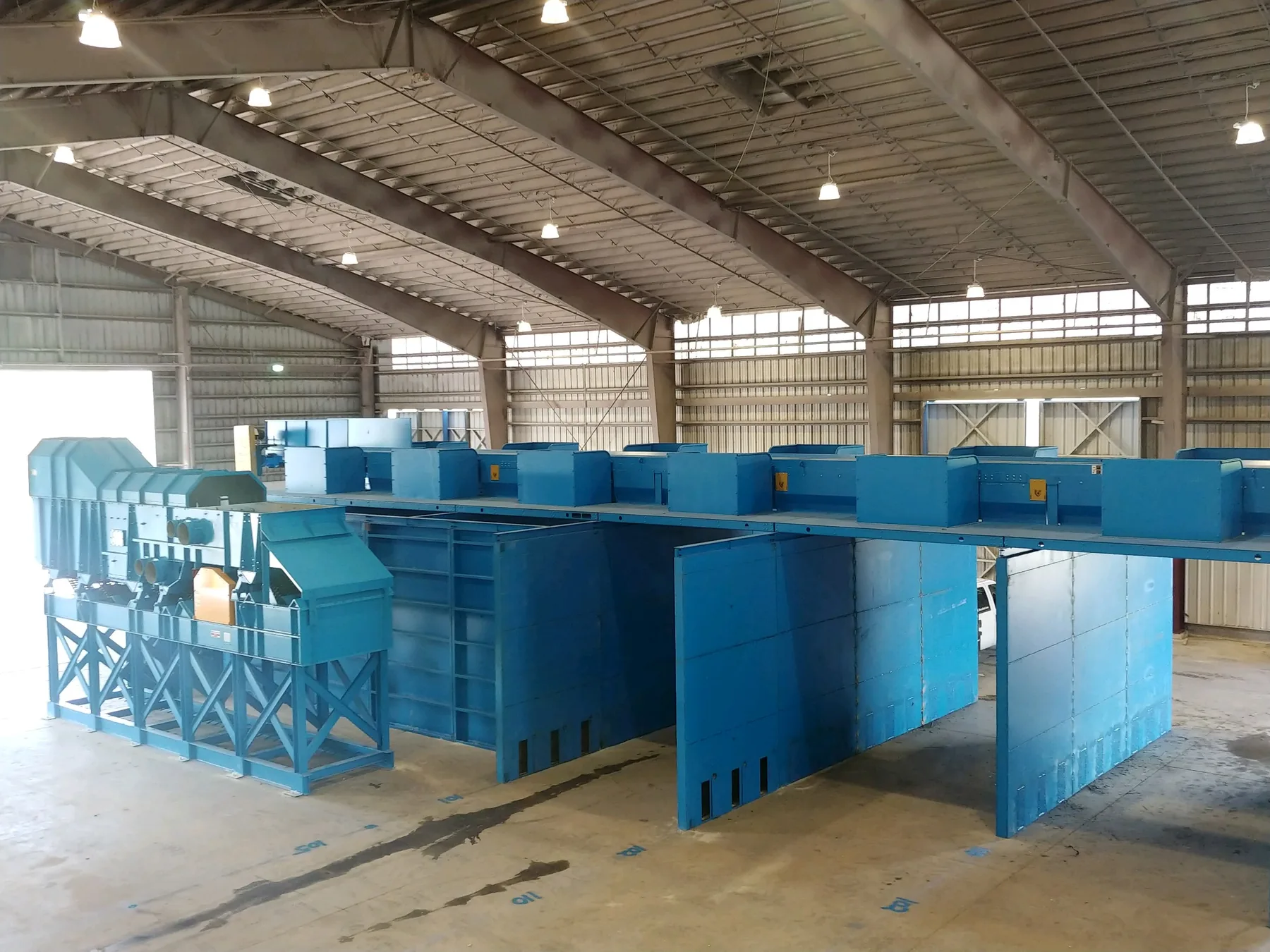
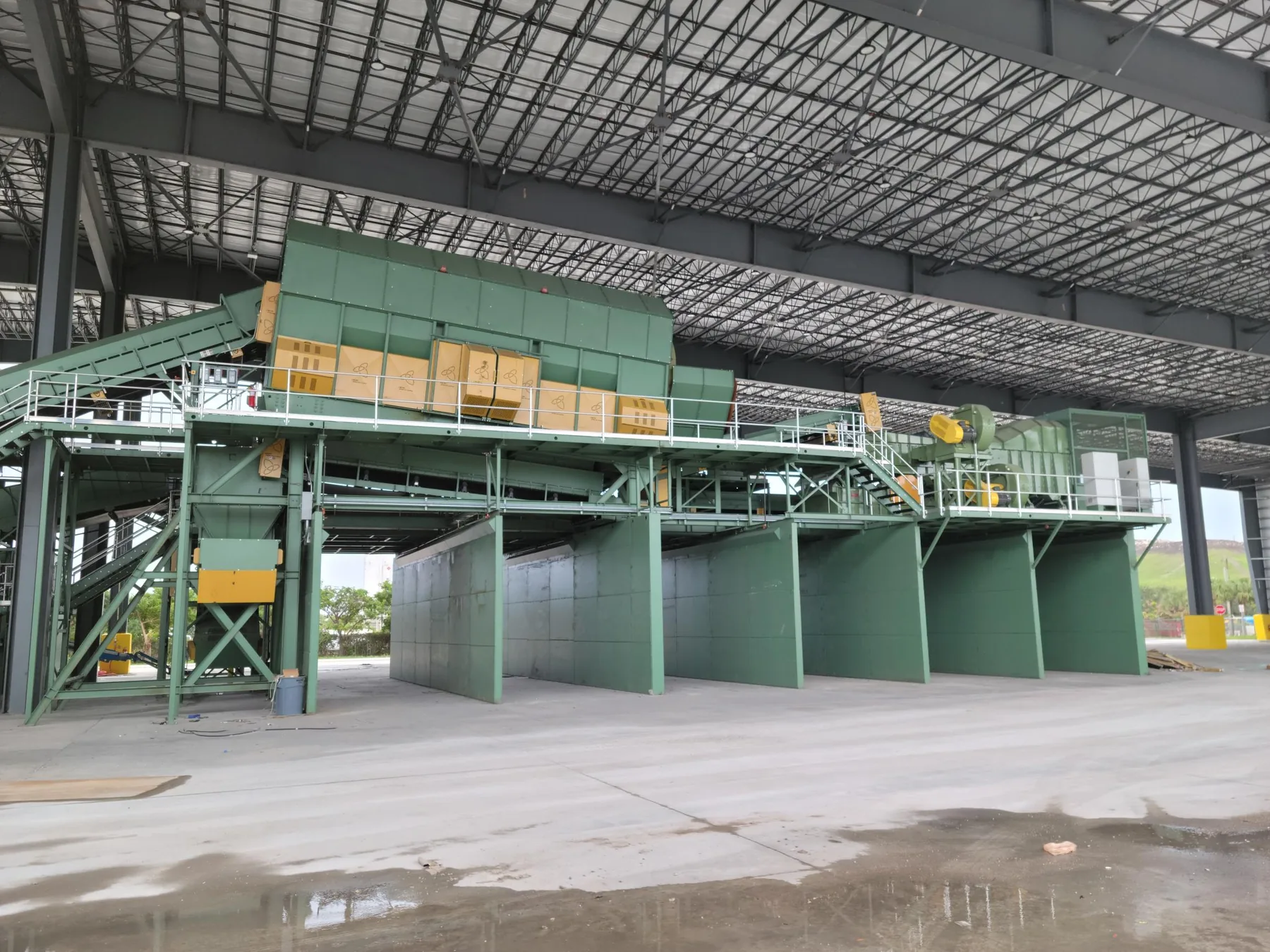
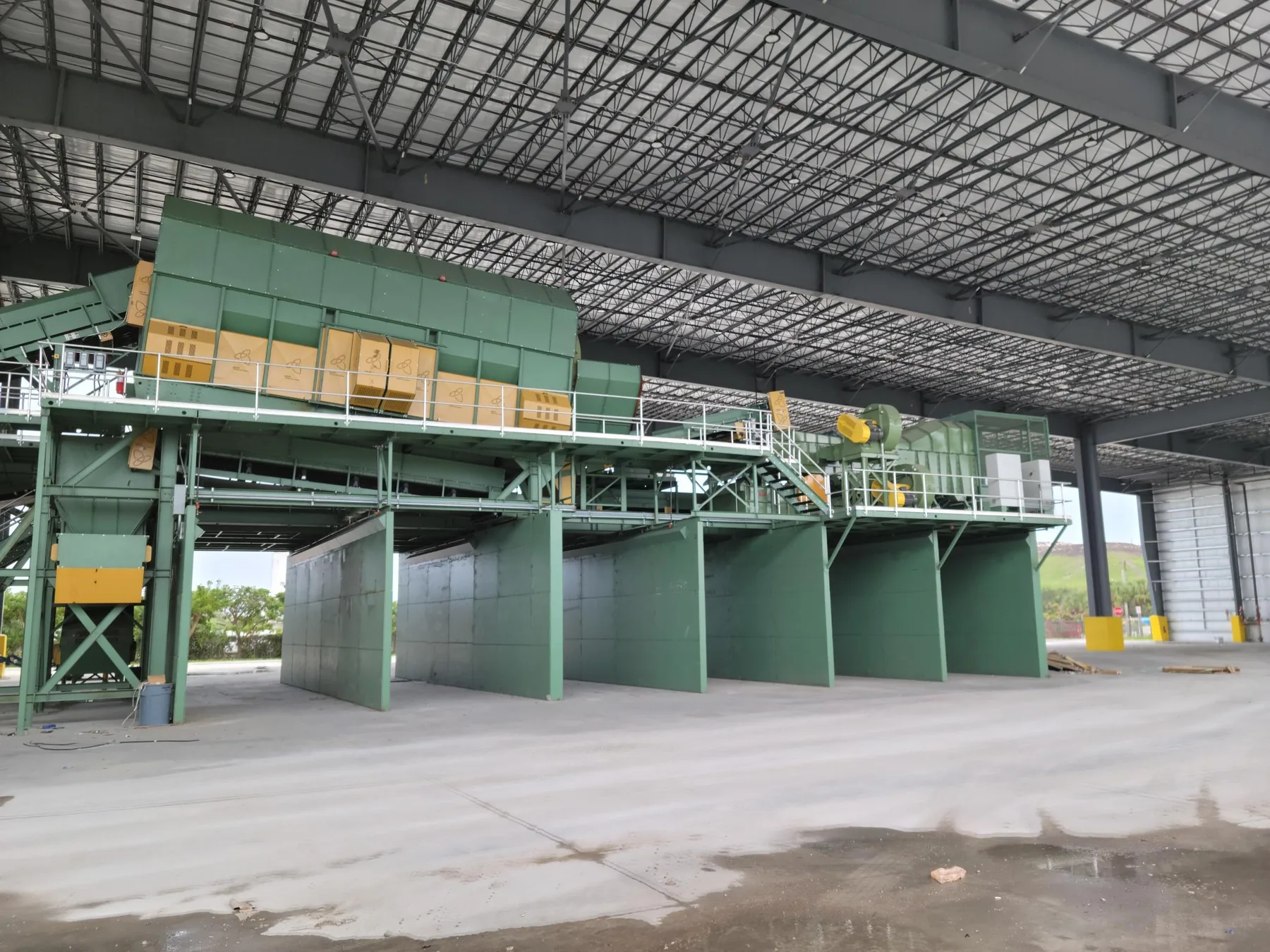
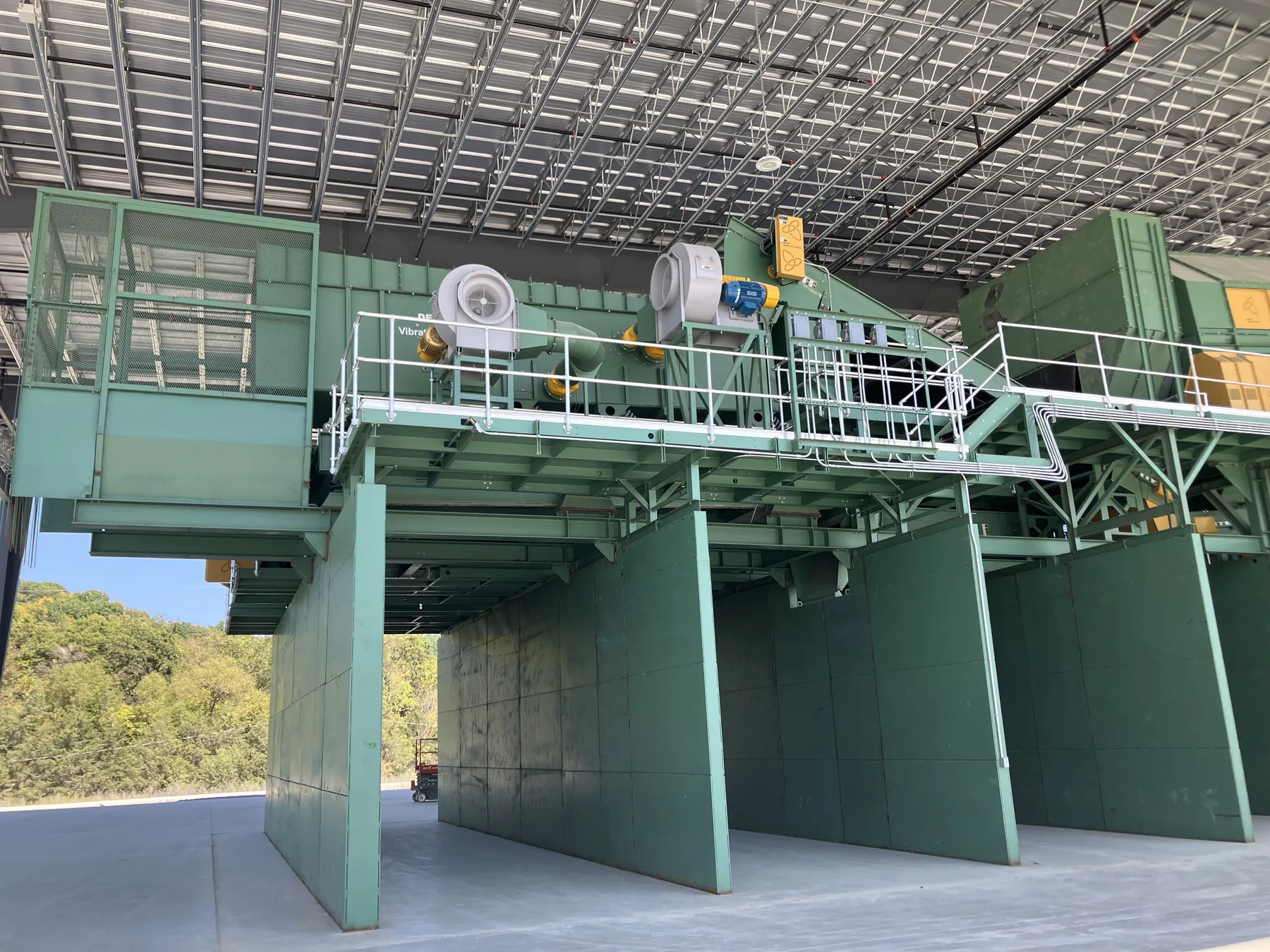
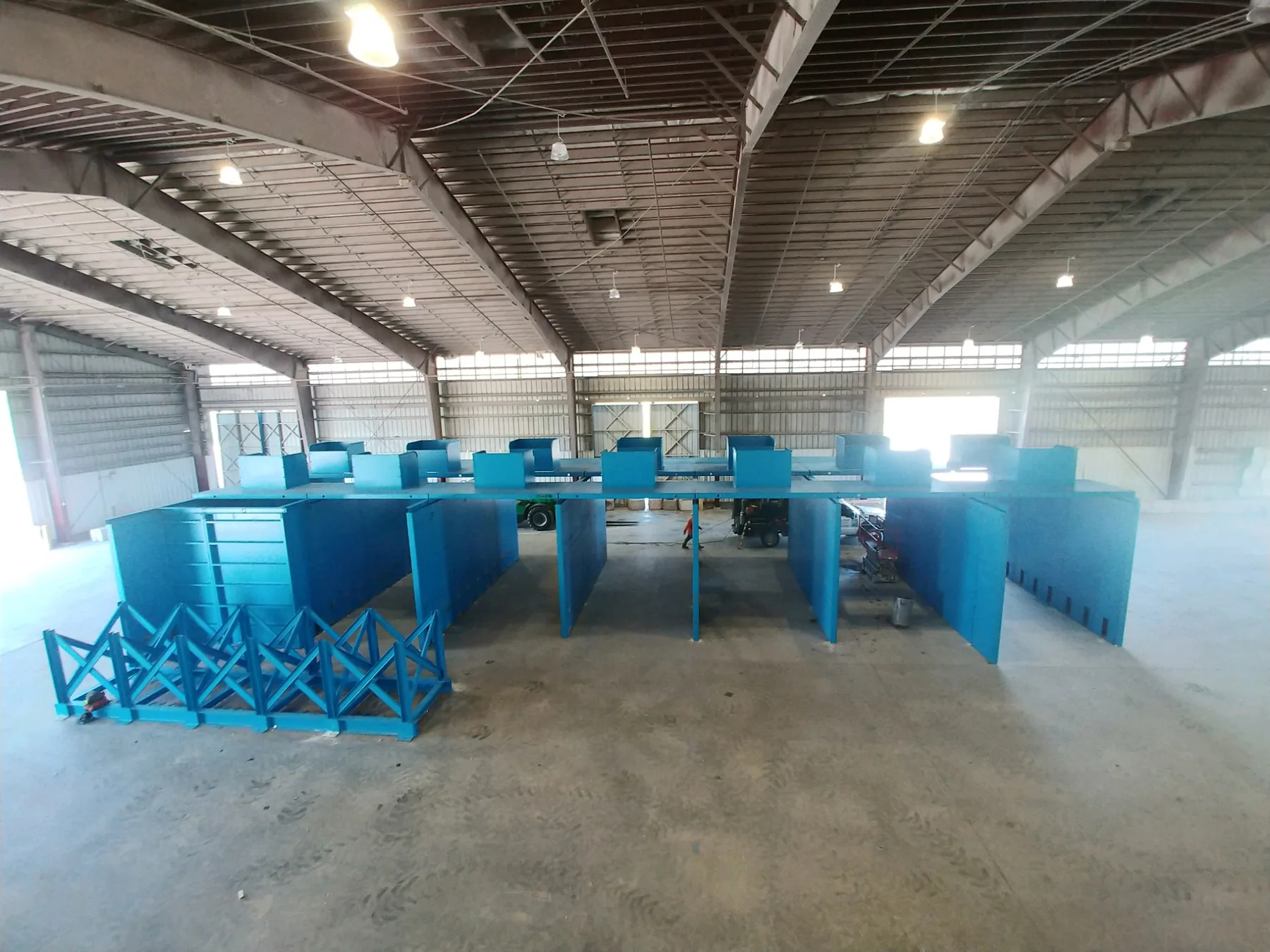
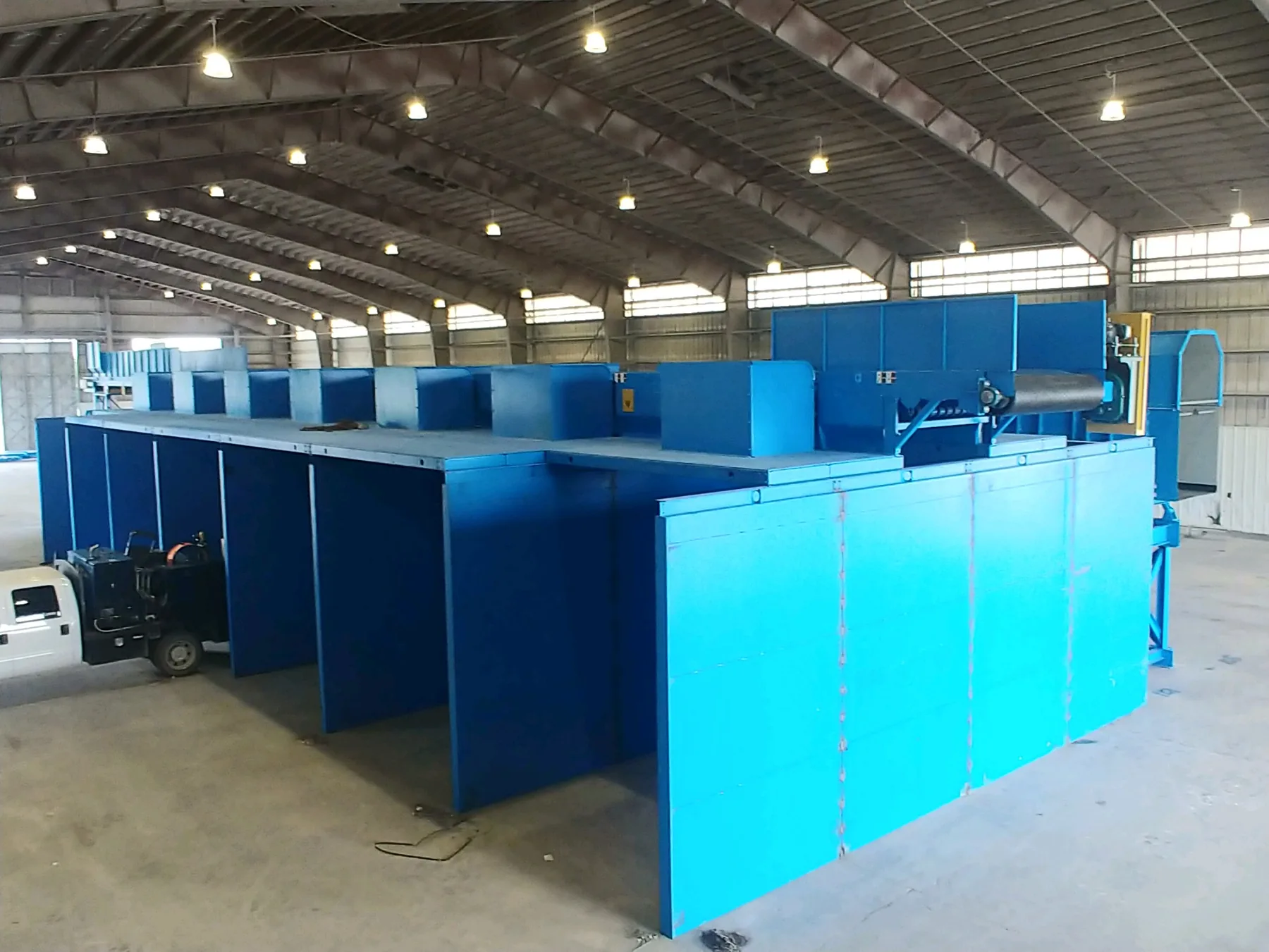
Sherbrooke OEM bunker walls are heavy steel push-wall systems for loader-managed storage of dense material. Walls are built from standard-width vertical sections; plate thickness is graded by height — thickest at the bottom where loader buckets and pile pressure hit, lighter above — over a structural channel and HSS tubing frame. Configurations run one- or two-sided, mechanically anchored to the slab or welded to building steel, with optional knee braces for extra stiffness. Layout, height, and length are engineered per kit from your floor plan, fabricated in Sherbrooke, Quebec.
Where It Fits
- Tipping floors and storage bays for C&D, scrap, and aggregate handled by loader
- Dividing walls separating fractions on a shared floor
- Protecting building walls and columns from pile pressure and bucket strikes
C&D Recycling · Scrap Metal Recycling · MSW Sorting · Aggregates & Custom
Configuration & Options
Every unit is engineered per project — these are the configuration choices and options we quote against, not limits.
| Length & height | Per floor plan — quoted as repeatable kits |
|---|---|
| Sections | Standard vertical sections with a partial section to finish odd heights |
| Plating | Thickness graded by height — heaviest plate low (1/2 to 1/4 in class), lighter above (down to 1/8 in) |
| Configuration | One-sided or two-sided |
| Frame width | Structural channel — 6, 8, 10, or 12 in per load |
| Mounting | Mechanically anchored to concrete, or welded to existing steel |
| Knee braces | Optional diagonal HSS braces tied to the floor |
Construction
| Frame | Structural channel verticals with HSS tubing framing |
|---|---|
| Plating | Steel plate, bolted to the frame in graded thicknesses — replaceable section by section |
| Anchoring | Mechanical concrete anchors or welded connections to building steel |
| Bracing | Knee braces available with either mounting, for added stiffness |
Project Photos
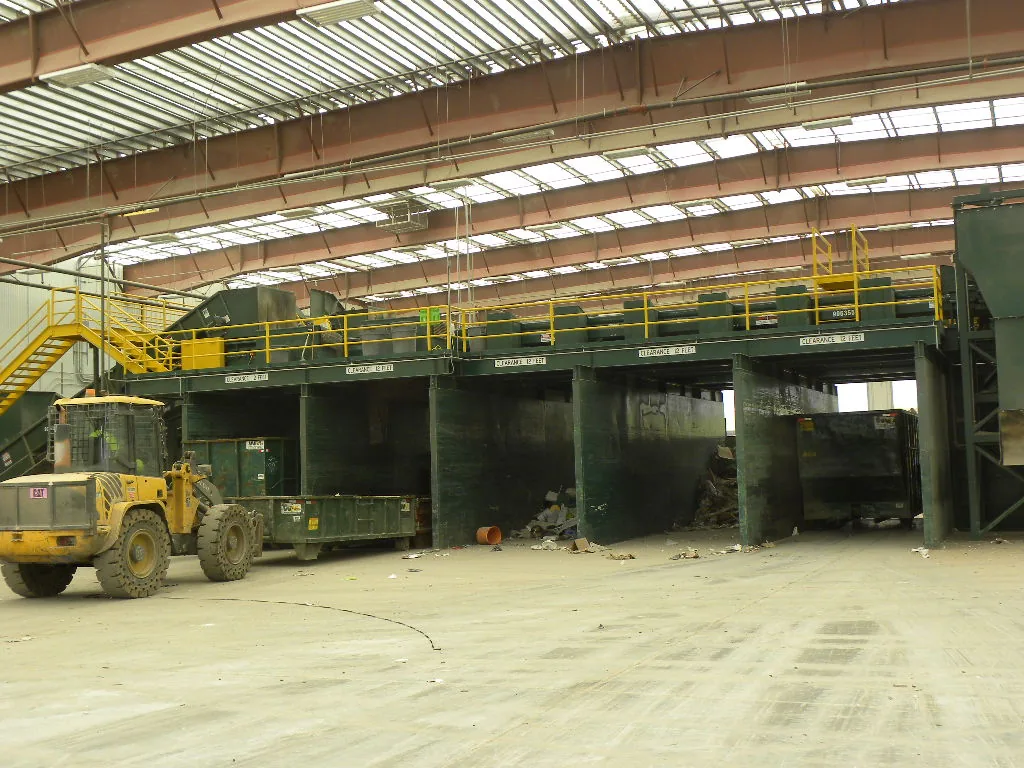
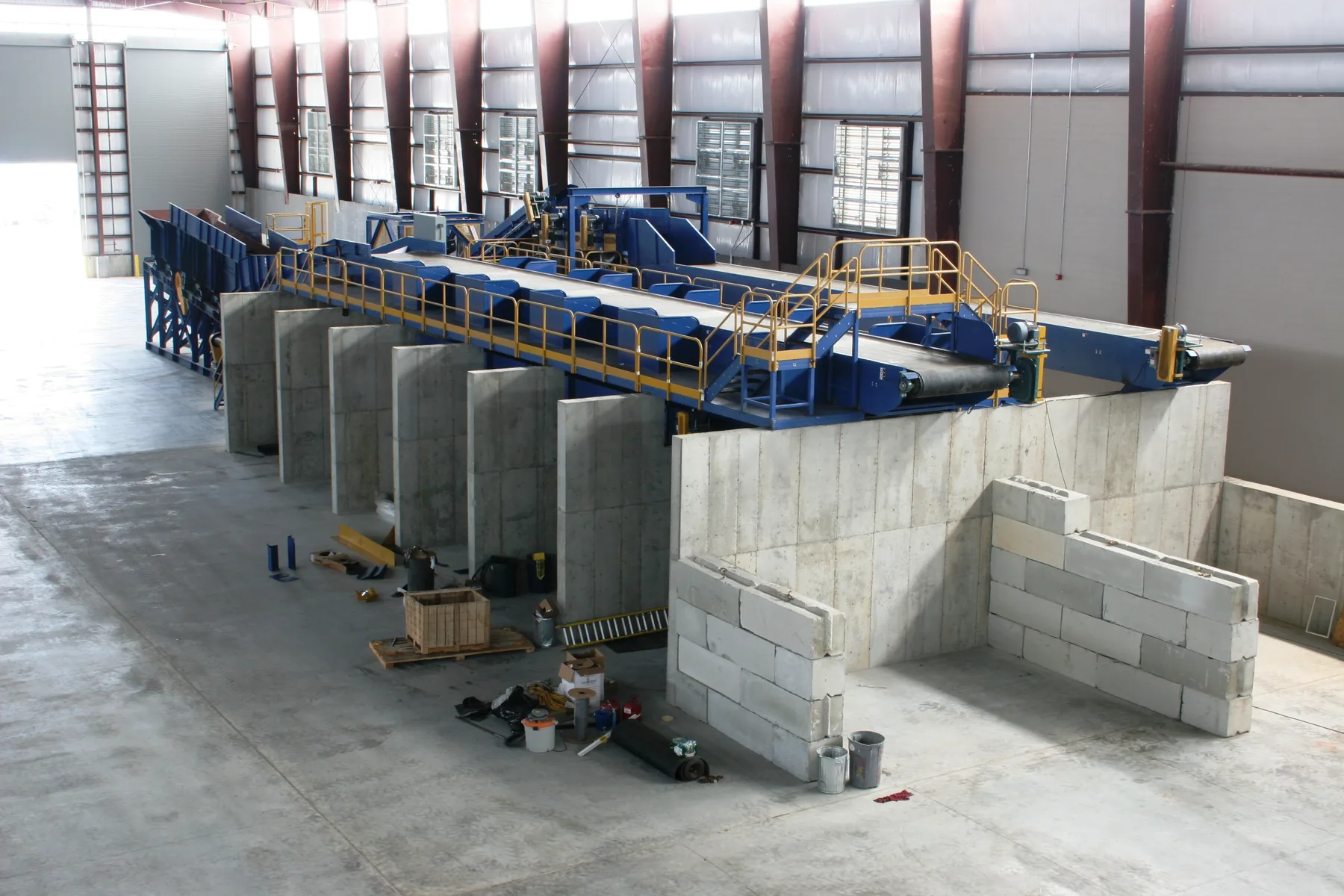
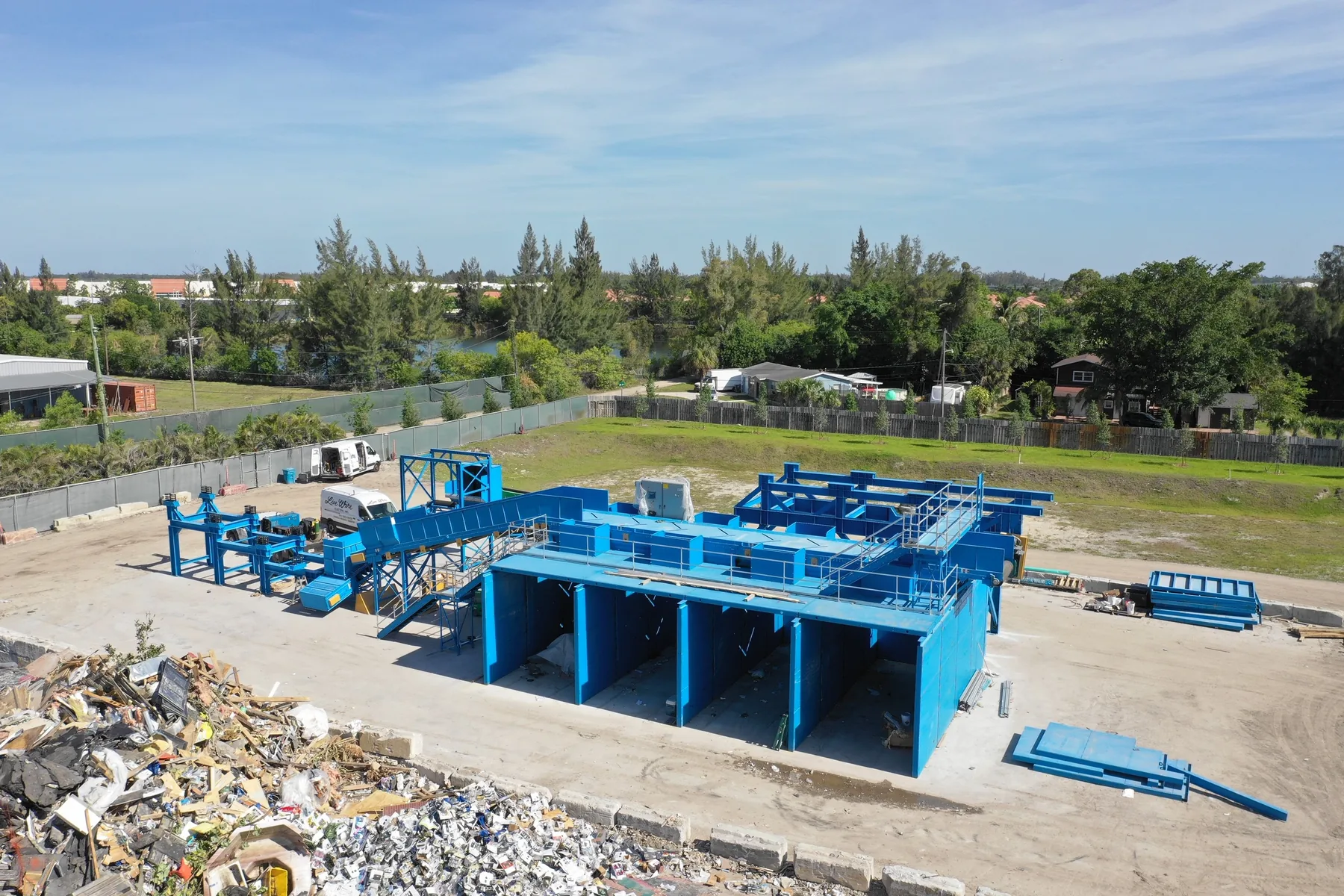
Bunker Walls units built and installed by Sherbrooke OEM on recycling and C&D lines across North America.
Bunker Walls — Frequently Asked Questions
Why is the plate thicker at the bottom of the wall?
Because that is where the work happens: pile pressure rises with depth and loader buckets strike low. Grading the plate — heaviest on the bottom sections, lighter above — puts the steel where the load is instead of paying for full-height heavy plate that the top of the wall never needs.
Anchored or welded — which mounting is right?
Anchored to the slab is the default: it installs on any sound concrete floor and can be relocated if the layout changes. Welded mounting ties into existing building steel where the slab cannot take anchors or the wall doubles as part of the structure. Knee braces can stiffen either.
What happens when a section wears through?
You replace that section’s plate, not the wall. The plating bolts to the frame in standard-width sections, so a worn or bucket-damaged panel comes off and a new one goes on — the frame itself is not the wear part.
Need dimensions, capacity, or a budget price?
Send your material profile and layout — engineering answers with real numbers, from the team that will fabricate it in Sherbrooke.
Talk to Engineering