

Bunkers & Storage · Built in-house
Gravity Bunker
Static storage with a controlled drop — a welded, plated bay holding a sorted fraction until the actuated door lets it go.
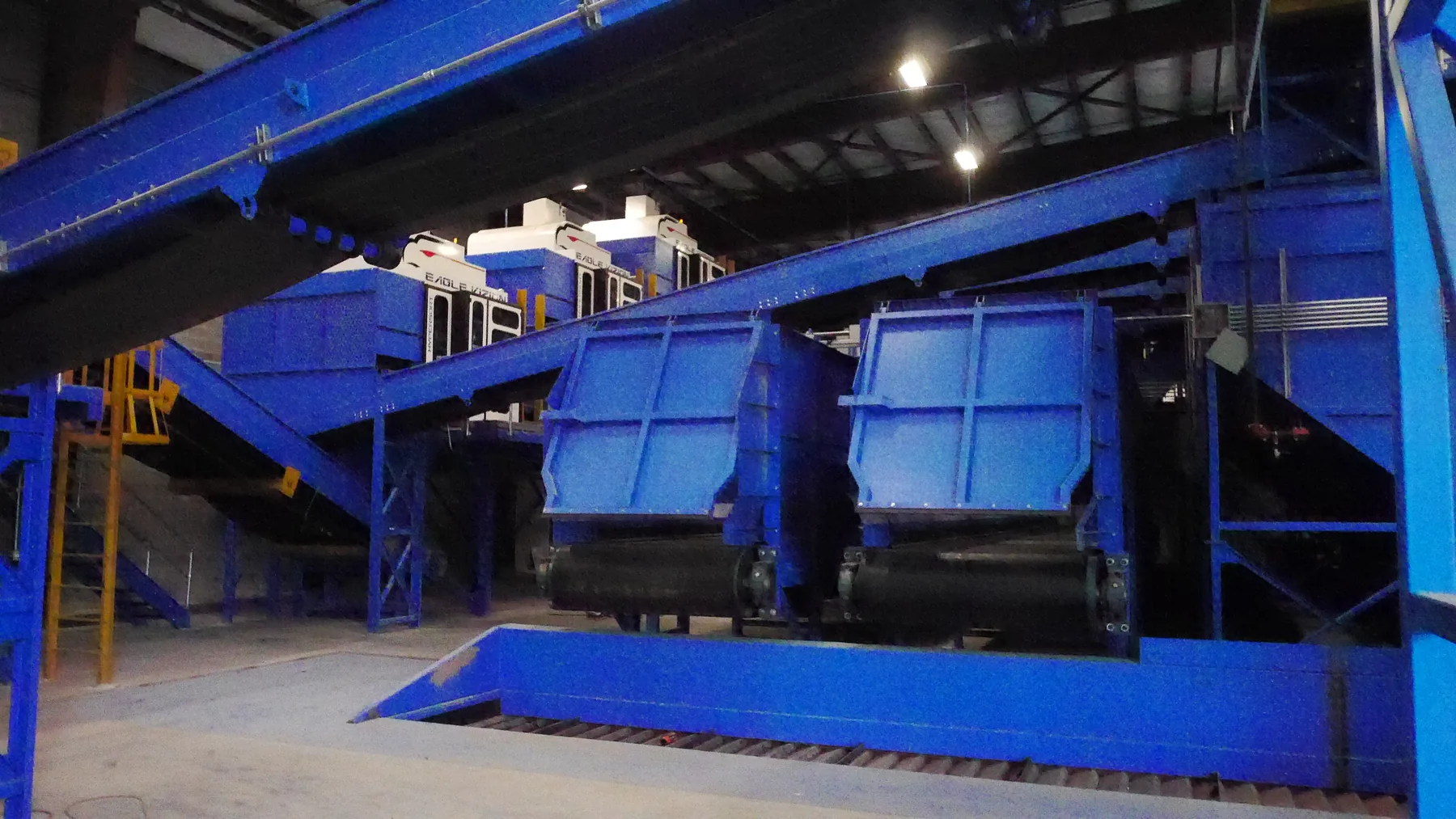
The Sherbrooke OEM gravity bunker is a static storage bay in welded, plated HSS square-tube framing, holding a sorted fraction above the reclaim point until an electrically actuated hinged door discharges it. With no moving floor it is the simple, economical buffer for free-flowing fractions, sized by volume per project — engineering default on the order of 1,250 cubic feet — and fabricated in Sherbrooke, Quebec.
Where It Fits
- Buffering free-flowing sorted fractions — containers, aggregates, glass — above reclaim conveyors
- Commercial (ICI) and MRF layouts where simplicity and cost beat metered discharge
- Positions where the fraction flows on its own and bridging is not a risk
Configuration & Options
Every unit is engineered per project — these are the configuration choices and options we quote against, not limits.
| Volume | Per project; engineering default on the order of 1,250 cu ft |
|---|---|
| Door | Hinged HSS-framed door, electric actuator |
| Discharge | Gravity, to reclaim conveyor or floor |
| Layout | Single bays or banked rows over a shared reclaim conveyor |
Construction
| Frame | HSS square tubing, welded and plated |
|---|---|
| Door | Hinged — HSS square-tube frame, plated |
| Door mechanism | Electric actuator |
| Supports | Bolted structural steel members, braced and mechanically anchored |
Project Photos
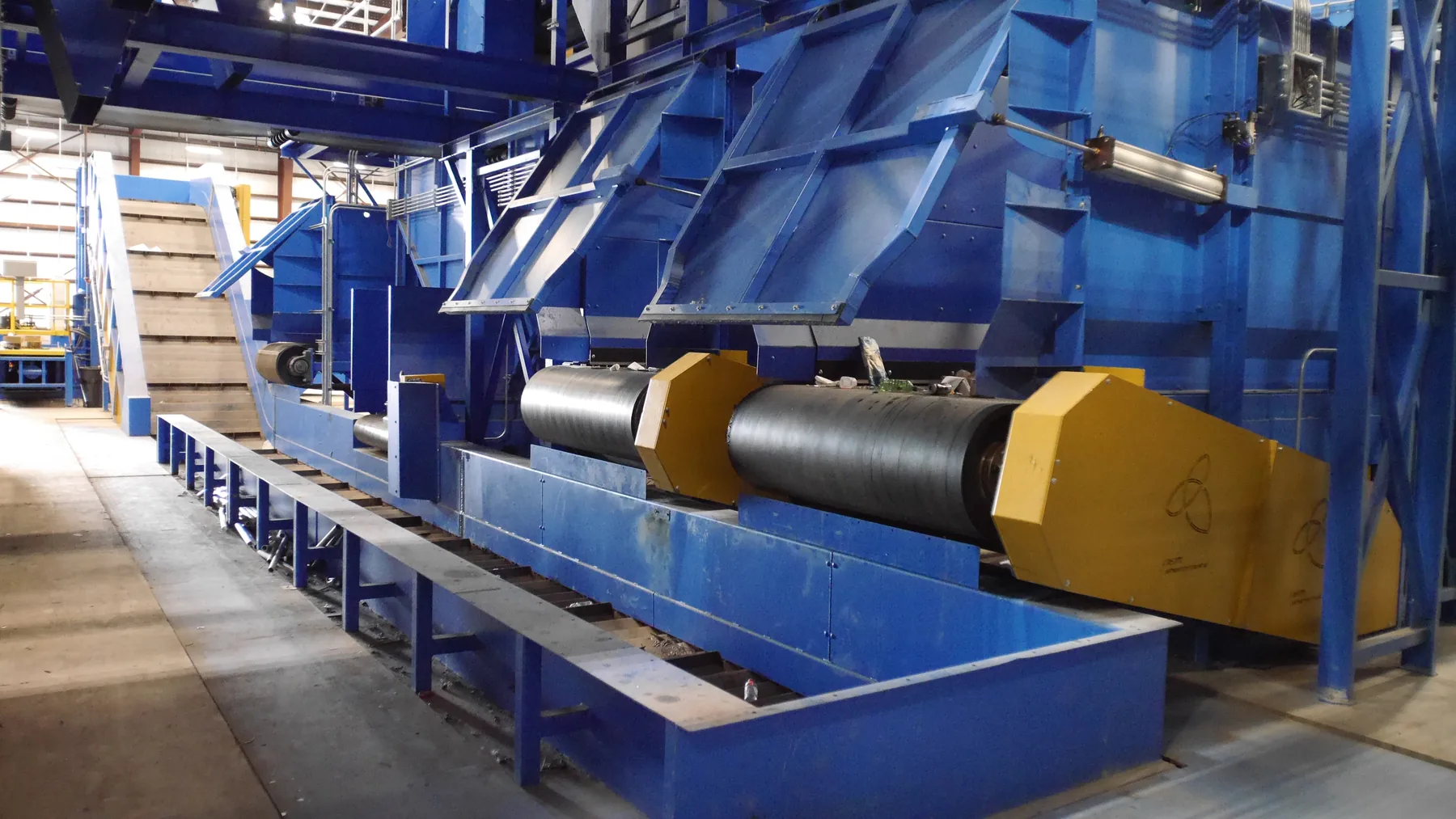
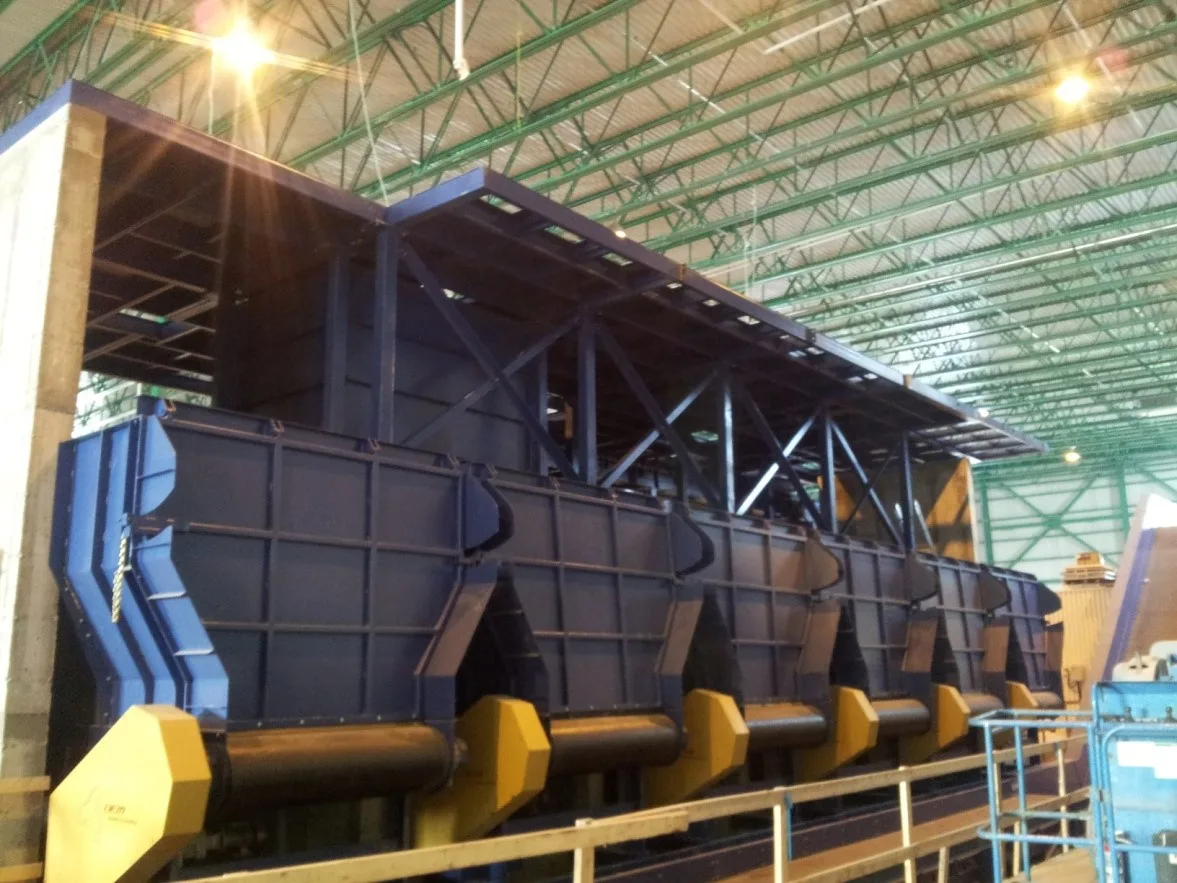
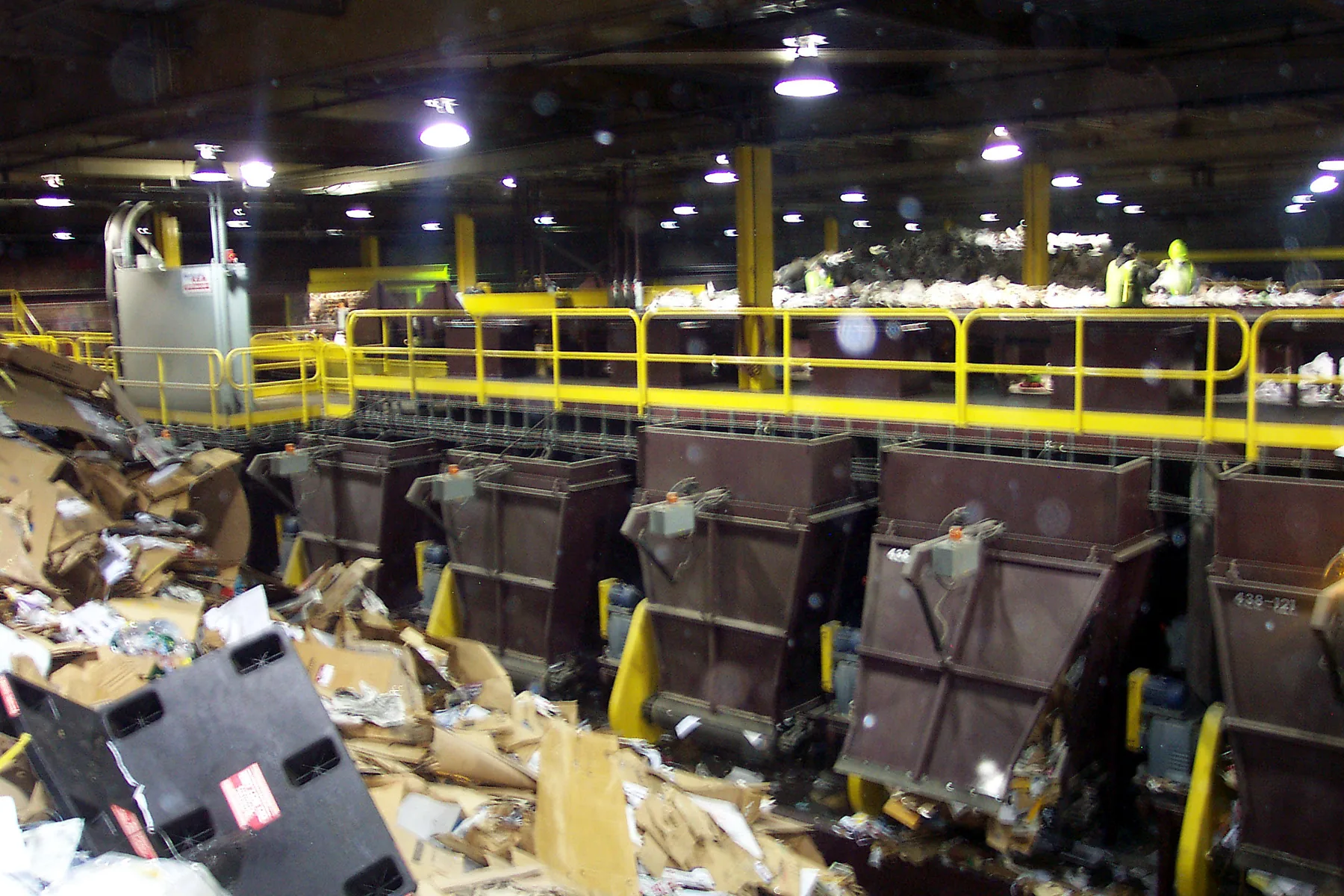
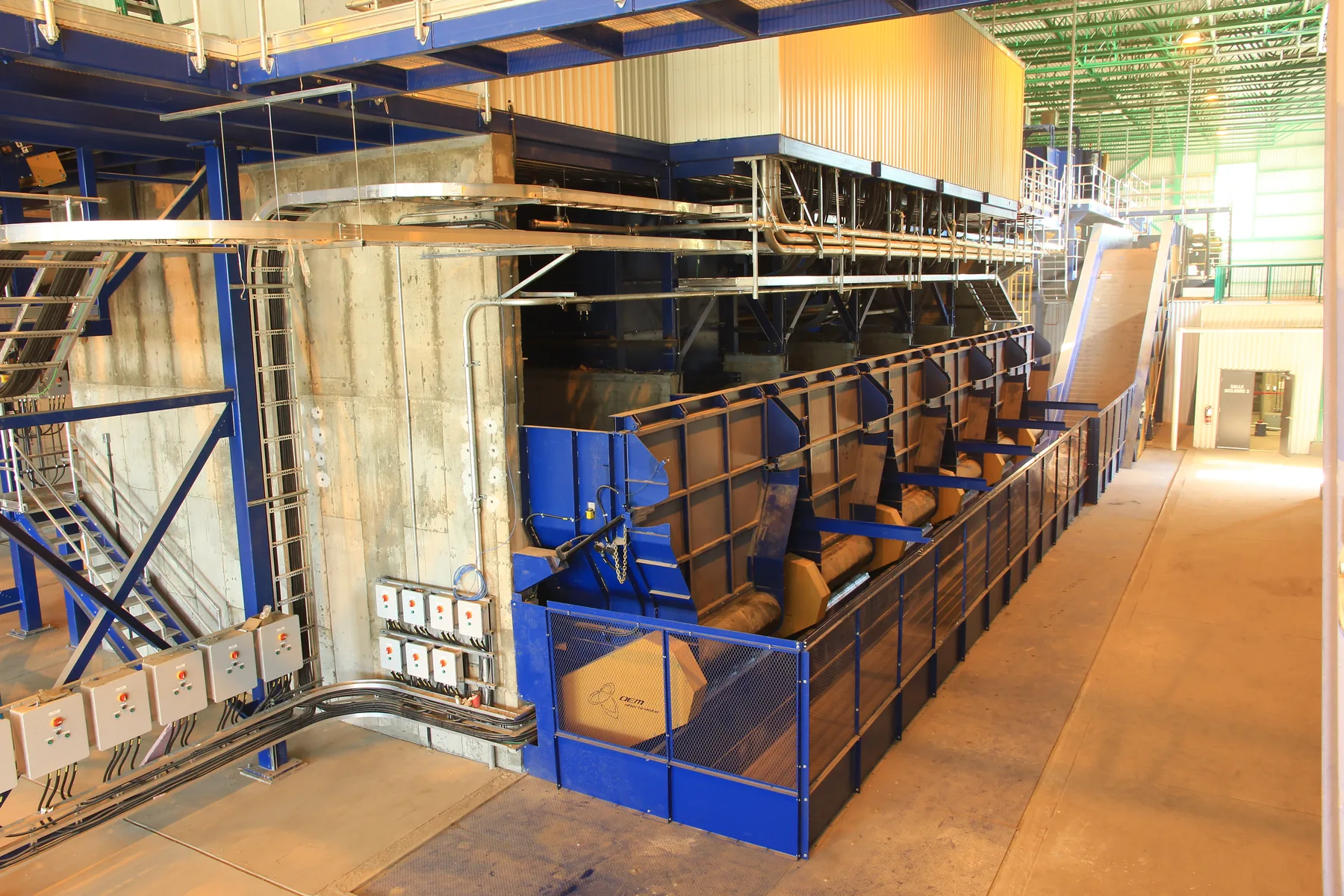
Gravity Bunker units built and installed by Sherbrooke OEM on recycling and C&D lines across North America.
Gravity Bunker — Frequently Asked Questions
Gravity bunker or live bottom — how do you choose?
By how the fraction flows. Dense, free-flowing products — containers, glass, aggregate — drop cleanly from a gravity bay, so the moving floor would be paying for a problem you do not have. Light, compressible, bridging-prone fractions need the live bottom. The flowsheet decides, bay by bay.
Can gravity bunkers be banked over one conveyor?
Yes — rows of bays over a shared reclaim conveyor are the classic arrangement: each door is opened from controls, releasing one fraction at a time onto the belt below, typically toward the baler.
What is the door actually doing structurally?
Holding back the live load of the stored pile — which is why it is a plated HSS frame on hinges with a positive electric actuator, not a flap. Door geometry and actuator sizing are engineered from the stored density and head height.
Need dimensions, capacity, or a budget price?
Send your material profile and layout — engineering answers with real numbers, from the team that will fabricate it in Sherbrooke.
Talk to Engineering