


Screens · Built in-house
OCC Screen
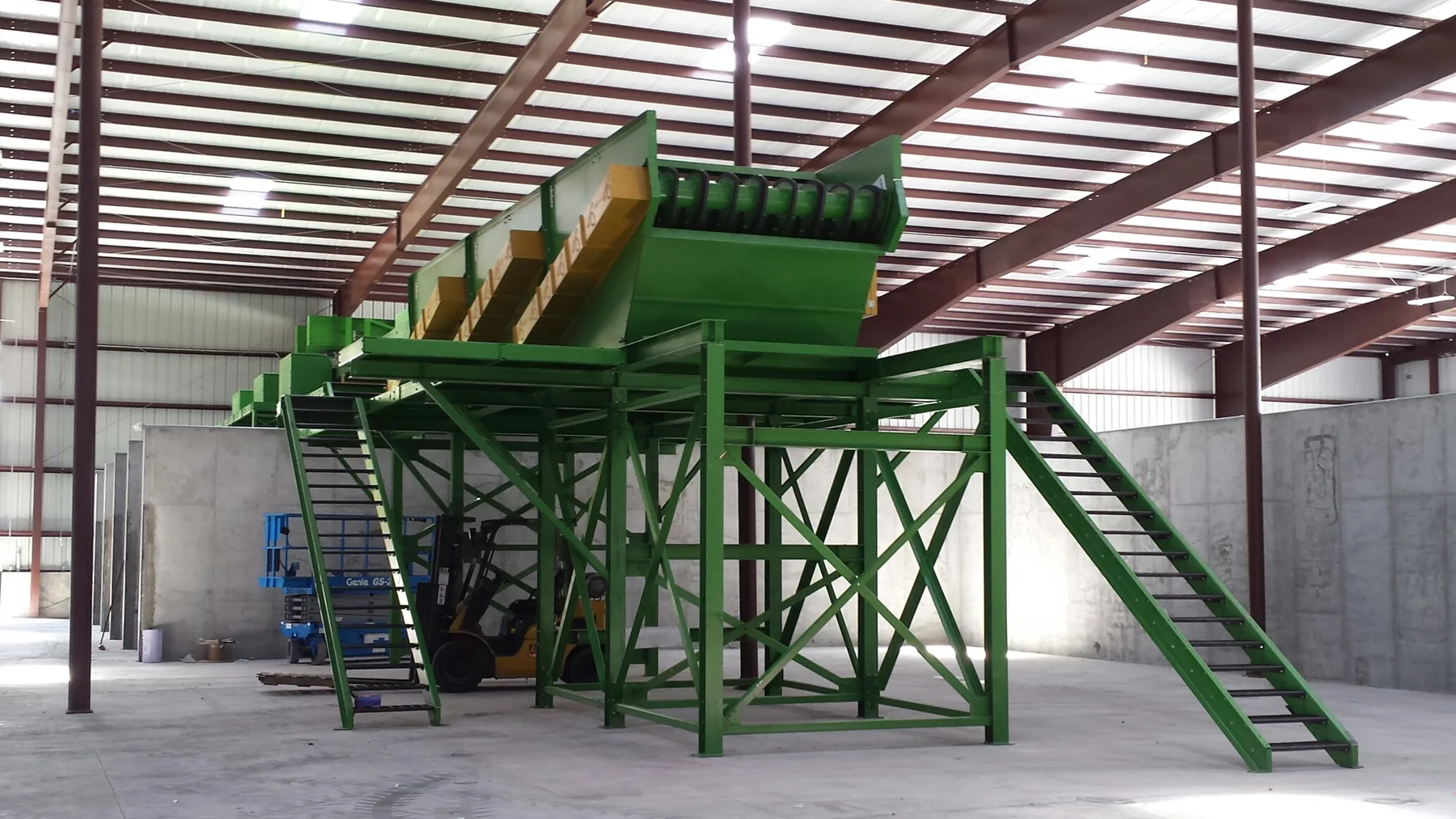
The disc screen at the front of the MRF that floats large cardboard up and out — the first product off a single-stream line.
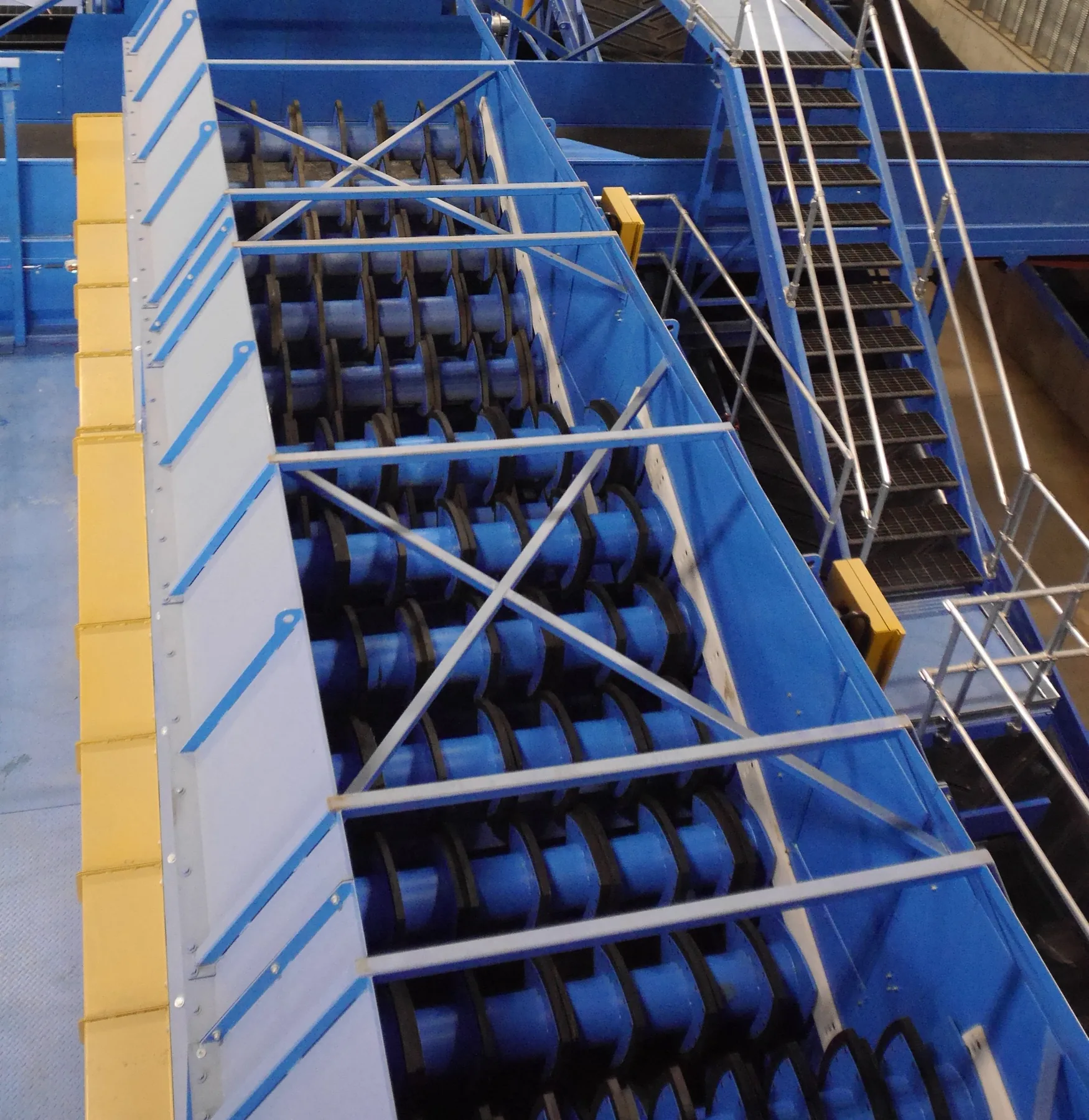
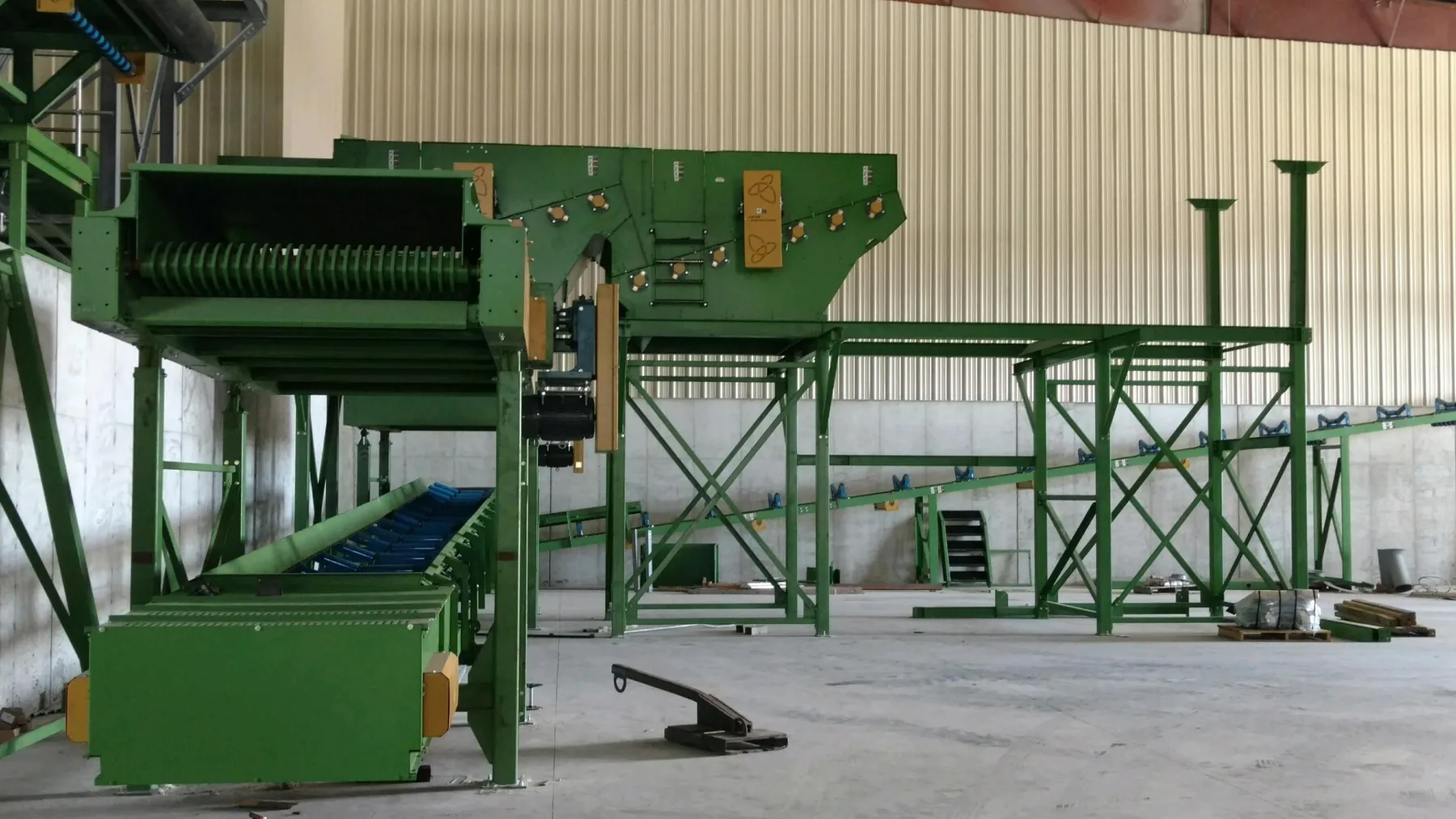
The Sherbrooke OEM OCC screen is a disc screen — single, dual, or triple deck per throughput and application — that lifts old corrugated containers (OCC) out of commingled recyclables at the front of the MRF. Rotating disc shafts walk large, flat cardboard up the deck while containers and smaller fiber fall through. Disc spacing is set to the stream: the early shafts, or the whole first deck, can run tighter to catch the smaller OCC that e-commerce now adds, before it slips through and contaminates the fiber and container lines. Shaft speed is VFD-adjustable around a 70 RPM engineering default; width is commonly around 96 in. The main frame is C-channel with bolted cross members, with chutes and sidewalls in formed steel plate. Engineered per project and fabricated in Sherbrooke, Quebec.
Where It Fits
- First sorting position on single-stream lines — pulling OCC before the fiber/container split
- Commercial (ICI) lines with high cardboard content
- Ahead of ONP screens and optical sorters that need the big flats gone
Configuration & Options
Every unit is engineered per project — these are the configuration choices and options we quote against, not limits.
| Decks | Single, dual, or triple deck — per throughput and application |
|---|---|
| Width | Commonly around 96 in |
| Length | Per project |
| Disc spacing | Engineered per stream — tighter on the early shafts, or the full first deck, to capture the smaller OCC that e-commerce now adds |
| Speed | VFD-adjustable; engineering default around 70 RPM |
| Wear plate | Optional CHT liners on chutes |
Construction
| Frame | C-channel main frame with bolted cross members |
|---|---|
| Chutes & sidewalls | Formed steel plate |
| Drive | Shaft-mount speed reducer (Dodge Torque-Arm II or equal); synchronous belt-and-sprocket shaft drive |
| Bearings | Piloted flange ball bearings (Dodge or equal) |
| Guarding | All rotating parts guarded to OSHA requirements |
| Supports | Bolted structural steel, braced and mechanically anchored |
Project Photos
OCC Screen units built and installed by Sherbrooke OEM on recycling and C&D lines across North America.
OCC Screen — Frequently Asked Questions
How does a disc screen separate cardboard from everything else?
By shape. Rotating discs form a moving deck that large, flat, stiff sheets ride up and over, while three-dimensional containers tumble backward and smaller pieces fall between the discs. Big cardboard exits the top; everything else continues to the next split.
How many decks does an OCC screen need?
One, two, or three — set by throughput and application. More decks stage the openings so the screen pulls a cleaner OCC product at capacity, instead of forcing one deck to do all the work and letting containers ride over with the cardboard.
How do you keep small e-commerce cardboard out of the fiber and containers?
E-commerce has put far more small OCC into the stream, and a screen built for big flats lets those small pieces fall through and contaminate the fiber and container lines. The fix is disc spacing: running tighter spacing on the early shafts — or the entire first deck — lifts the smaller OCC up with the big cardboard instead of dropping it. It is a per-stream configuration decision made when the screen is engineered.
What maintenance does an OCC screen need?
Disc and shaft wear inspection, drive belt checks, and keeping the decks clear of wrap. The bolted cross-member frame and formed-plate sidewalls are designed for access, and disc shafts are individually replaceable.
Need dimensions, capacity, or a budget price?
Send your material profile and layout — engineering answers with real numbers, from the team that will fabricate it in Sherbrooke.
Talk to Engineering