


Screens · Built in-house
ONP Screen
The fiber screen that splits paper from containers by shape — flat rides up, round rolls back.
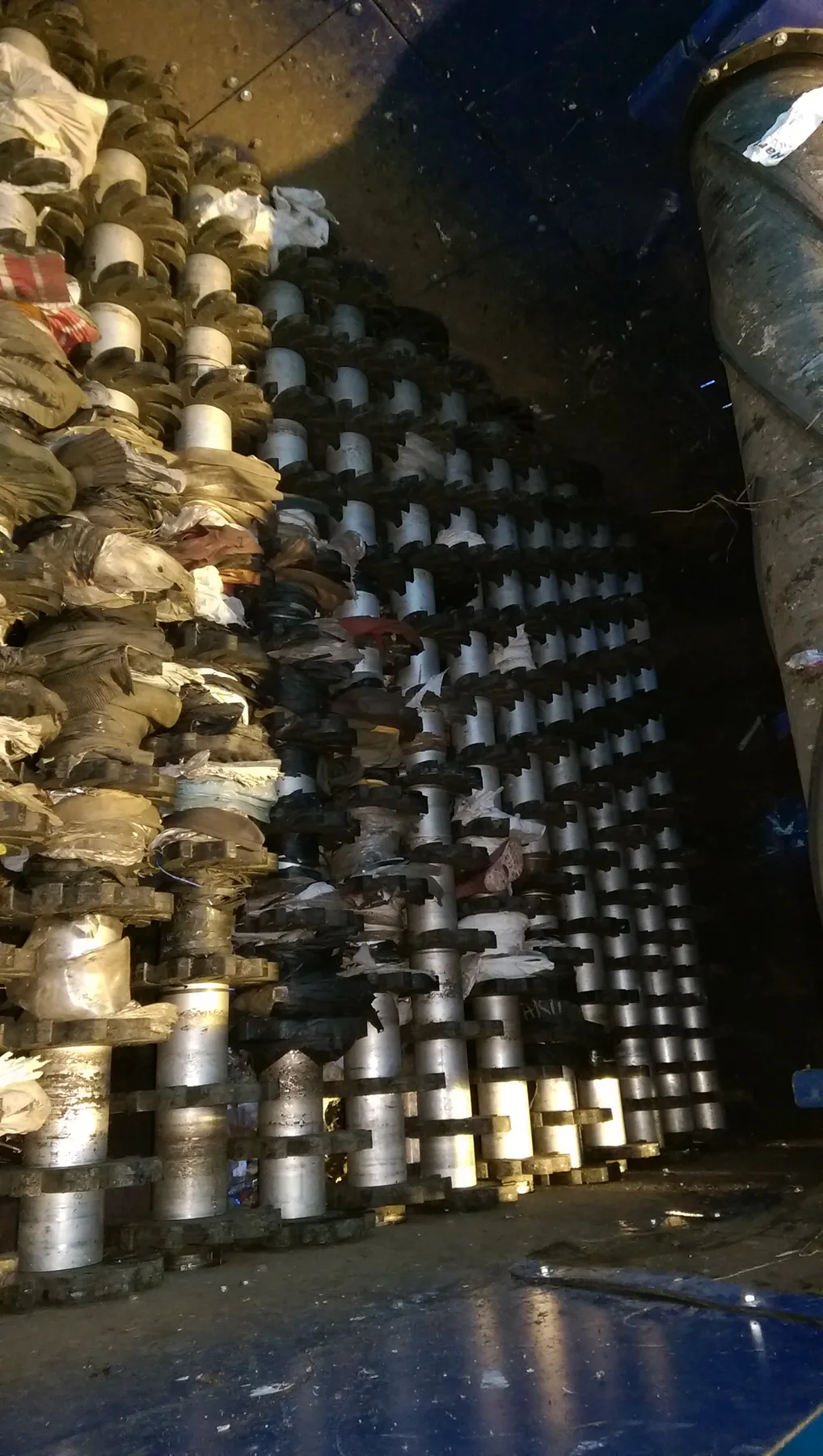
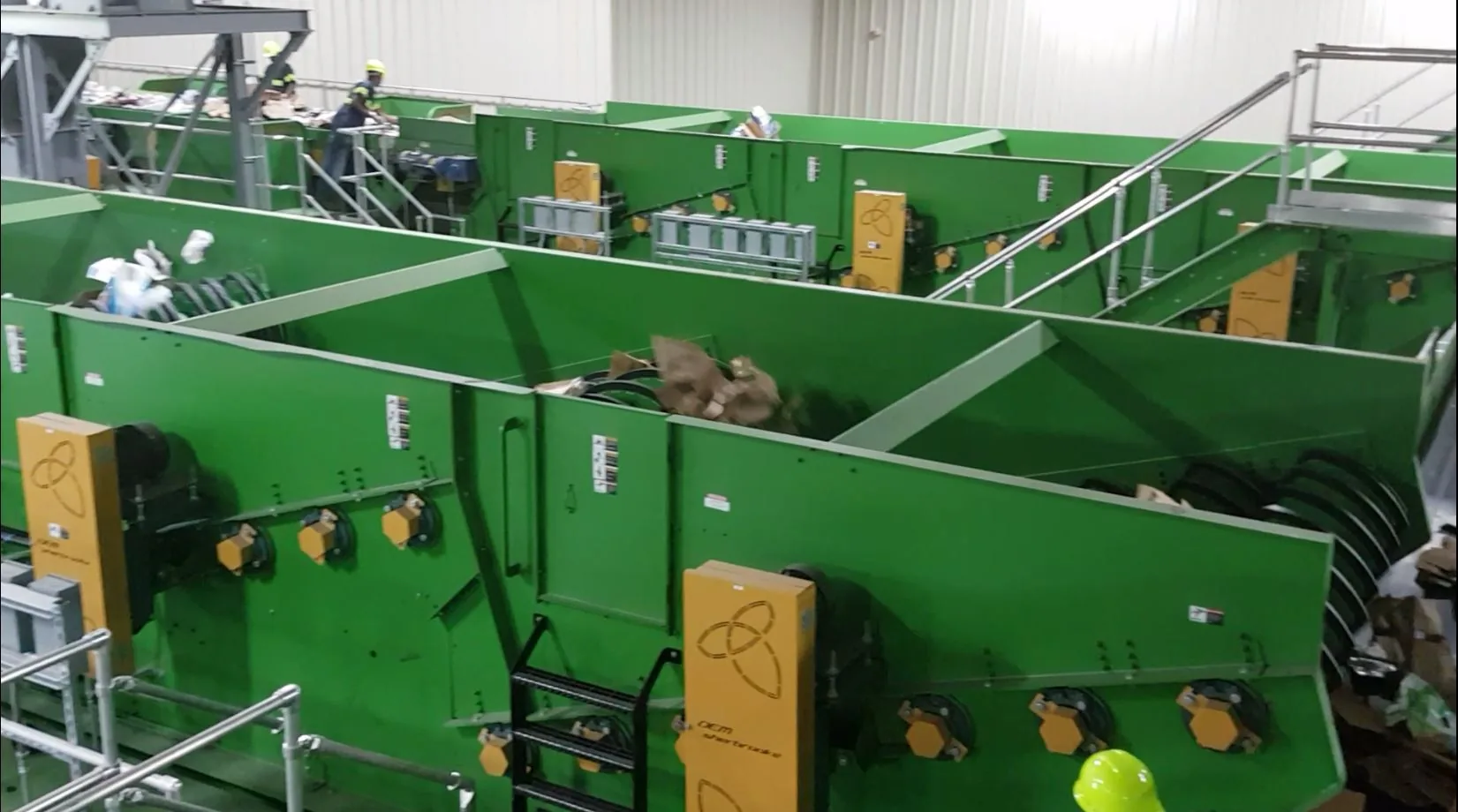
The Sherbrooke OEM ONP screen is an inclined disc screen that separates newspaper and mixed paper from containers on single-stream lines. The rotating disc decks walk two-dimensional fiber up and over while three-dimensional containers tumble back down the incline, producing the fiber/container split at the heart of the MRF. An adjustable air knife assists the split in the drop — making the initial fiber/container separation in mid-air, which sharpens the cut and raises throughput considerably. Disc profile, spacing, deck angle, and VFD-controlled shaft speed are engineered per project. Frame construction follows the same machined, bolted disc-screen platform as our OCC and glass breaker screens, fabricated in Sherbrooke, Quebec.
Where It Fits
- The fiber/container split on single-stream MRFs, after OCC removal and glass breaking
- Polishing screens producing a cleaner news/mixed-paper product ahead of manual or optical QC
- MSW lines recovering a saleable fiber fraction
Configuration & Options
Every unit is engineered per project — these are the configuration choices and options we quote against, not limits.
| Decks | Single deck — a second machine is added for higher throughput rather than stacking decks |
|---|---|
| Width | Per throughput |
| Air knife | Adjustable air assist that makes the initial fiber/container split in the drop (mid-air), lifting efficiency and throughput |
| Deck angle | Adjustable and self-leveling — an angle sensor auto-adjusts and holds the set angle via hydraulic cylinders on each side; steeper sharpens the 2D/3D split |
| Disc profile & spacing | Selected per fiber mix and cut |
| Speed | VFD-adjustable shaft speed |
| Wear plate | Optional CHT liners on chutes |
Construction
| Frame | Machined, bolted channel stringer for high-precision shaft mounting |
|---|---|
| Sidewalls & chutes | Formed steel plate, removable for access |
| Drive | Shaft-mount speed reducer with synchronous belt-and-sprocket shaft drive |
| Bearings | Flange bearings (Dodge or equal) |
| Guarding | All rotating parts guarded to OSHA requirements |
| Supports | Bolted structural steel, braced and mechanically anchored |
Project Photos
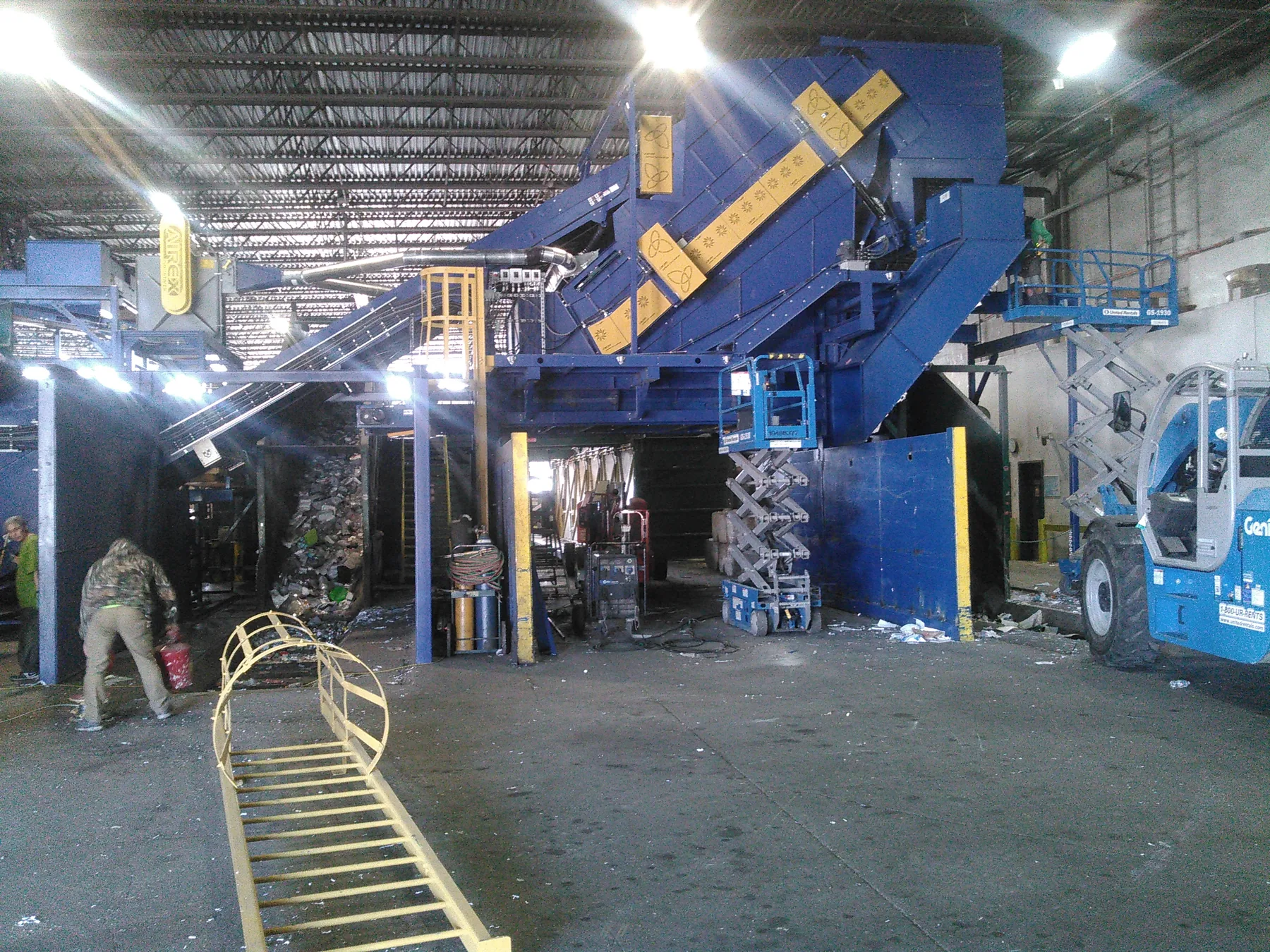
ONP Screen units built and installed by Sherbrooke OEM on recycling and C&D lines across North America.
ONP Screen — Frequently Asked Questions
What is the difference between an OCC screen and an ONP screen?
Both are disc screens separating by shape, but they target different products. The OCC screen sits first and pulls only large cardboard with wide openings; the ONP screen runs downstream with a finer disc pitch, splitting the remaining stream into fiber over the top and containers off the back.
How does the air knife improve the ONP screen?
An adjustable air knife makes a first fiber/container split in the drop — separating light, flat paper from heavier containers in mid-air before the material lands on the discs. That pre-split means the disc deck does less work, which sharpens the cut and raises throughput considerably.
How do you keep containers out of the paper?
Deck angle, disc speed, and burden depth are the levers. A steeper deck and the right speed make three-dimensional items tumble back reliably; even feeding from the metering equipment upstream keeps the burden thin enough for the screen to see every piece. That is why the feeder and the screen are engineered together.
Can the screen adapt as the fiber mix changes?
Within a design, shaft speed is VFD-adjustable and discs are replaceable with different profiles and spacing. As newspaper keeps declining in the stream, that adjustability is what keeps the split sharp.
Need dimensions, capacity, or a budget price?
Send your material profile and layout — engineering answers with real numbers, from the team that will fabricate it in Sherbrooke.
Talk to Engineering