


Structure & Platforms · Built in-house
Staircases & Ladders
Code-compliant access to every level of the plant — formed steel stringers, open-mesh treads, and speed-rail guarding, integrated with the layout.
Sherbrooke OEM staircases and ladders are the access structures tying the plant together — platform to platform, floor to equipment. Staircases are built on formed C-shape stringers (10 in x 1/4 in class) with bolted open-mesh steel treads (11 x 36 in class) and aluminum speed-rail handrails; ladders serve tight vertical access per code. Widths, rises, landings, and cage requirements are engineered with the platform layout and quoted per step, fabricated in Sherbrooke, Quebec.
Where It Fits
- Primary access to sorting platforms and picking boxes
- Maintenance access to screens, magnets, and drives at elevation
- Vertical ladder access where footprint rules out stairs
C&D Recycling · MSW Sorting · Single Stream MRF · Scrap Metal Recycling
Configuration & Options
Every unit is engineered per project — these are the configuration choices and options we quote against, not limits.
| Type | Staircase or ladder, per code and footprint |
|---|---|
| Width | Per code and traffic; engineering default around 36 in |
| Steps | Quoted per step; rises and landings per layout |
| Guarding | Handrails, mid-rails, and cages per applicable code |
| Integration | Tied to platforms and building steel per the structural design |
Construction
| Stringers | Formed C-shape members (10 in x 1/4 in class) |
|---|---|
| Treads | Bolted open-mesh steel treads (11 x 36 in class) — self-draining, slip-resistant |
| Handrail | Aluminum speed-rail system (Hollaender class) |
| Connections | Bolted to platforms and structure; anchored at grade |
| Finish | Shop-painted |
Project Photos
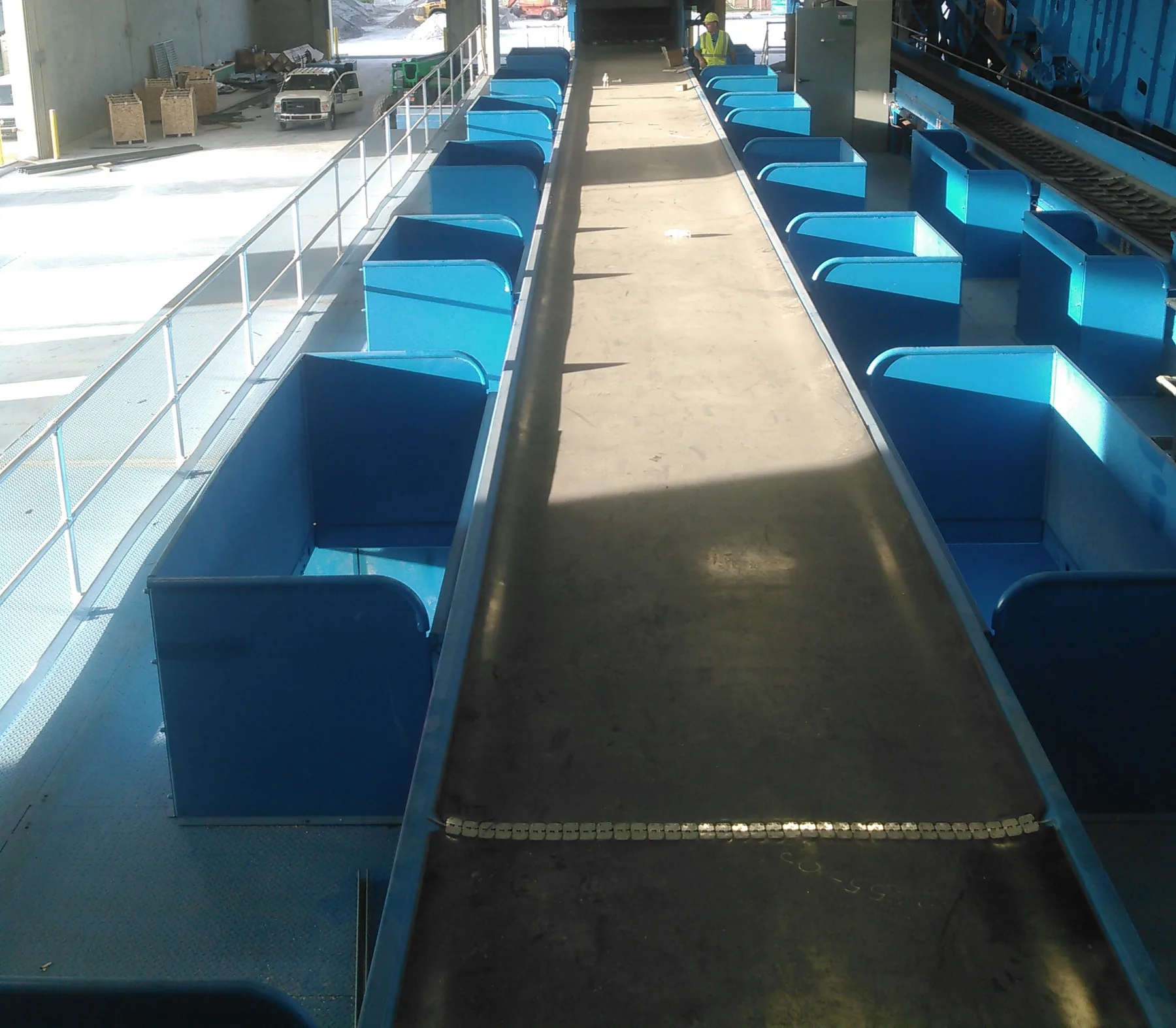
Staircases & Ladders units built and installed by Sherbrooke OEM on recycling and C&D lines across North America.
Staircases & Ladders — Frequently Asked Questions
Why open-mesh treads instead of solid plate?
Recycling plants shed dust, fines, and water onto every walking surface. Open mesh lets debris fall through instead of accumulating into a slip hazard, keeps traction in wet conditions, and the bolted treads are individually replaceable when one finally wears.
Stairs or ladder — who decides?
The code does, mostly: frequency of use, what gets carried, and available footprint determine where a staircase is required versus where a caged ladder is acceptable. We design access during platform layout so it is never an afterthought squeezed in around the steel.
Why aluminum handrail on a steel structure?
The speed-rail fitting system assembles without welding, stays corrosion-free in damp plant air, and individual rails replace quickly after impact damage — practical advantages over welded steel rail in this environment, while meeting the same guarding codes.
Need dimensions, capacity, or a budget price?
Send your material profile and layout — engineering answers with real numbers, from the team that will fabricate it in Sherbrooke.
Talk to Engineering