


Screens · Built in-house
Star Gear Screen
Rows of rotating star shafts that agitate, convey, and split the stream — high-capacity 2D/3D and size separation in a compact deck.
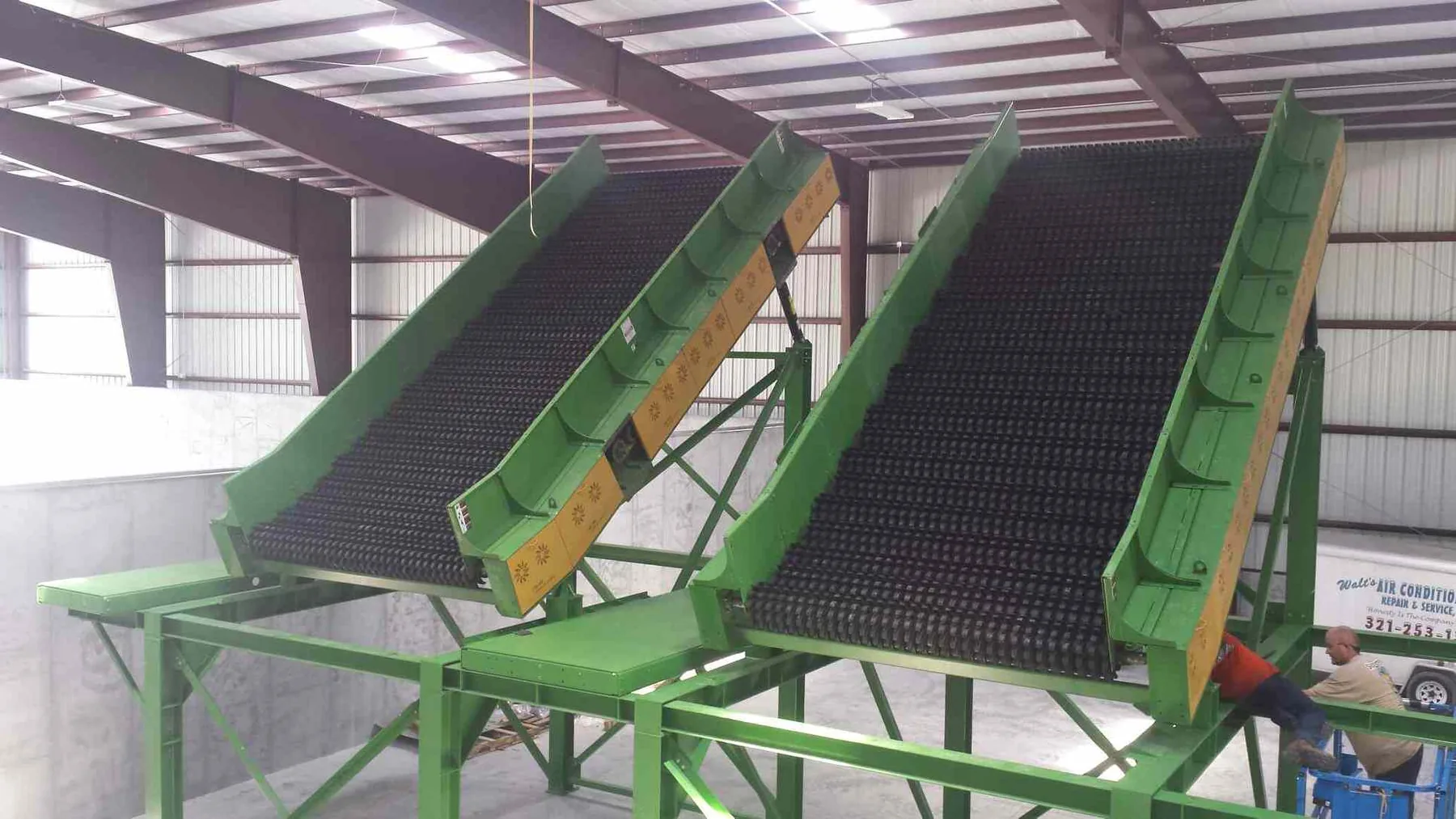
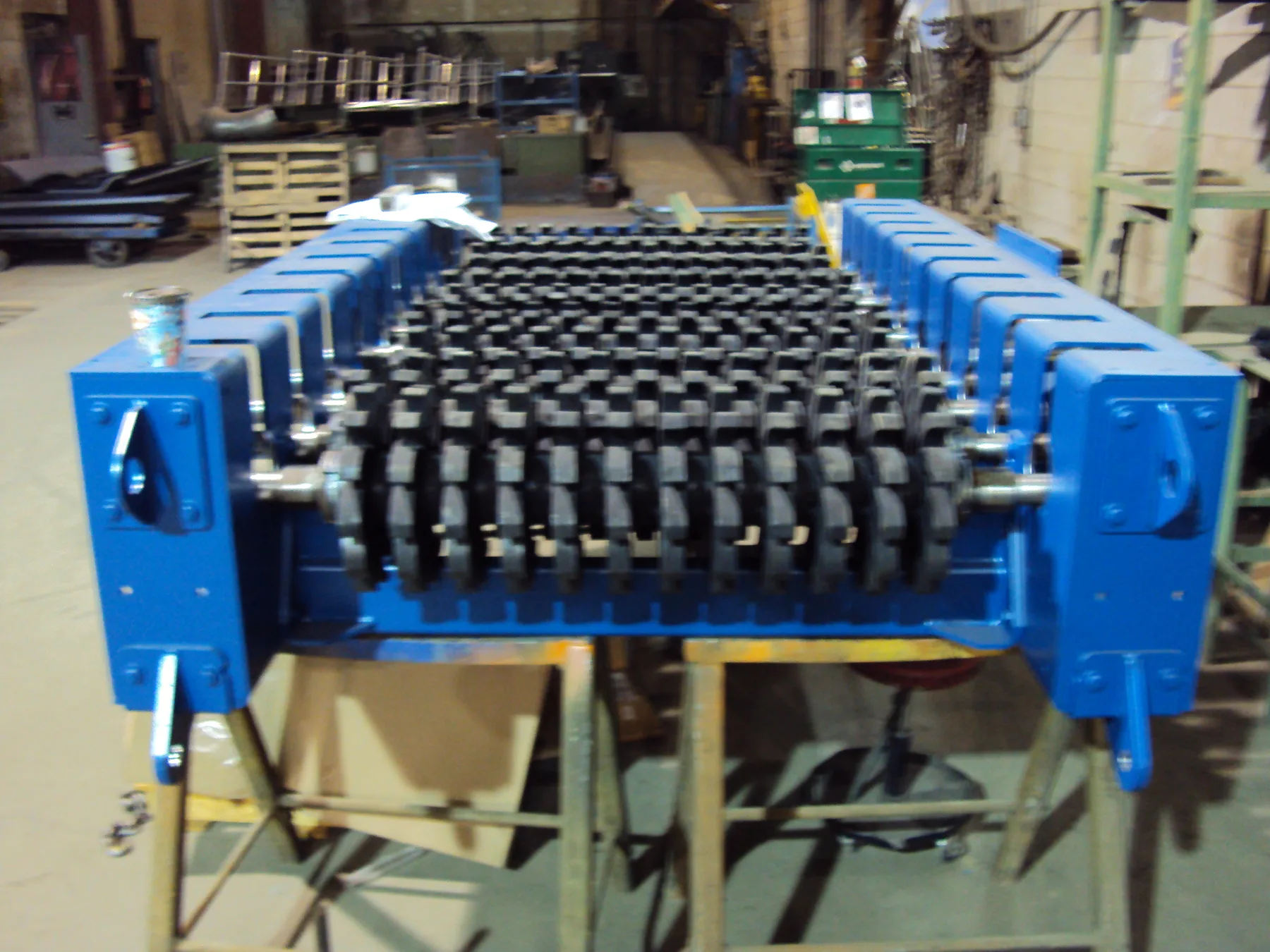
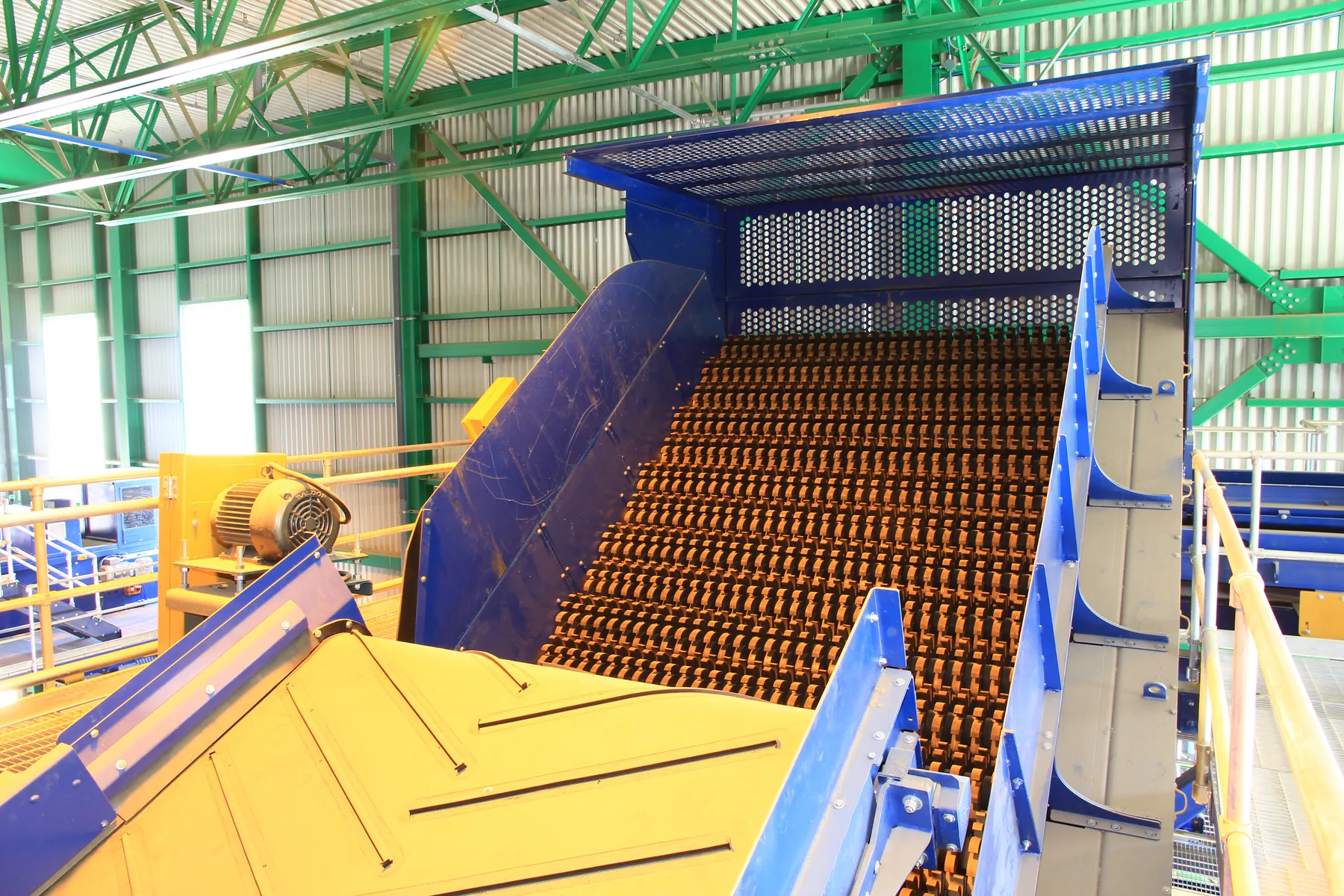
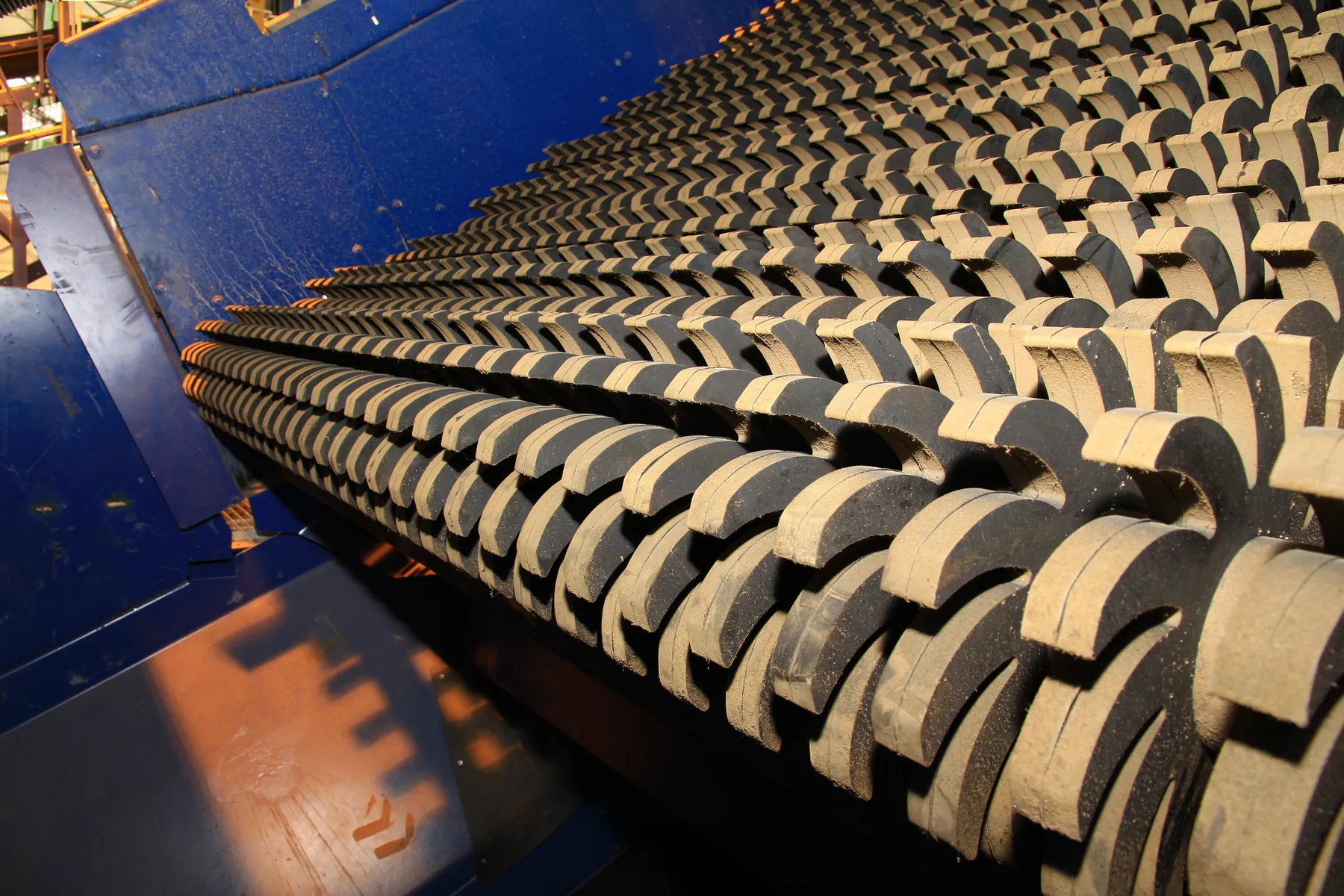
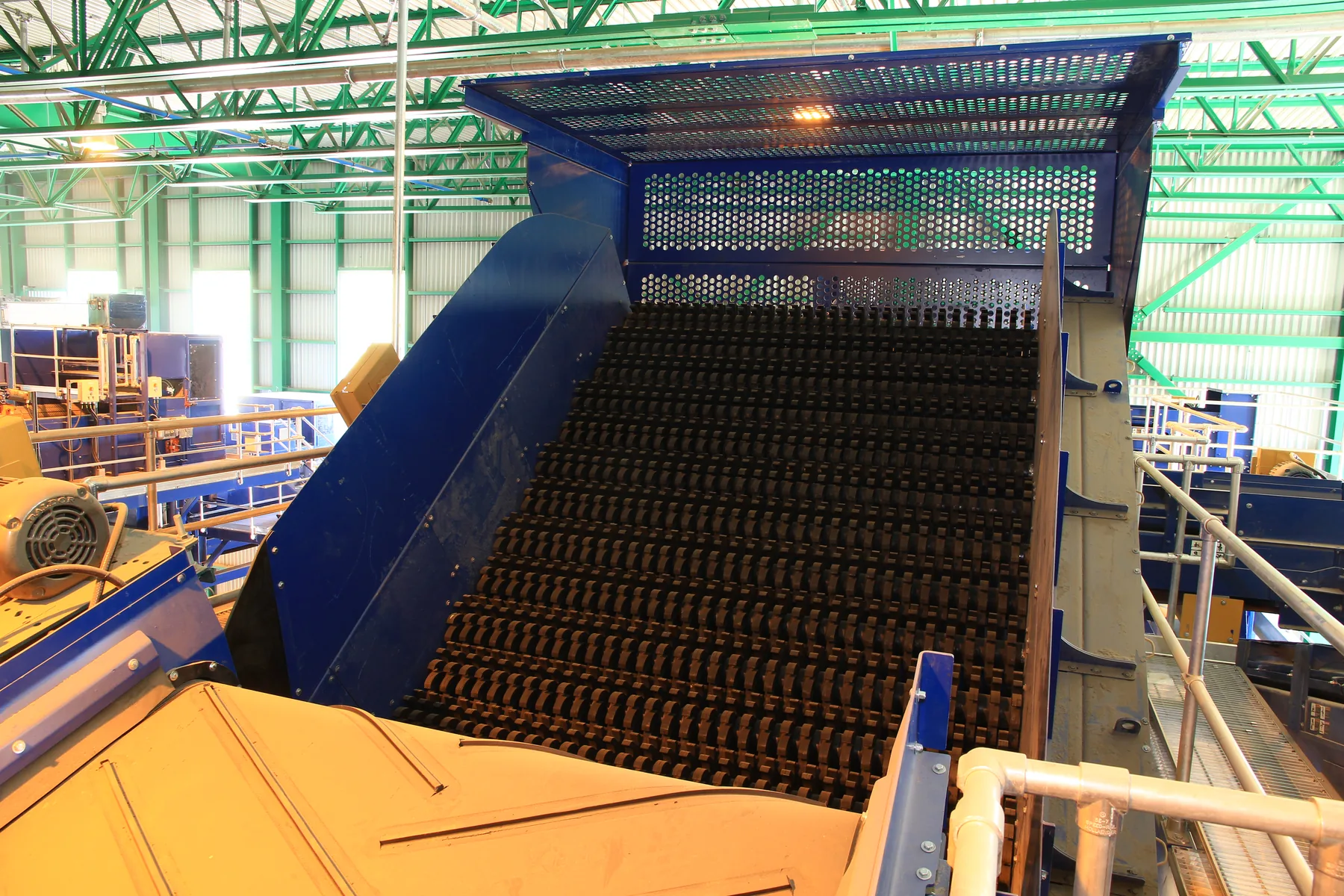
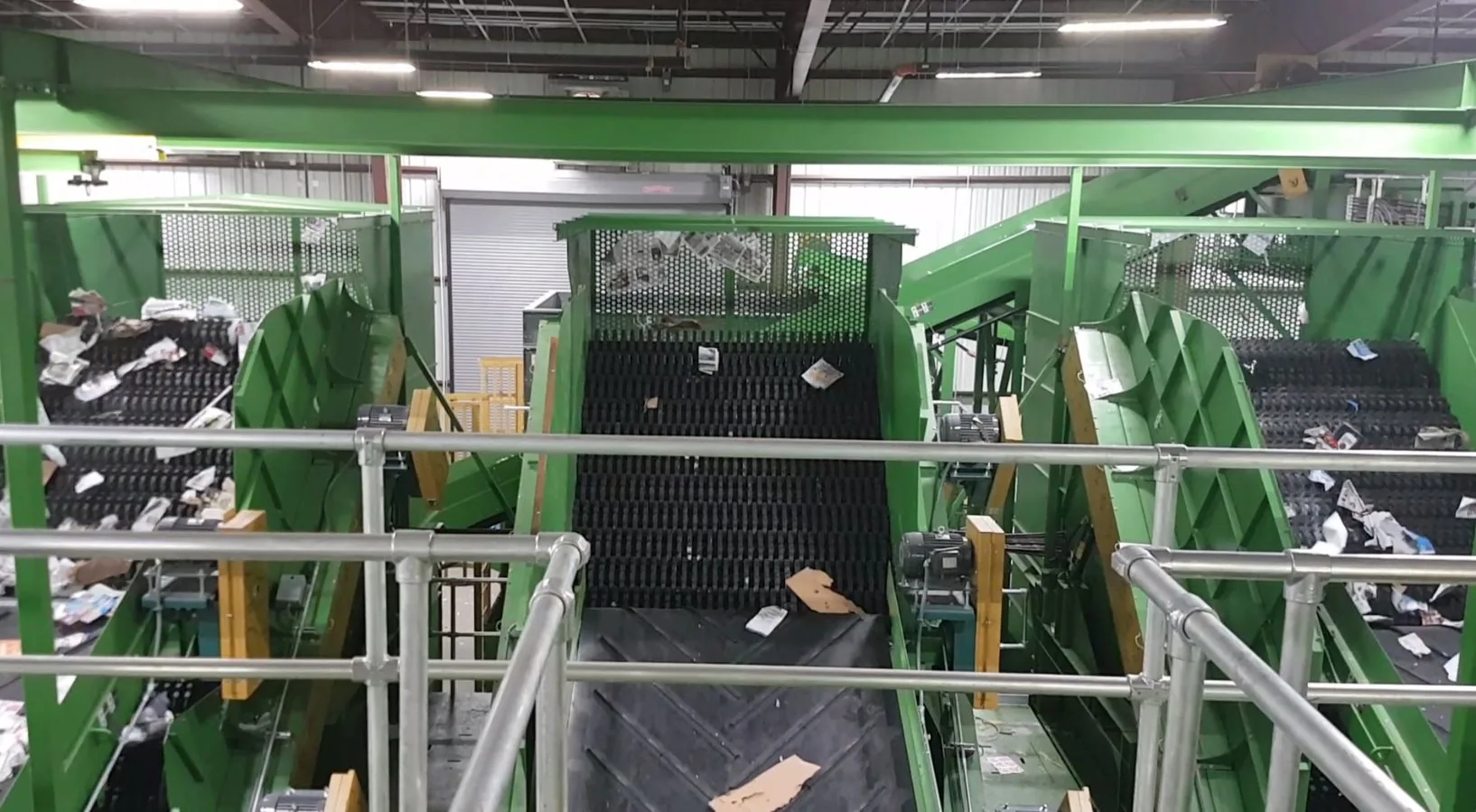
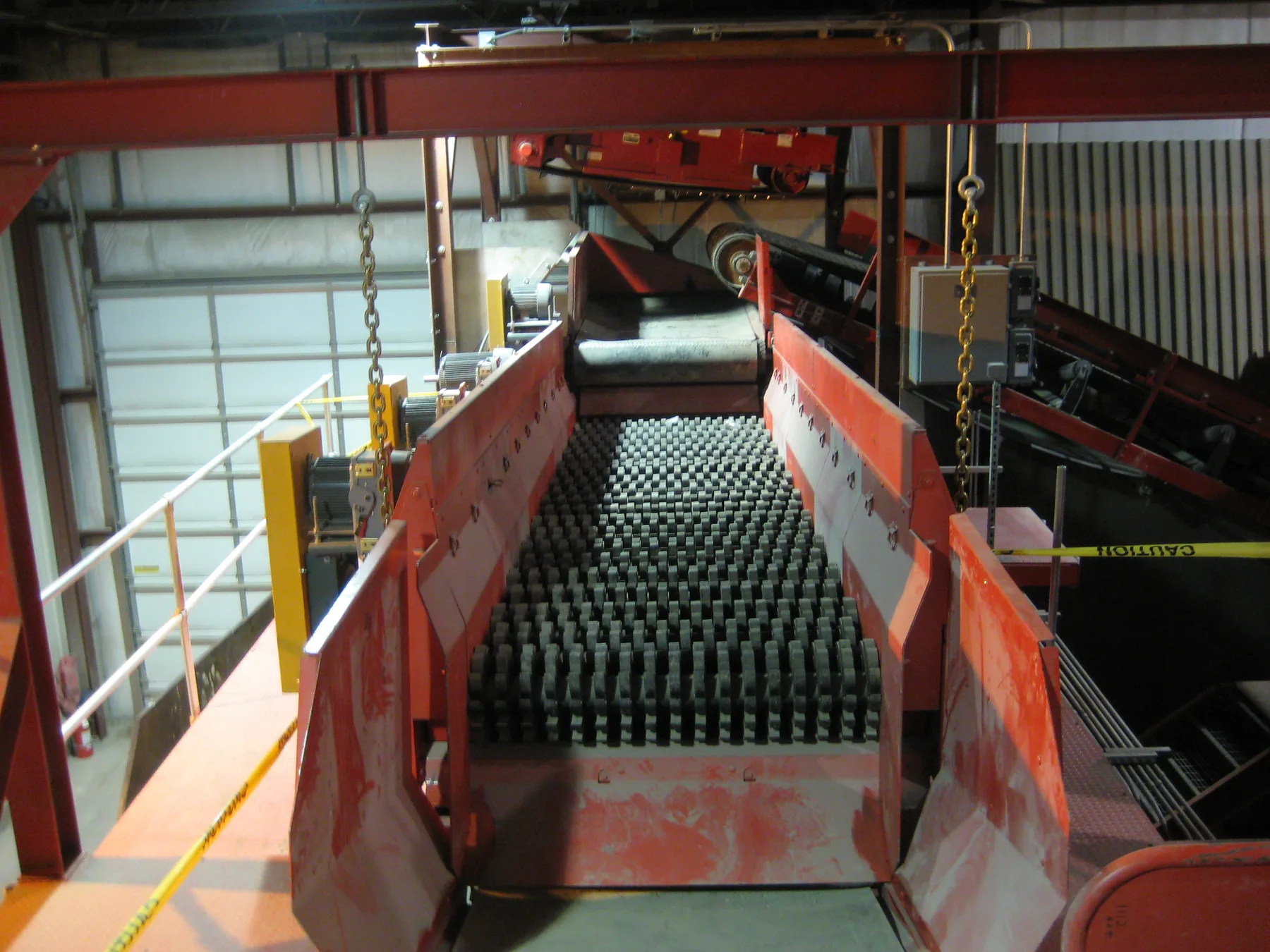
The Sherbrooke OEM star gear screen is a deck of rotating shafts fitted with flexible star wheels that flip and convey the stream forward: undersize and three-dimensional pieces fall between the stars while flat, two-dimensional material rides the deck. The aggressive agitation gives high throughput per deck area, and the star profile, shaft spacing, and VFD-controlled speed set the cut. Star wheels are individually replaceable wear parts. Deck angle, width, and shaft count are engineered per project, fabricated and integrated in Sherbrooke, Quebec.
Where It Fits
- High-capacity size and 2D/3D splits on single-stream and MSW lines
- Compact positions where a star deck delivers more throughput per footprint than a flat screen
- Organics and compost-overs screening with a tolerant, self-cleaning action
Configuration & Options
Every unit is engineered per project — these are the configuration choices and options we quote against, not limits.
| Cut point | Set by star profile and shaft spacing — engineered per stream |
|---|---|
| Speed | VFD-adjustable; tunes both cut sharpness and conveying rate |
| Deck angle | Per application |
| Width & shaft count | Per throughput |
| Stars | Flexible polymer star wheels, individually replaceable |
| Chute work | Mild steel, stainless, or CHT chutes |
Construction
| Frame | Structural steel frame, machined and bolted for precision shaft mounting |
|---|---|
| Drive | Synchronous belt-and-sprocket shaft drive from a VFD-controlled motor |
| Bearings | Flange bearings (Dodge or equal) |
| Sidewalls | Formed steel plate, removable for access |
| Guarding | All rotating parts guarded to OSHA requirements |
| Supports | Bolted structural steel, braced and mechanically anchored |
Project Photos
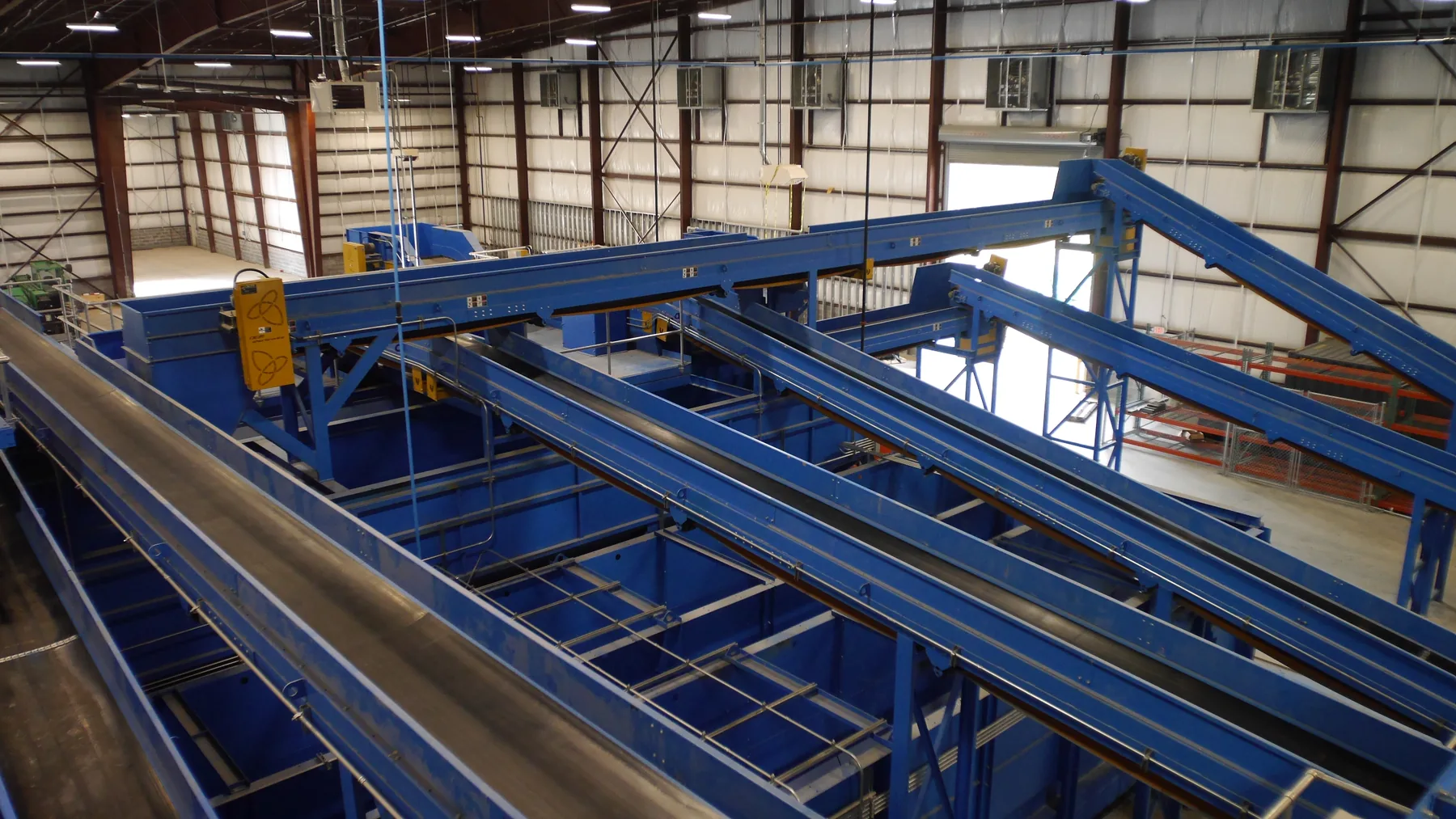
Star Gear Screen units built and installed by Sherbrooke OEM on recycling and C&D lines across North America.
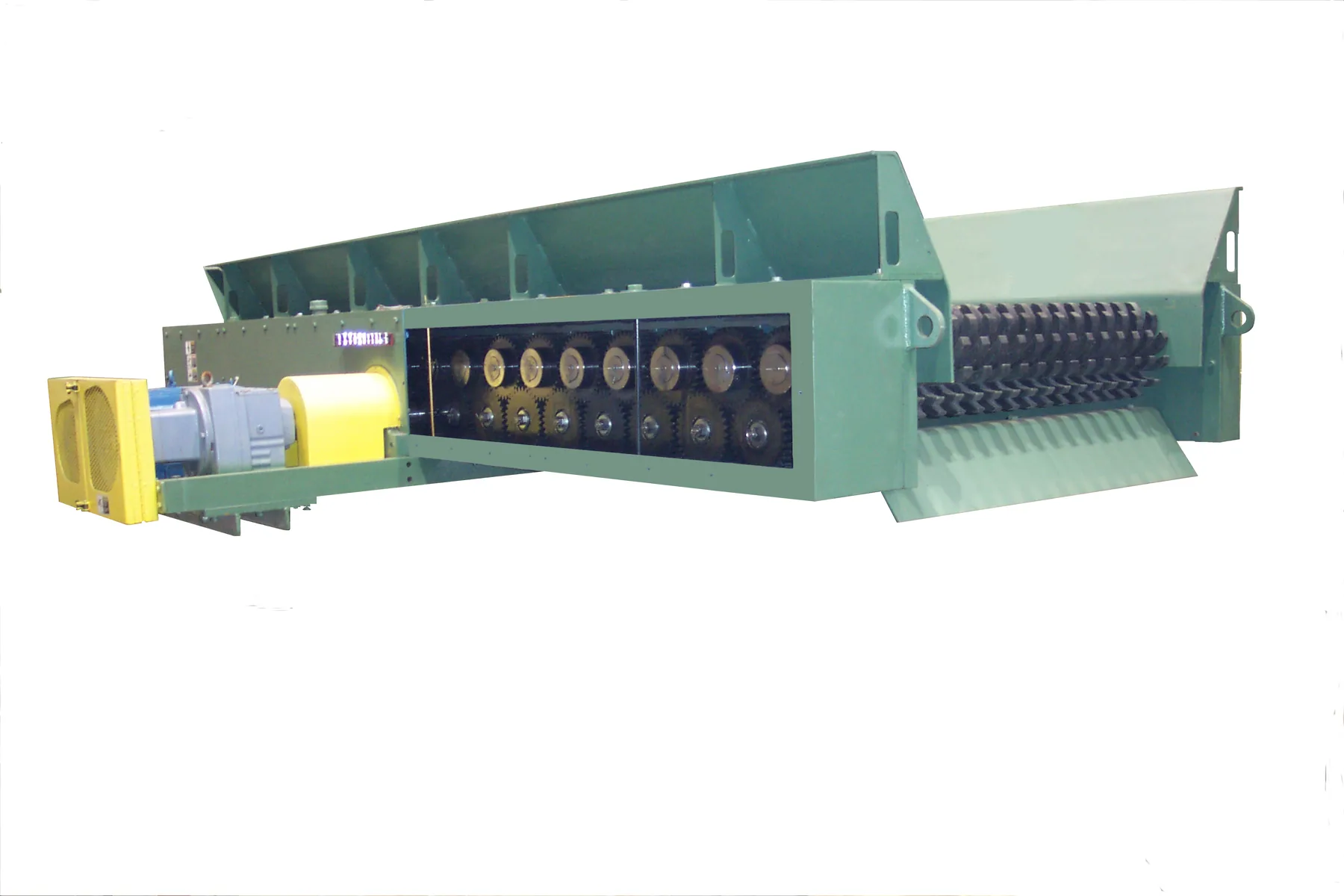
Star Gear Screen — Frequently Asked Questions
How does a star screen differ from a disc screen?
Both separate by shape and size with rotating shafts, but the flexible star wheels agitate the burden far more aggressively than rigid discs — flipping pieces so trapped undersize is released. That buys throughput and a degree of self-cleaning, at the cost of the stars being faster-wearing parts than steel discs.
What happens when the stars wear?
Star wheels are individually replaceable on the shaft — wear is handled wheel by wheel during maintenance windows rather than by replacing decks or shafts.
Can the same machine make different cuts?
Speed is VFD-adjustable day to day, and the cut geometry itself can be changed by swapping star profiles or re-spacing shafts — a heavier intervention, but far short of replacing the machine when the stream evolves.
Need dimensions, capacity, or a budget price?
Send your material profile and layout — engineering answers with real numbers, from the team that will fabricate it in Sherbrooke.
Talk to Engineering