


Screens · Built in-house
Trommel Screen
The rotating drum that makes the size split — separating a stream into clean size fractions so every machine downstream sees material it can actually sort.
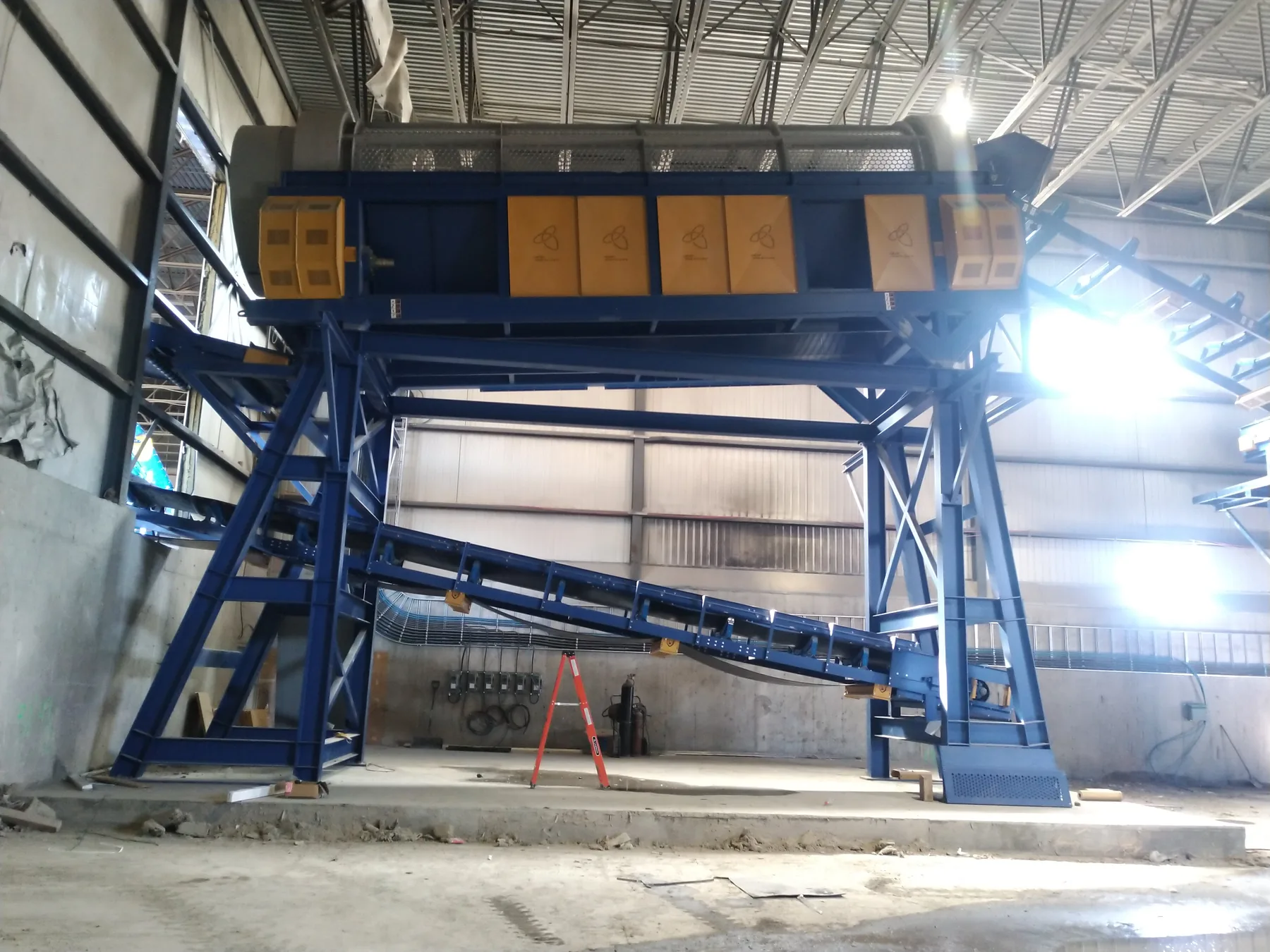
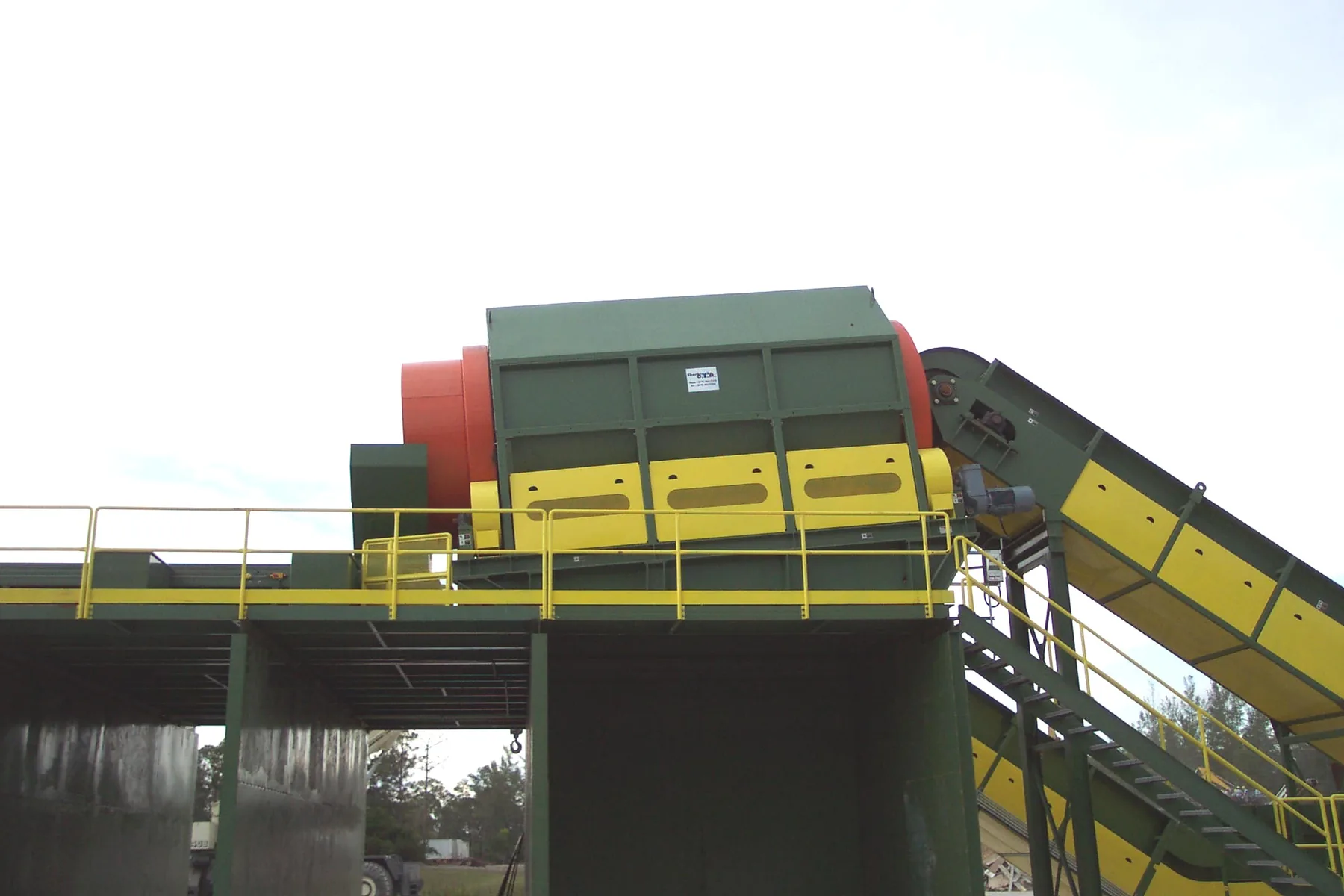
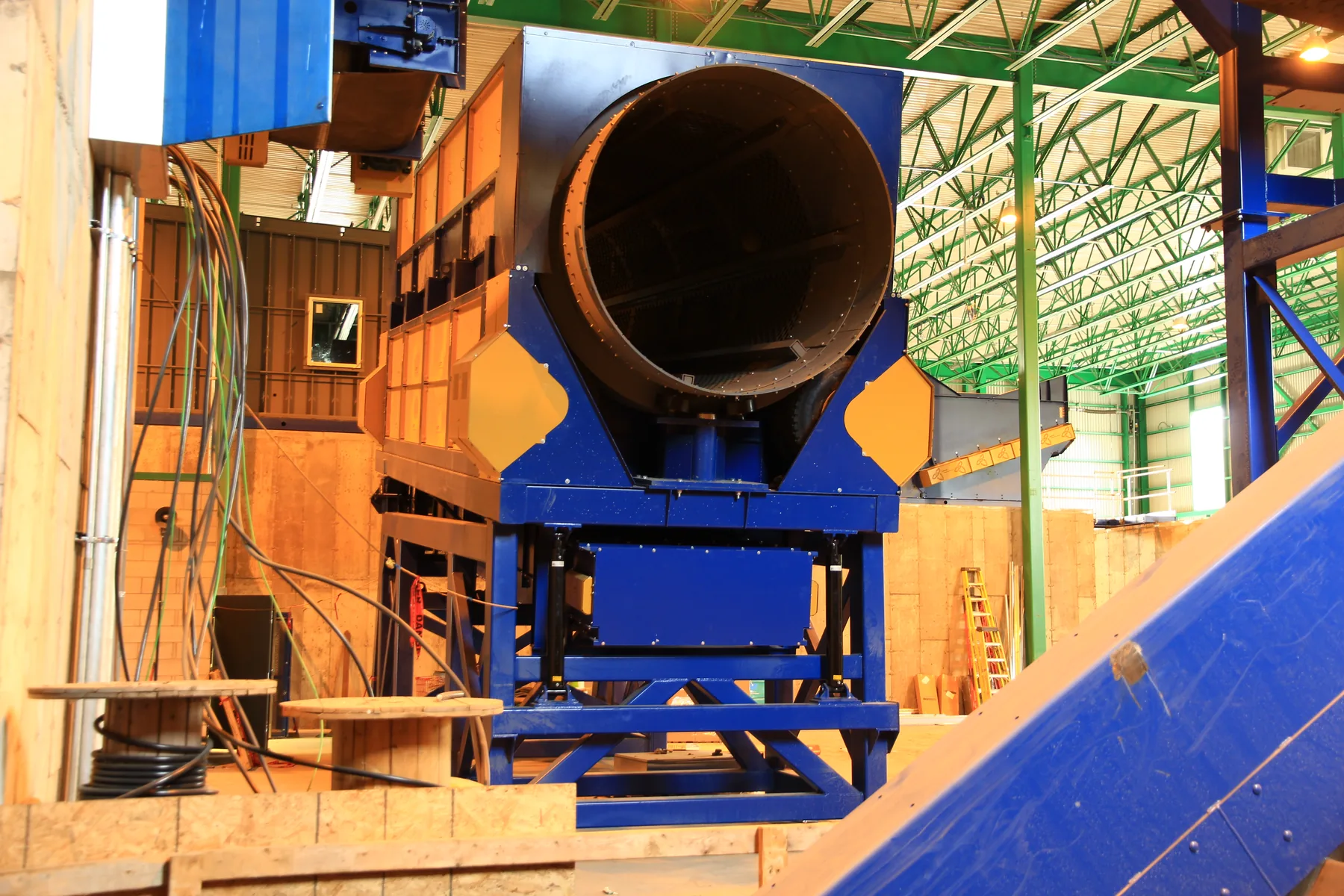
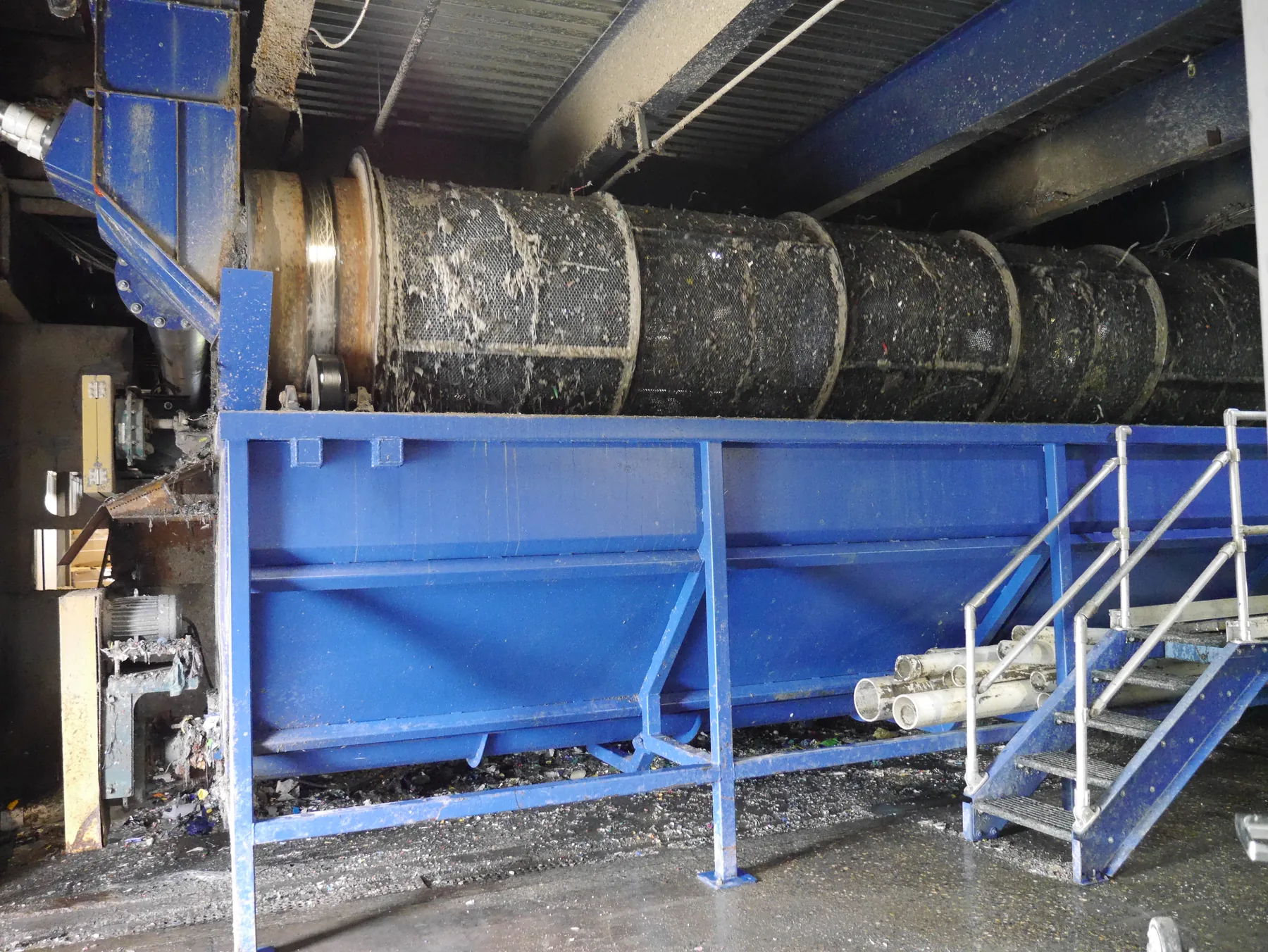
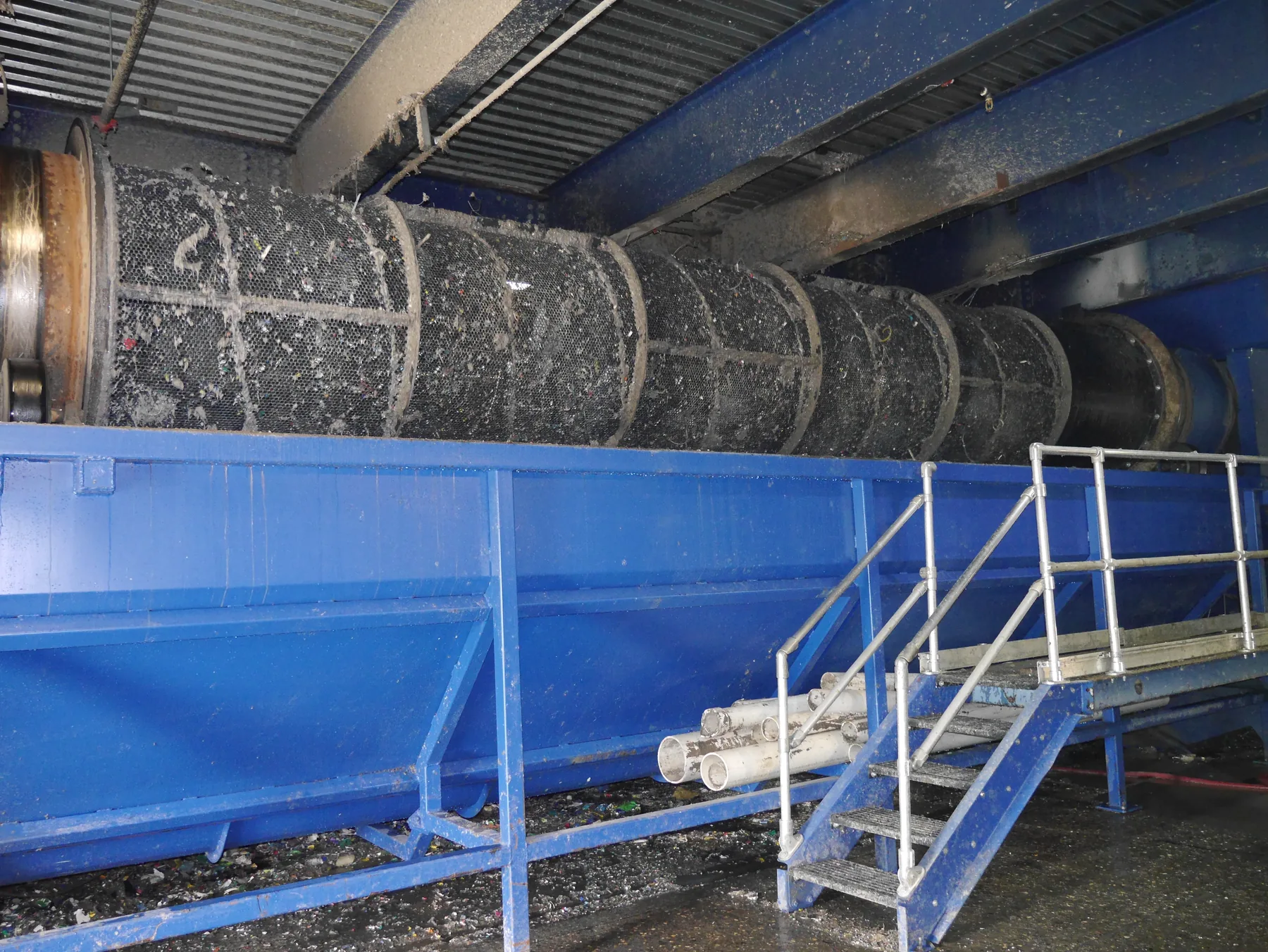
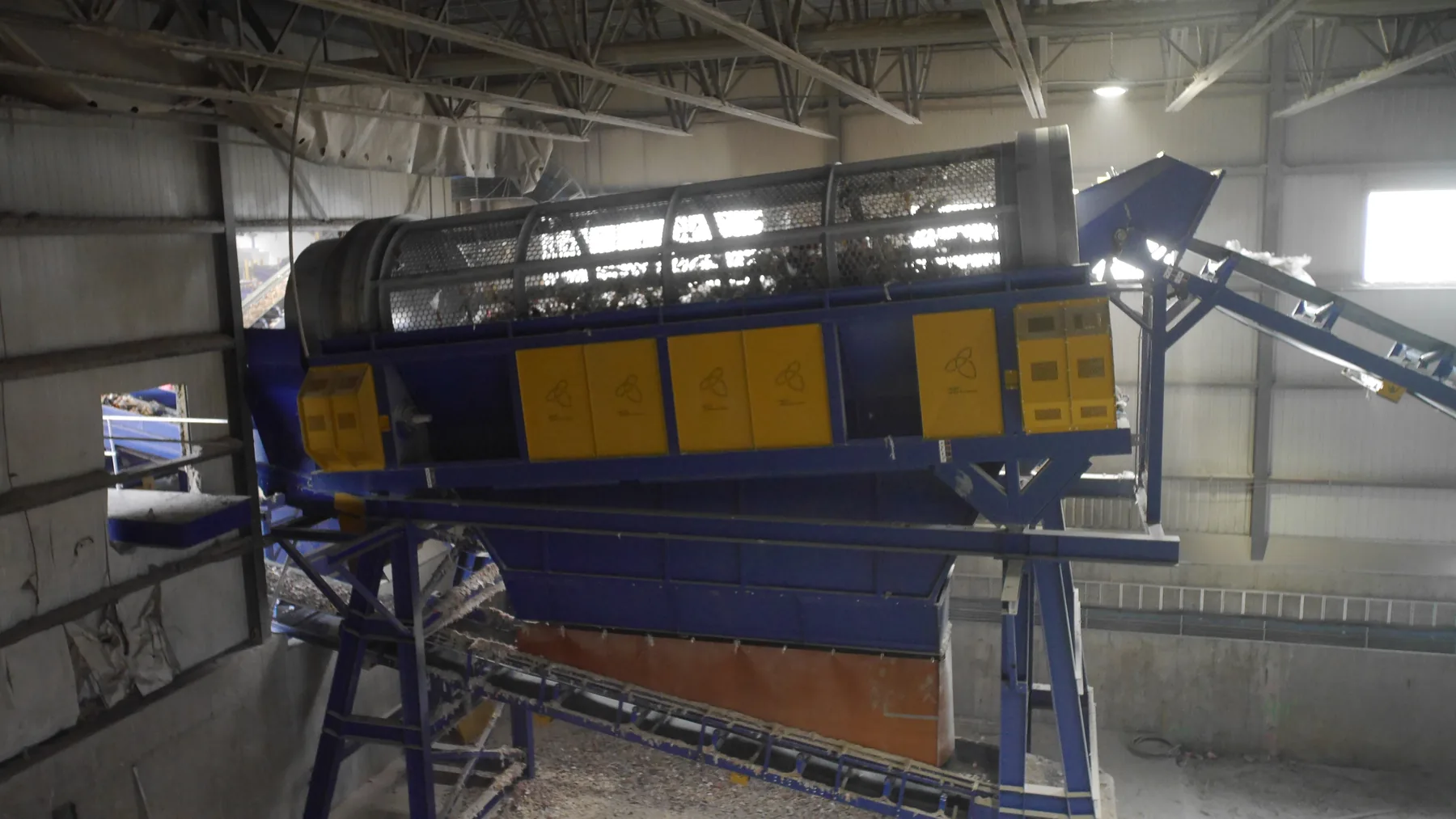
The Sherbrooke OEM trommel screen is a rotating drum classifier with bolted, replaceable screening plates, used as a secondary screen on C&D and MSW sorting lines — and as the primary screen where the project calls for it. The barrel is framed in heavy structural tube with perforated plates in round, staggered-pitch holes; the drum rides on cantilevered pneumatic tire assemblies with self-aligning urethane-coated thrust wheels. Drive is a helical-bevel reducer with double output shafts. Diameter, length, screening sections, hole size, incline, and speed are engineered per project from the material profile and throughput. Fabricated in-house in Sherbrooke, Quebec.
Where It Fits
- Secondary screening on C&D lines — typically a single cut (around 3 in) splitting the B-line (screen unders) into a ~0–3 in fines fraction and a ~3–10 in mids fraction; can be multiple cuts, sized per project
- Primary classification where the project calls for it — excavator- or apron-fed, opening the raw stream (C&D, MSW, or organics) before sorting
- Any position where a robust size split with replaceable wear surfaces beats a flat screen — a primary shredder can replace it entirely when the project calls for size reduction instead
Configuration & Options
Every unit is engineered per project — these are the configuration choices and options we quote against, not limits.
| Diameter | 48–120 in — sized from throughput and burden |
|---|---|
| Overall length | Per layout; screening length built from bolted plate sections |
| Screen size | Round holes, staggered pitch — cut point engineered per project; sections can carry different hole sizes |
| Incline | Typically around 5° — set per retention time required |
| Speed | VFD-adjustable; engineering default around 20 RPM |
| Discharges | Enclosed, insulated overs discharge; formed and flanged fines discharge to the fines conveyor |
| Hoods | Bolted steel hoods with ready-to-connect dust-collector flanges |
| Wear plate | Optional CHT wear-plate liners at impact and discharge zones |
Construction
| Barrel | Heavy structural tube framing (3 x 5 x 3/8 in) with bolted, replaceable screening plates |
|---|---|
| Screening plates | Perforated plate — round holes, staggered pitch |
| Support tires | Pneumatic, four dual assemblies — cantilevered for easy tire replacement |
| Thrust wheels | Double cast-steel wheels, urethane-coated, self-aligning |
| Drive | Helical-bevel gear reducer with double output shafts; chain-style couplings |
| Bearings | Flange roller bearings (Dodge Imperial IP or equal) |
| Support | Four-legged H-beam tower — bolted, braced, and mechanically anchored |
| Guarding | All rotating parts guarded to OSHA requirements |
Related reading: from the Knowledge Hub
Project Photos
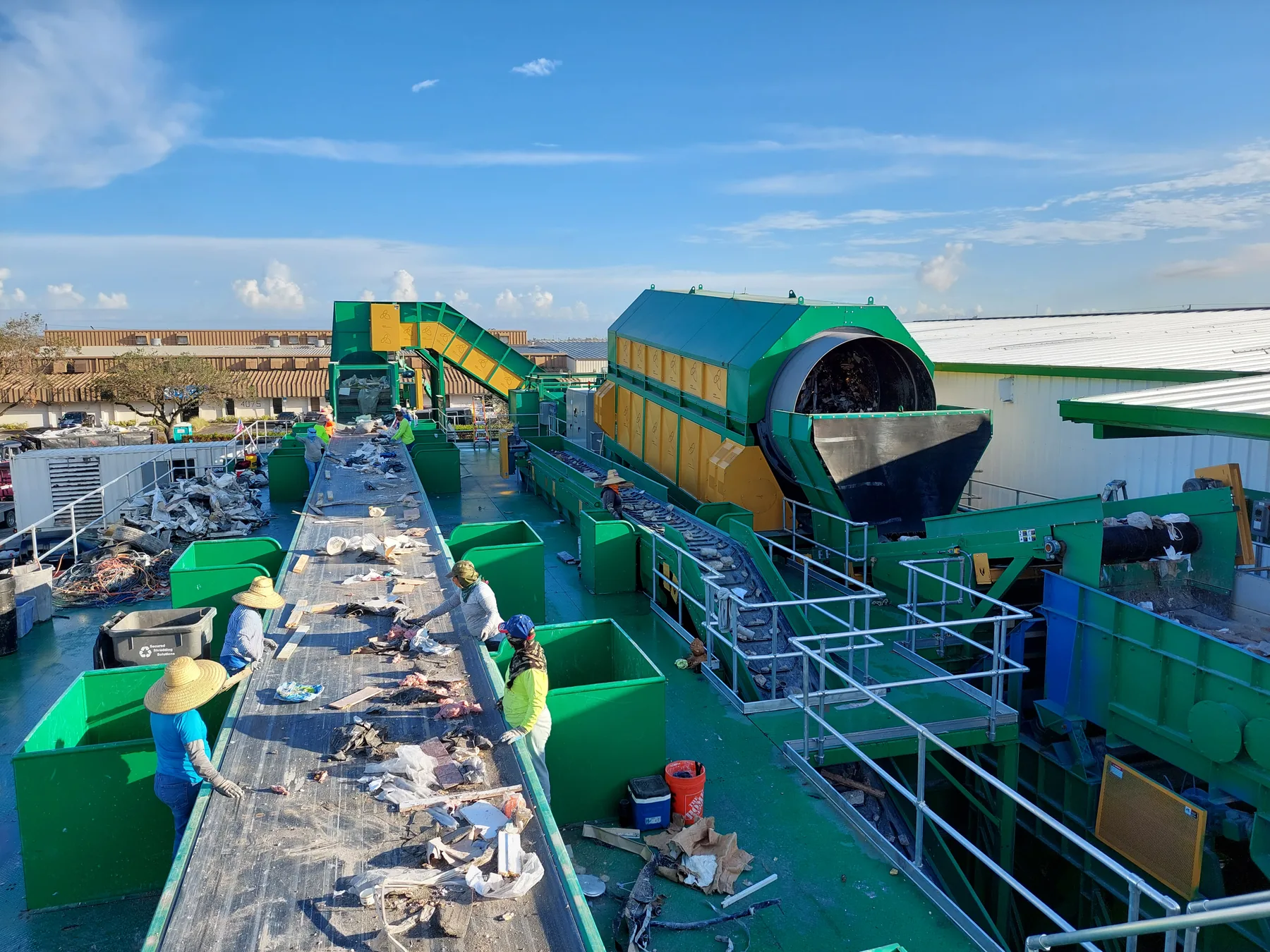
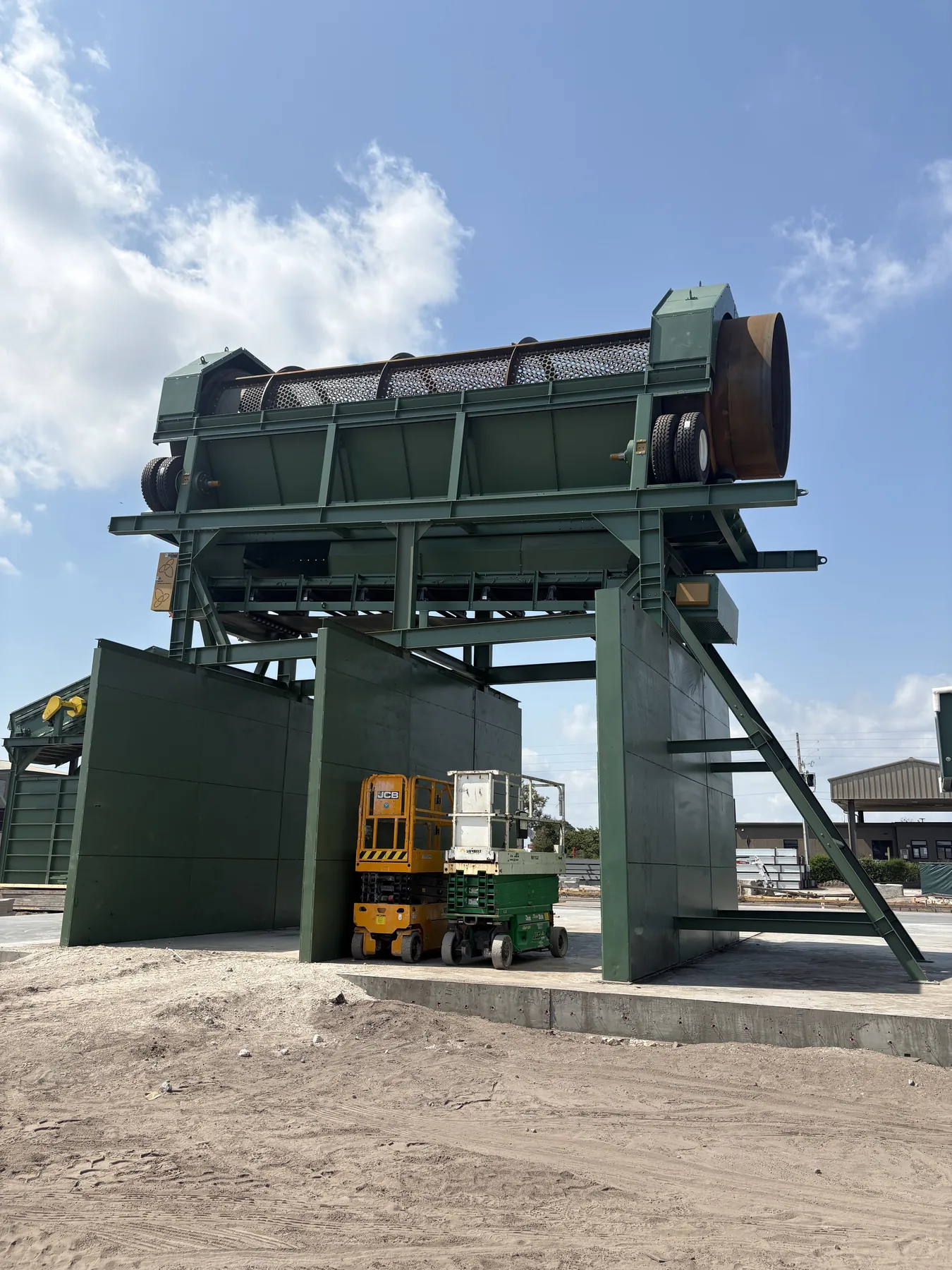
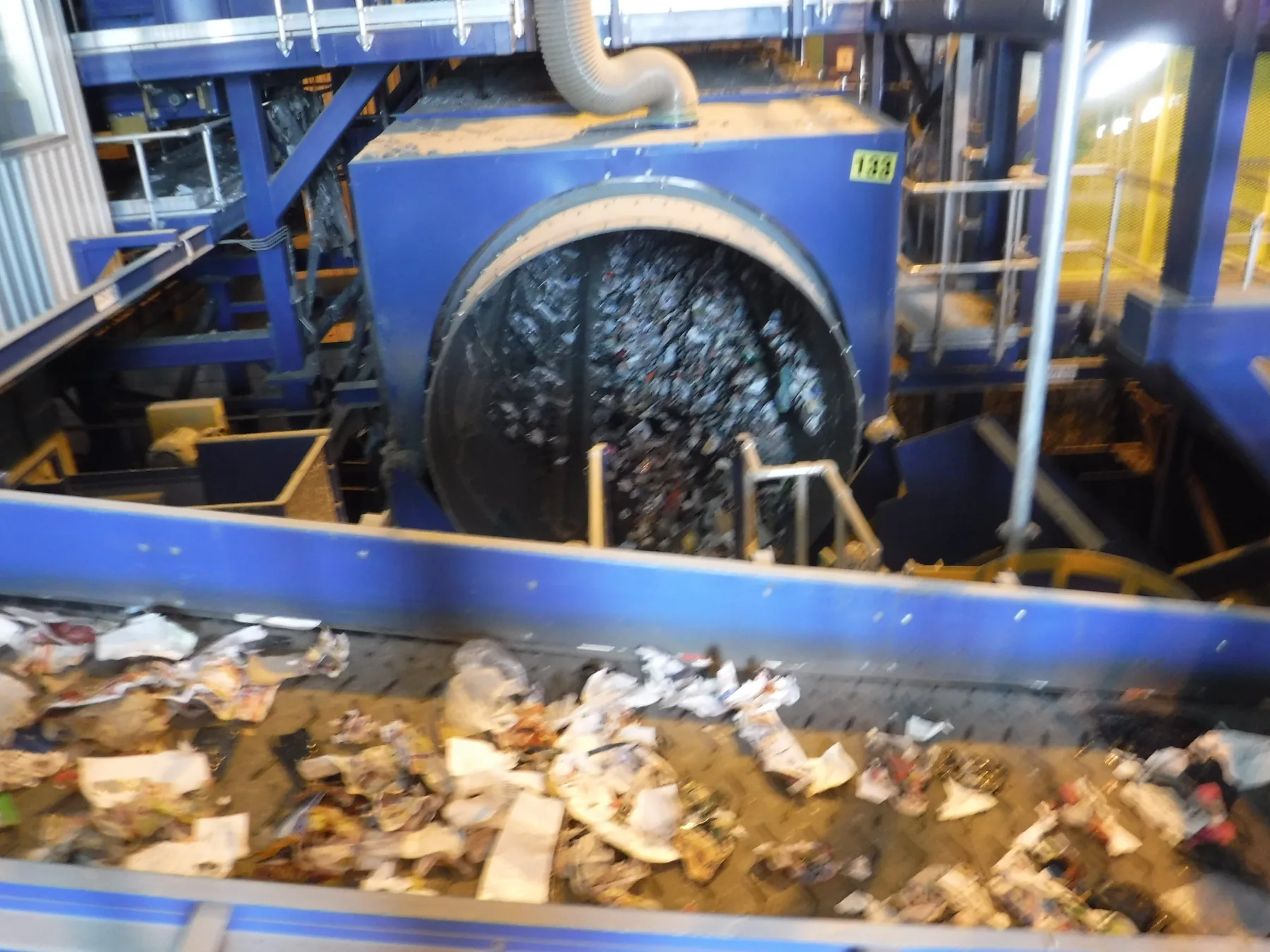
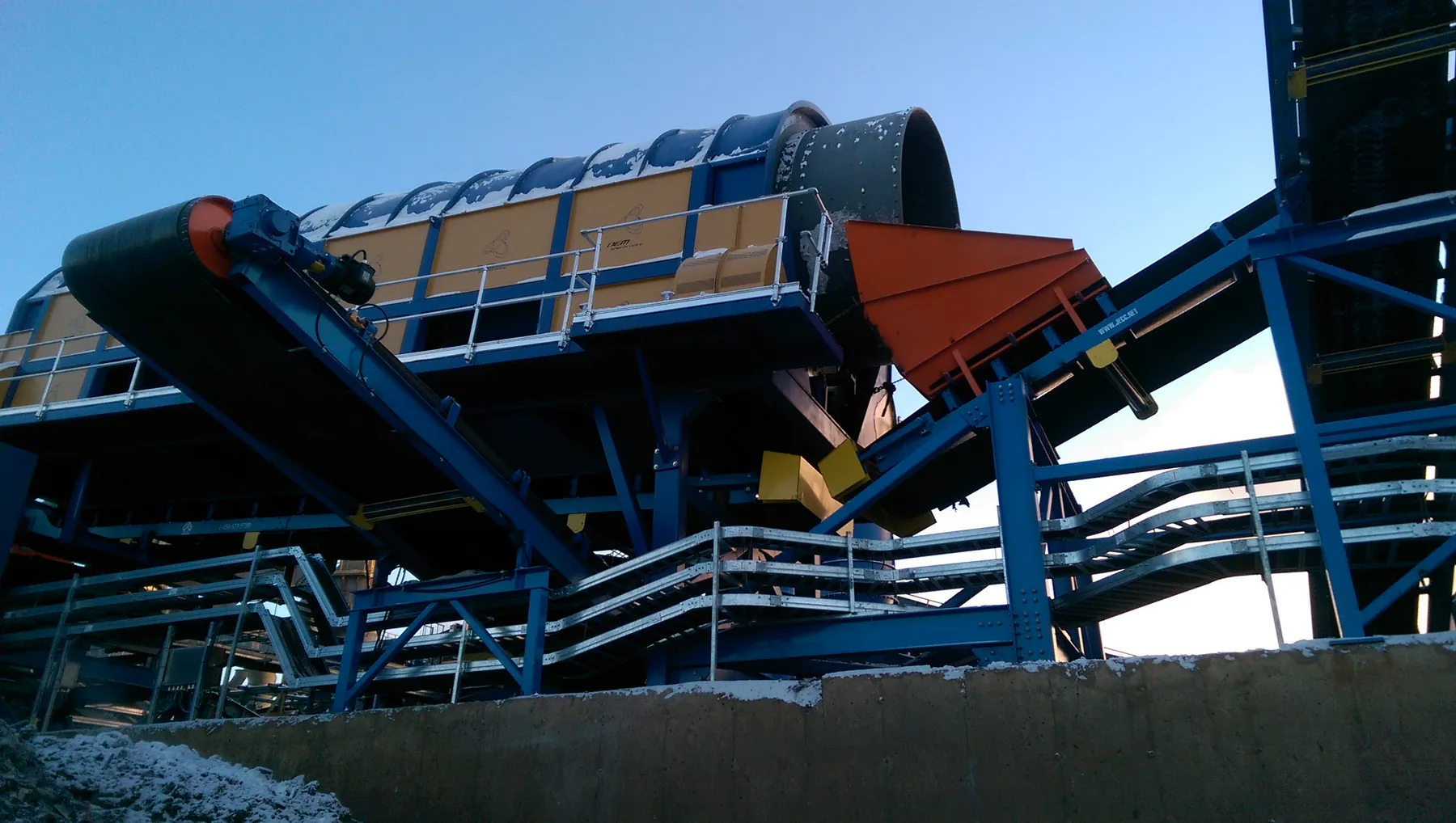
Trommel Screen units built and installed by Sherbrooke OEM on recycling and C&D lines across North America.
Trommel Screen — Frequently Asked Questions
What size does a trommel cut at?
There is no universal answer — the cut point is engineered per project from the material composition, the downstream equipment, and the local market for each fraction. The bolted screening plates make the cut changeable: sections can be swapped to a different hole size as the incoming stream evolves.
Why bolted screening plates instead of a welded drum?
Screening plates are wear parts. Bolted sections let you replace only the worn area, stagger replacement over maintenance windows, and change hole sizes without touching the barrel structure.
Can a shredder replace the primary screen on a C&D line?
Yes. A primary shredder is an alternative front end for the entire stream — the choice between primary screening and primary shredding depends on composition, recovery targets, and what the downstream line is designed to do. Most lines we build use a primary screen, but both are engineered options.
How is the trommel fed?
It depends on its position. As a secondary screen — its most common role — the trommel is fed by conveyor from the primary screen unders (the B-line). Used as a primary screen, an excavator or loader feeds a steel apron conveyor that carries the raw stream up into the drum. Either way, the feed conveyor takes the impact and the trommel does the splitting.
Need dimensions, capacity, or a budget price?
Send your material profile and layout — engineering answers with real numbers, from the team that will fabricate it in Sherbrooke.
Talk to Engineering