


Screens · Integrated
Vibratory Finger Screen
Cascading finger decks that scalp fines and stringy material without wrapping — no shafts to choke on wire, film, or textiles.
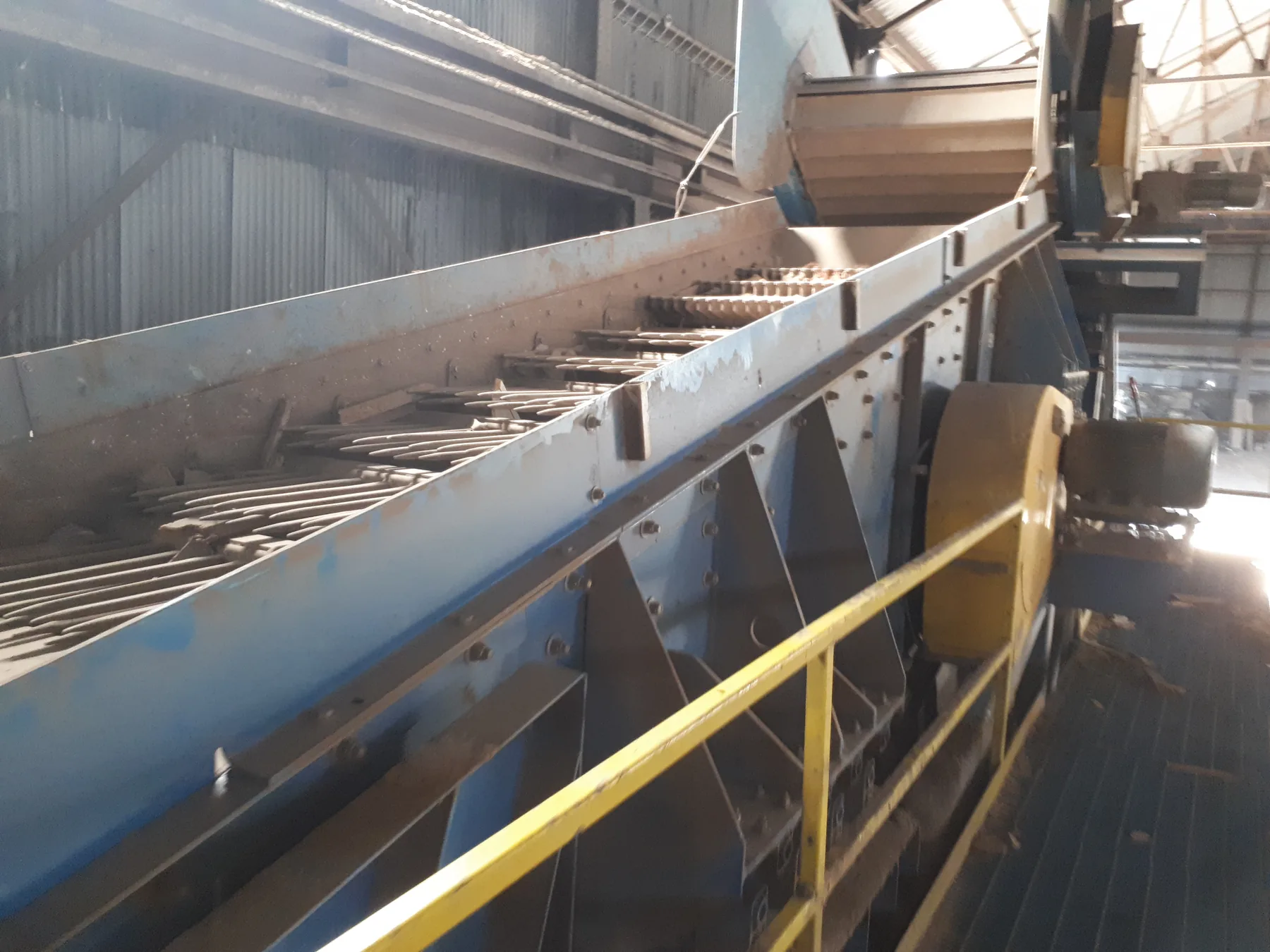
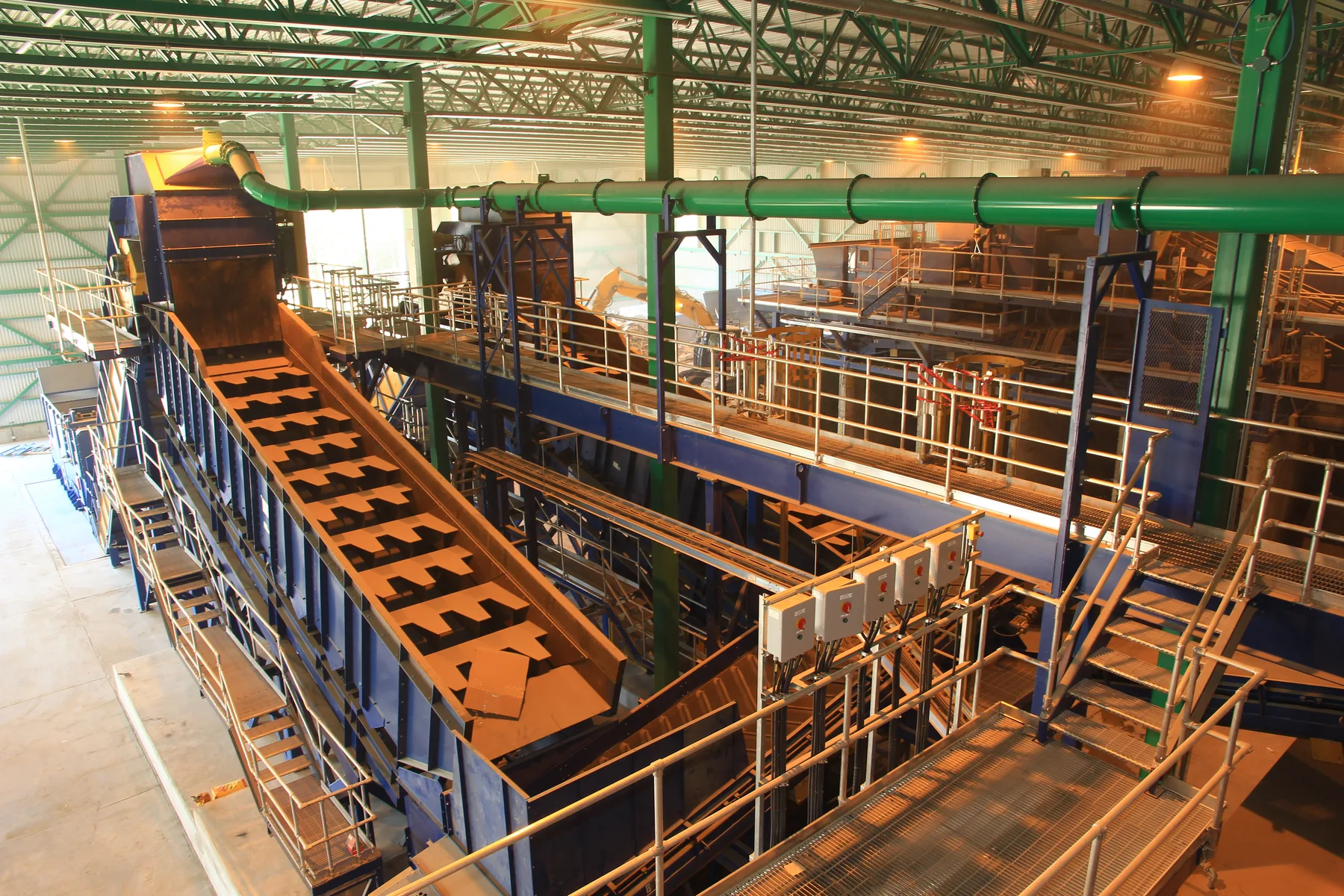
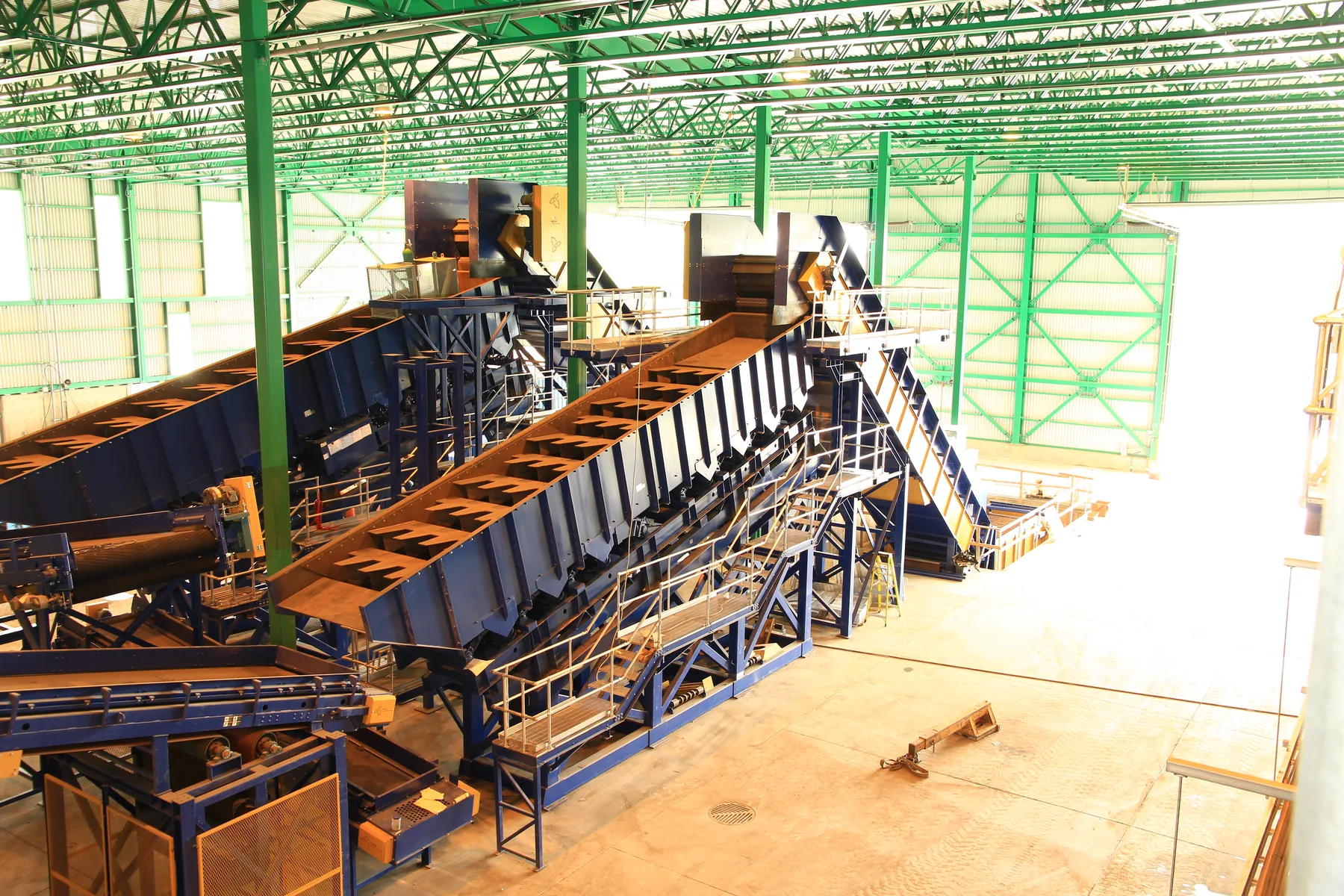
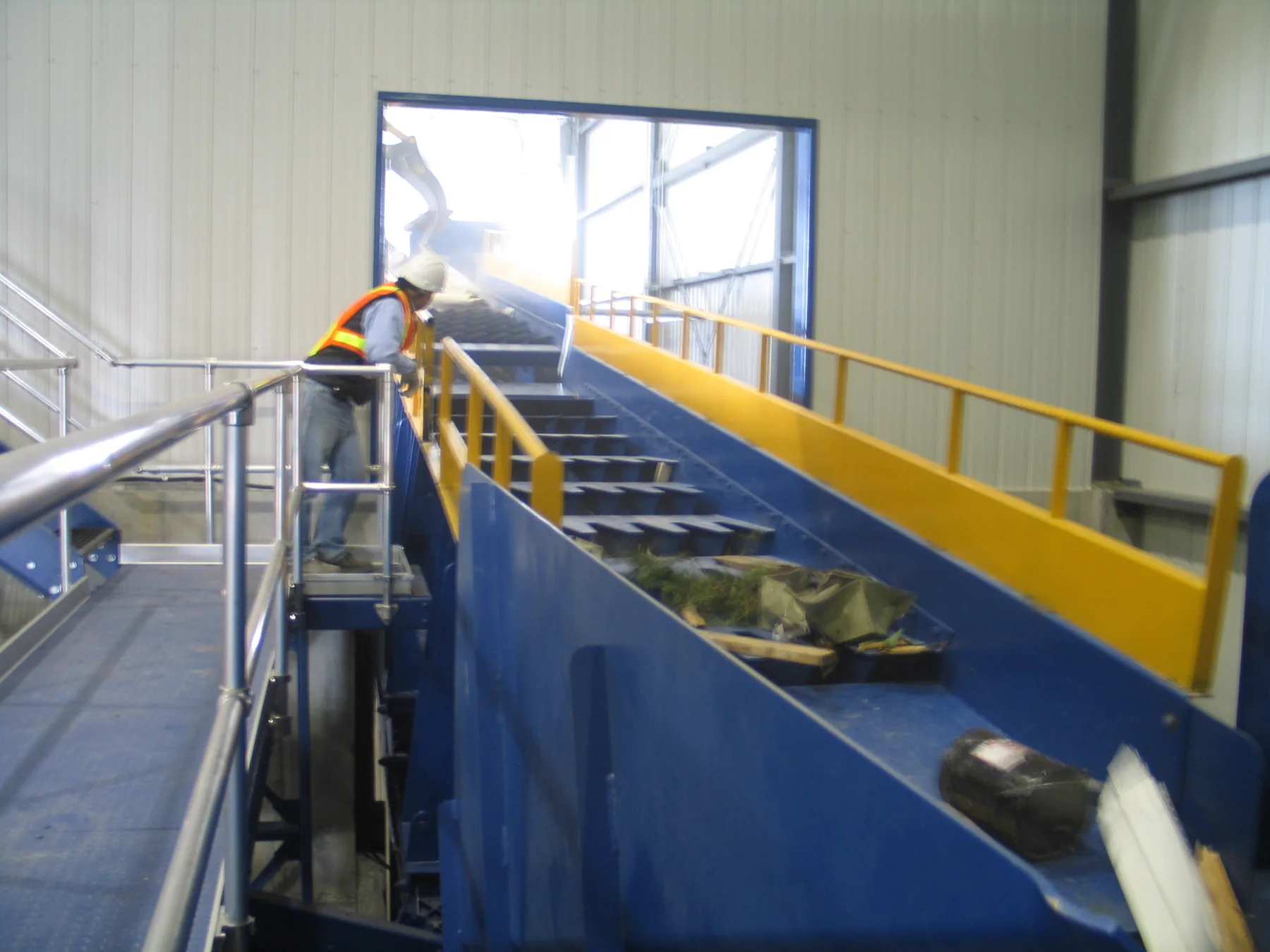
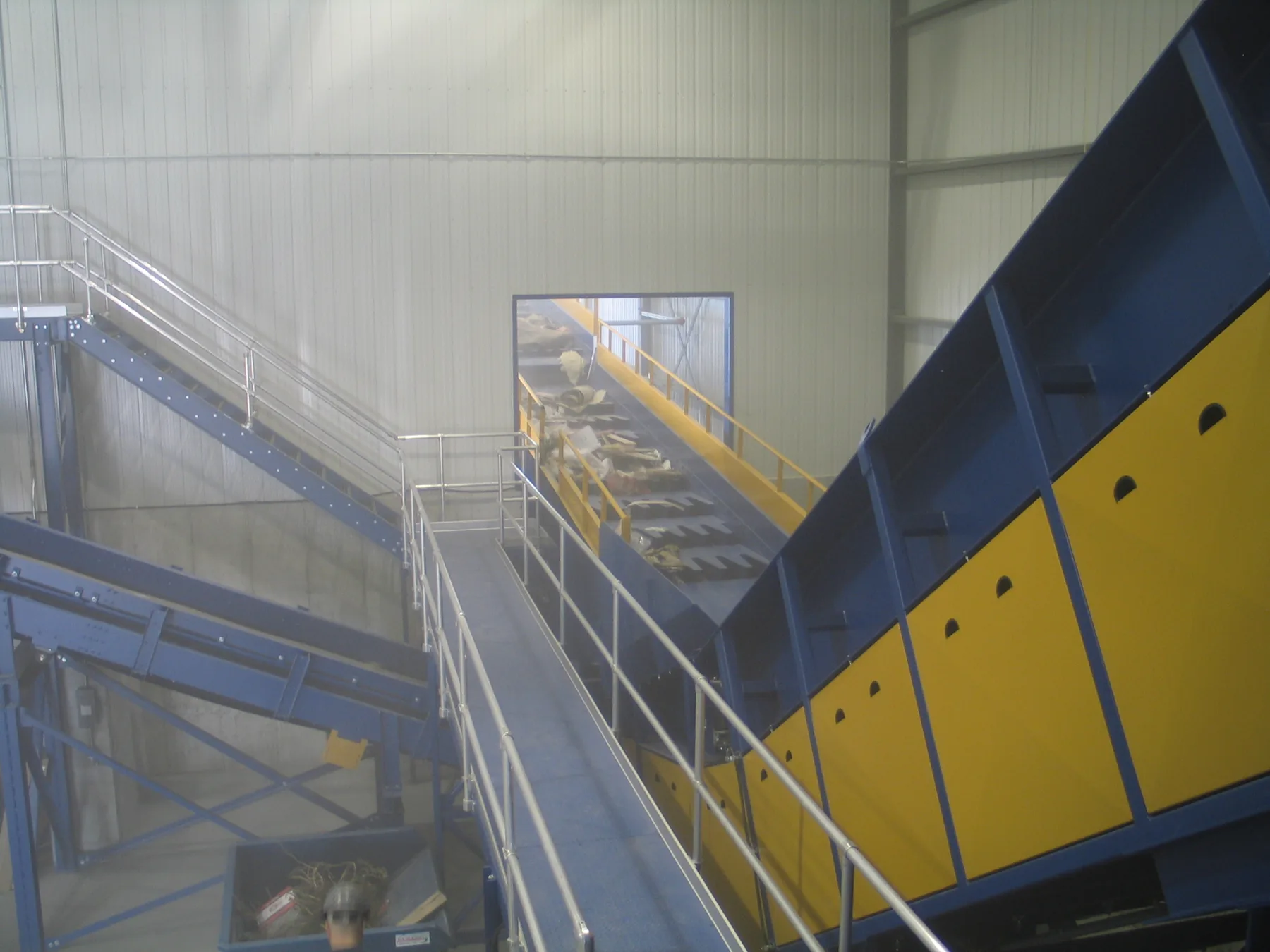
On a Sherbrooke OEM sorting line, the vibratory finger screen is a specialist-built primary finger-screen — cascading decks of cantilevered steel fingers driven by vibration. With no rotating shafts in the screening surface, wire, film, textiles, and other stringy C&D and MSW material cannot wrap; it tumbles down the cascades while fines fall between the fingers. Sherbrooke OEM engineers the position, fabricates the braced, welded H-beam support structure, chute work, and wear plate, and integrates the unit into plant controls — engineered and integrated from Sherbrooke, Quebec.
Where It Fits
- Primary or secondary scalping on C&D lines where wire and stringy demolition debris defeat disc screens
- MSW front ends with heavy film and textile content
- Fines removal ahead of manual sorting and density separation
Configuration & Options
Every unit is engineered per project — these are the configuration choices and options we quote against, not limits.
| Screen unit | Primary vibratory finger-screen, model per project |
|---|---|
| Width | 60–96 in — per throughput, application, and fraction proportion |
| Cut point | Set by finger spacing and cascade geometry, engineered per stream |
| Decks | Cascading finger decks; count per application |
| Chute work | Mild steel, stainless, or CHT chutes; optional CHT wear liners |
| Structure | Support height per line elevation |
Construction
| Screen supply | Specialist-built vibratory finger-screen unit, specified and integrated by Sherbrooke OEM |
|---|---|
| Supports | H-beam structural steel members, braced and welded, by Sherbrooke OEM |
| Chutes | Formed steel plate, flanged to downstream conveyors |
| Guarding | Guarded to OSHA requirements |
Project Photos
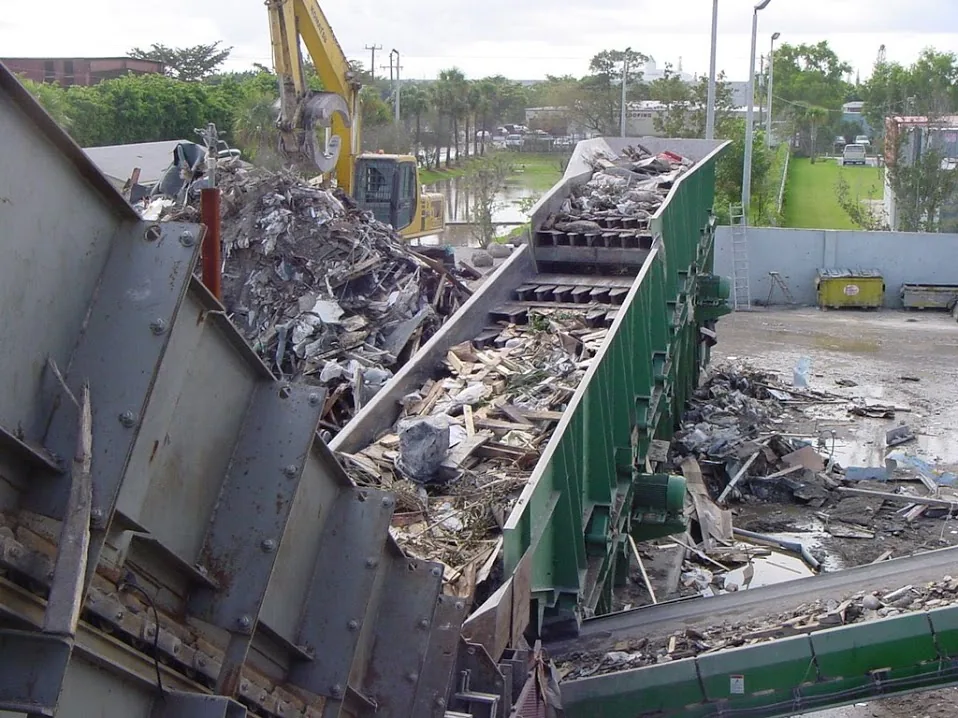
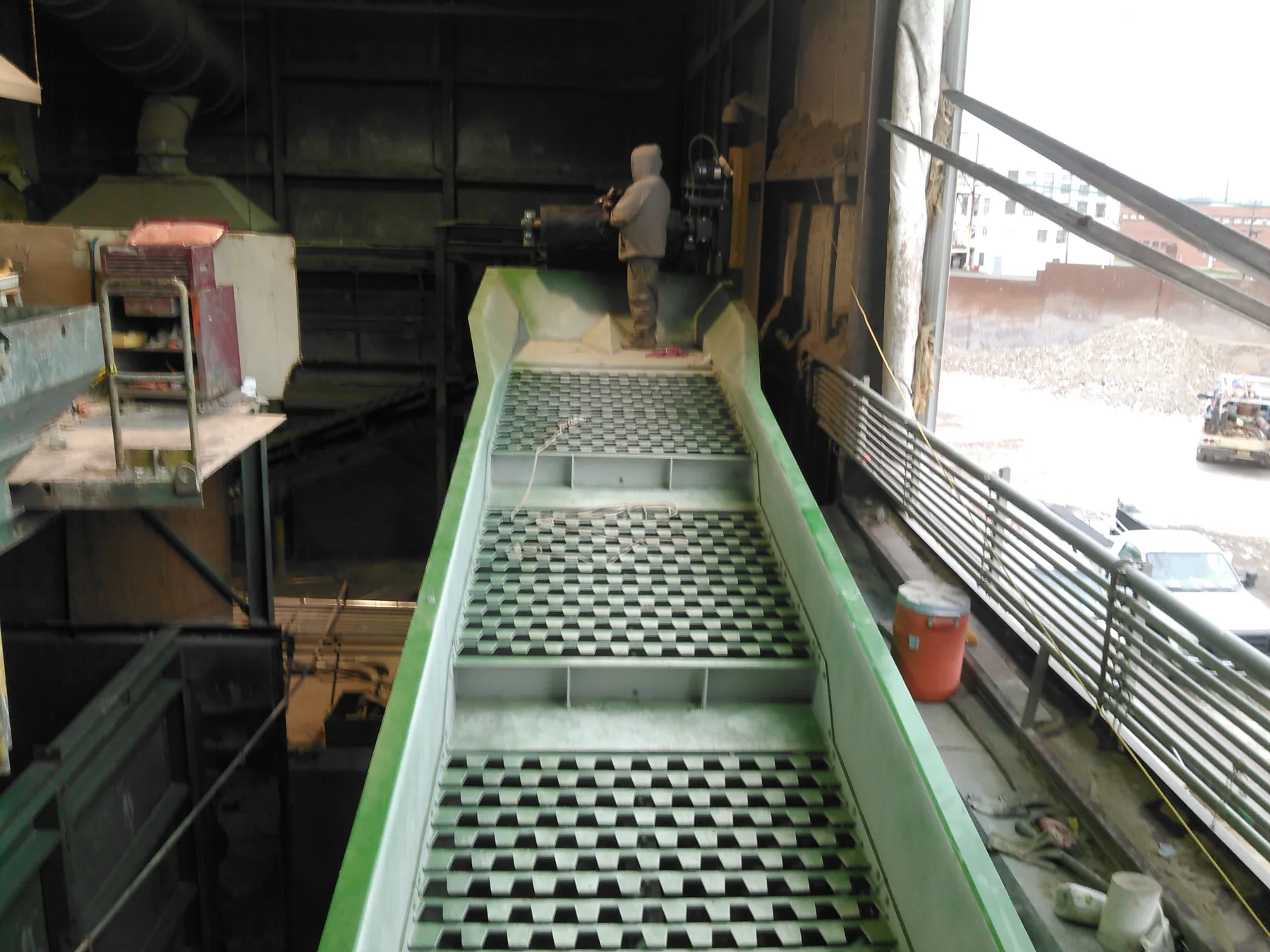
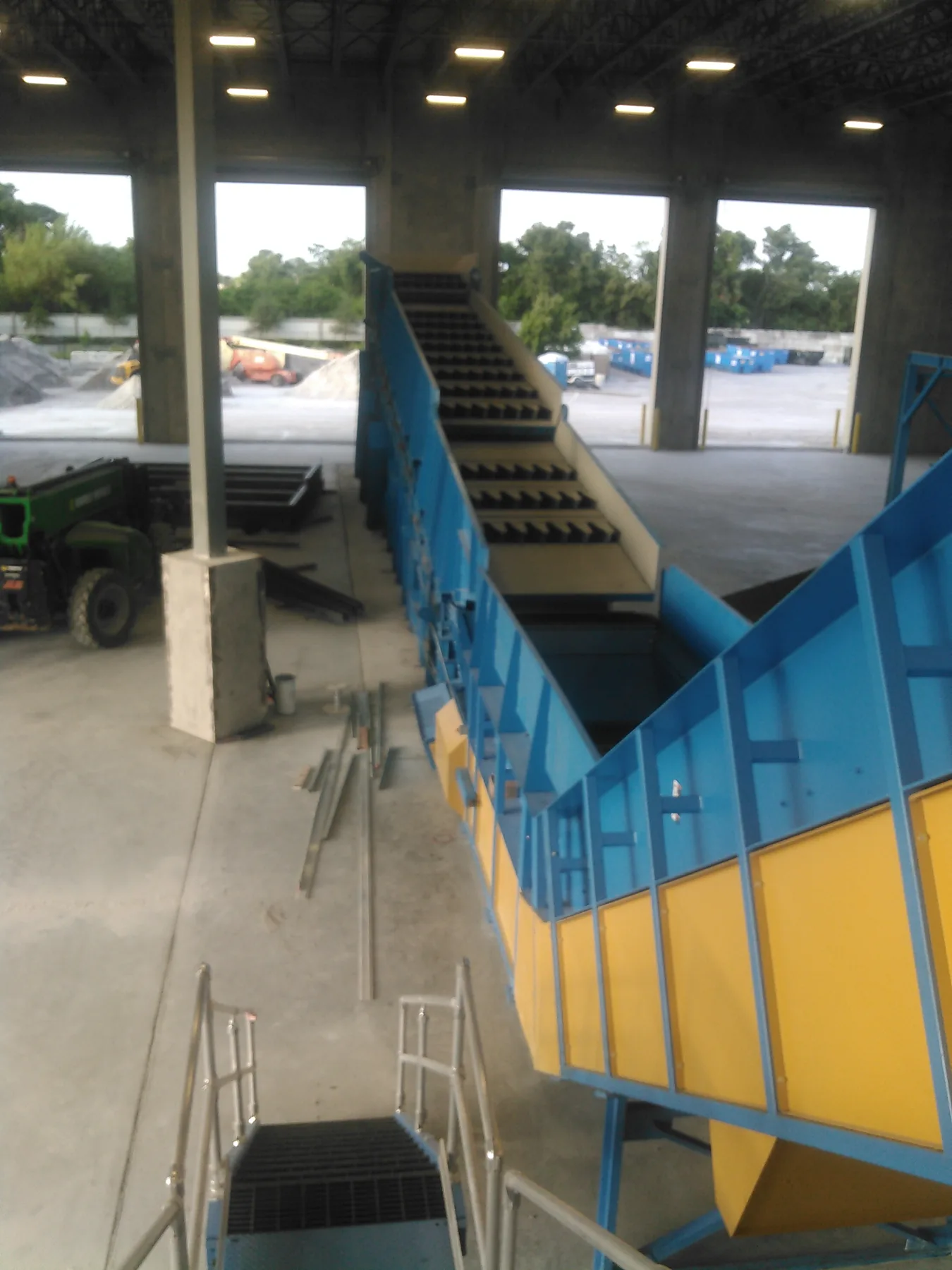
Vibratory Finger Screen units built and installed by Sherbrooke OEM on recycling and C&D lines across North America.
Vibratory Finger Screen — Frequently Asked Questions
Why a finger screen instead of a disc screen?
Wrapping. Disc screens have rotating shafts that wire, film, hose, and textiles wind around until the deck blinds and the line stops for cutting. A finger screen has no rotating parts in the screening surface — the vibrating cascades convey the stream over fixed fingers, so the wrap-prone material simply rides through.
What sets the fines cut on a finger screen?
Finger spacing and the cascade geometry — both engineered per project. Vibration amplitude tunes how the burden stratifies and presents to the gaps.
Who builds what on this machine?
The vibratory screen unit is built by a specialist supplier; Sherbrooke OEM engineers its position in the line, fabricates the welded H-beam support structure, chute work, and wear protection, and integrates the drive into plant controls — one accountable team for the running result.
Need dimensions, capacity, or a budget price?
Send your material profile and layout — engineering answers with real numbers, from the team that will fabricate it in Sherbrooke.
Talk to Engineering