


Conveyors · Built in-house
Acceleration Conveyor
The high-speed belt that thins and singulates the stream so optical sorters can see — and eject — one object at a time.
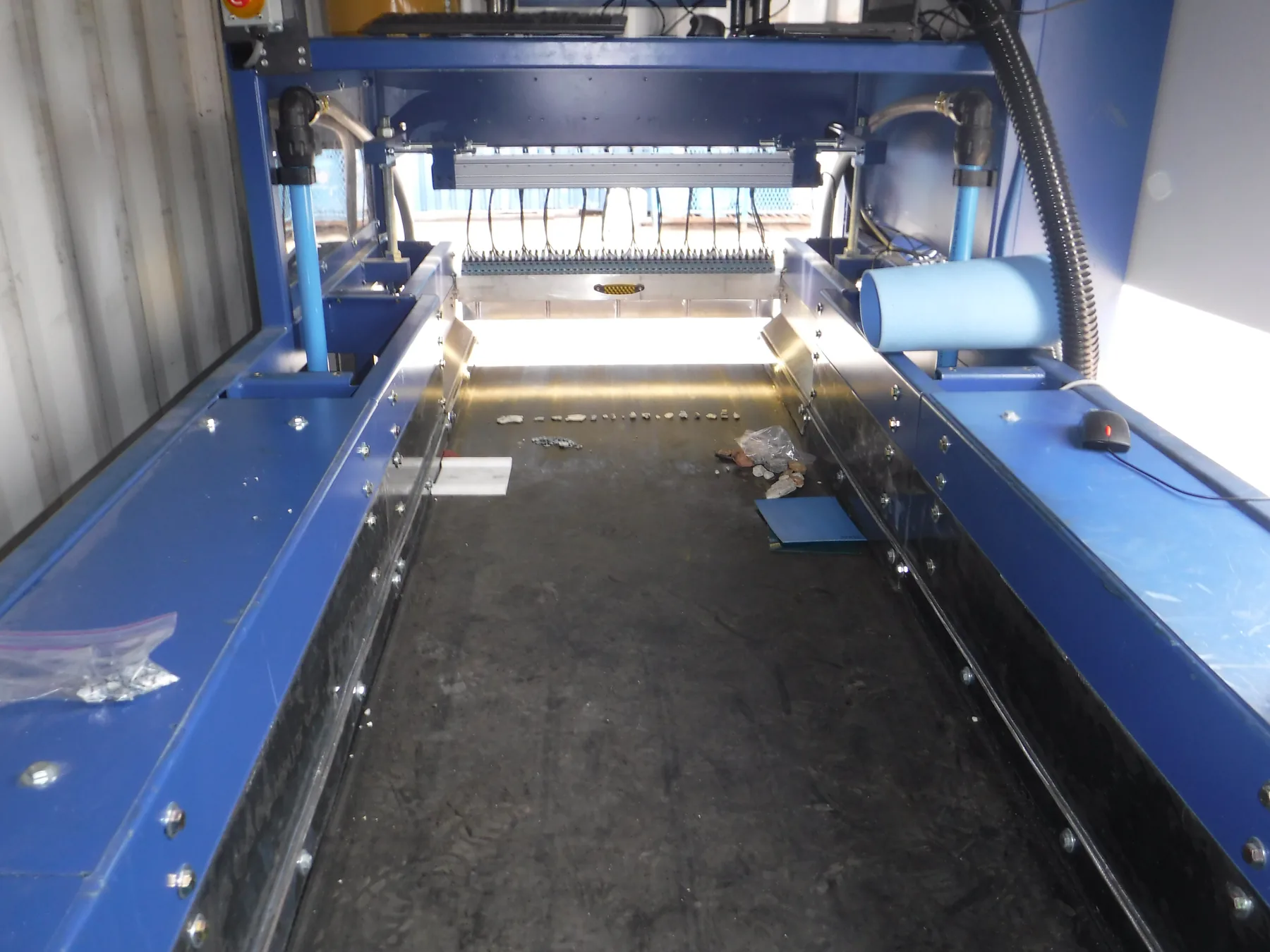
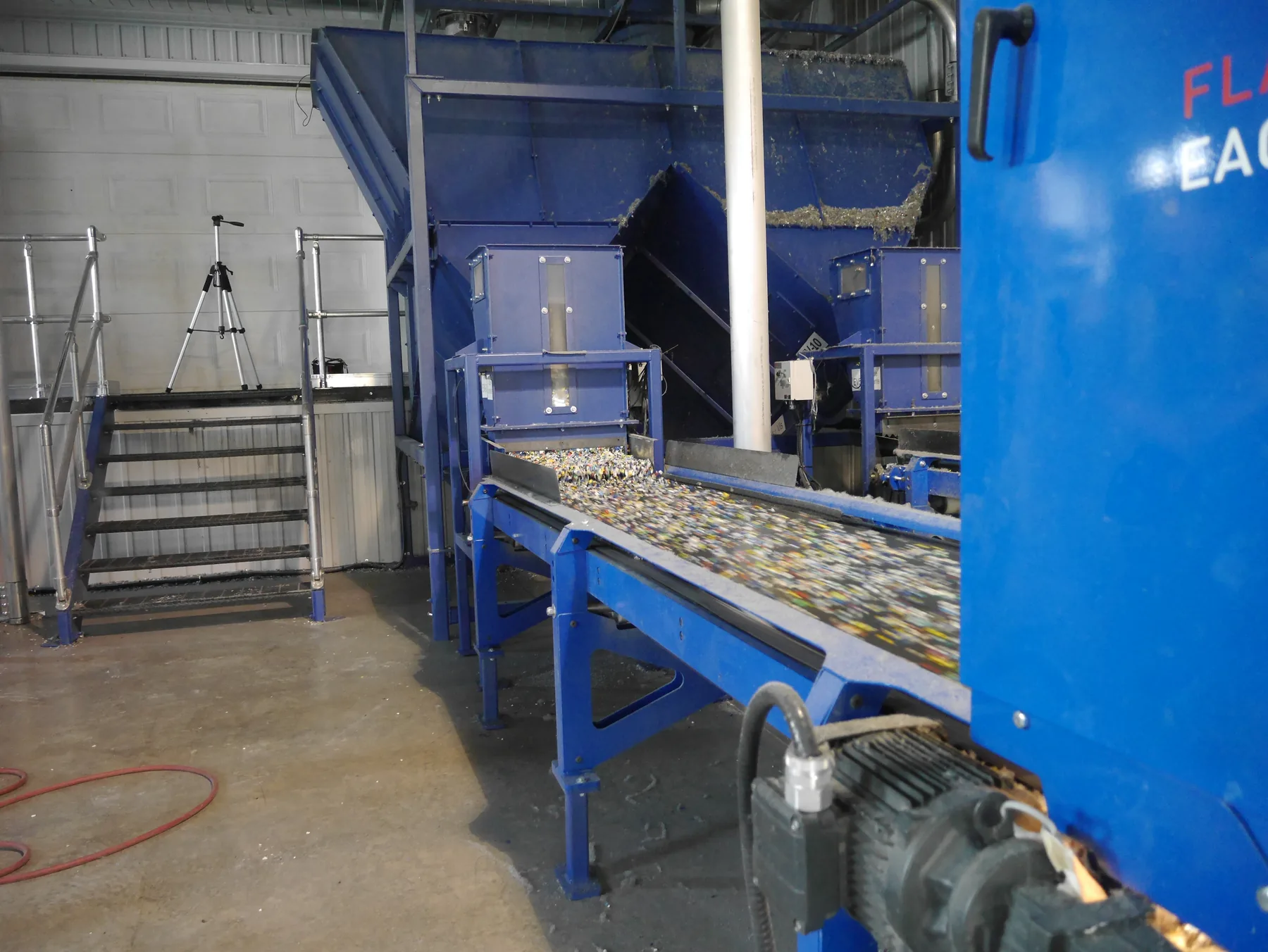
The Sherbrooke OEM acceleration conveyor is a high-speed sliderbed running typically at 550 FPM and above, used immediately ahead of optical sorters. By running far faster than the feeding conveyor, it stretches the burden into a thin, single layer with stable trajectories — the presentation an NIR sorter needs for accurate identification and clean air-jet ejection. The bed is sheeted in high-molecular-weight (HMW) polyethylene for a consistent low-friction surface. Typical widths match the optical unit, commonly 48 in. Built in Sherbrooke, Quebec, and integrated with Eagle Vizion optical sorters as a matched pair.
Where It Fits
- Directly ahead of every optical sorting position — containers, fiber, wood, plastics
- Anywhere the stream must be thinned from a deep burden to a single layer
- Matched-width pairing with Eagle Vizion NIR + AI units
- Burden-depth control and singulation ahead of NIR, optical, and AI sorters
- Infeed to ballistic separators and screens that need an even, single-layer feed
- Plastics-by-polymer, fibre, and wood-grade optical sorting infeed
Configuration & Options
Every unit is engineered per project — these are the configuration choices and options we quote against, not limits.
| Speed | Typically 550 FPM and up |
|---|---|
| Width | Matched to sorter — commonly 48 in |
| Typical use | Typically used with an optical sorter |
| Geometry | Straight or elbow (break-away) — incline and horizontal sections with angles per layout |
| Cleats | Rubber cleats applied per configuration; various types and sizes available |
| Skirts | Optional rubber skirtboards with adjustable clamps, any length |
| Stainless section | Optional stainless steel section on the conveyor, any length |
| Side walls | Optional raised side walls, height and length per need |
| Impact section | Optional — light, medium, or heavy duty, length per loading zone |
| Chute work | Mild steel, stainless, or CHT chutes; optional CHT wear-plate liners |
Construction
| Bed | HMW polyethylene sheet over structural sliderbed |
|---|---|
| Belting | Heavy-duty rubber belt; specifications vary by application |
| Pulleys | Heavy-duty lagged drum head, wing tail, XT hubs and bushings |
| Frame | Structural channel with welded cross members |
| Return idlers | CEMA C — 5 in rubber-disc return idlers |
| Take-up | Telescopic screw take-up |
| Guarding | All rotating parts guarded to OSHA requirements |
| Supports | Bolted structural steel — standard supports or custom structure engineered to fit the environment |
Project Photos
Acceleration Conveyor units built and installed by Sherbrooke OEM on recycling and C&D lines across North America.
Acceleration Conveyor — Frequently Asked Questions
Why do optical sorters need an acceleration conveyor?
An optical sorter identifies objects in flight and ejects them with air jets. That only works if objects arrive in a single layer with predictable trajectories. The acceleration conveyor creates both: its speed differential thins the burden, and its short, fast, flat run stabilizes each object before the scan line.
Why is the bed sheeted in HMW polyethylene?
At 550+ FPM, bed friction is the dominant drag and wear factor. The HMW polyethylene sheet gives a consistent low-friction surface (engineering friction factor ~0.3 regardless of belt cover), protecting the belt and keeping drive sizing honest.
What speed should the acceleration conveyor run?
Fast enough relative to the infeed to pull objects apart into one layer — typically 550 FPM and above, finalized against the optical unit’s scan width, burden, and the material being sorted.
Need dimensions, capacity, or a budget price?
Send your material profile and layout — engineering answers with real numbers, from the team that will fabricate it in Sherbrooke.
Talk to Engineering