


Conveyors · Built in-house
Heavy-Duty Apron Conveyor
The primary infeed machine: steel pans on heavy chain, built to take the bucket — as a full Z-pan deck, or a combo configuration transitioning to belt.
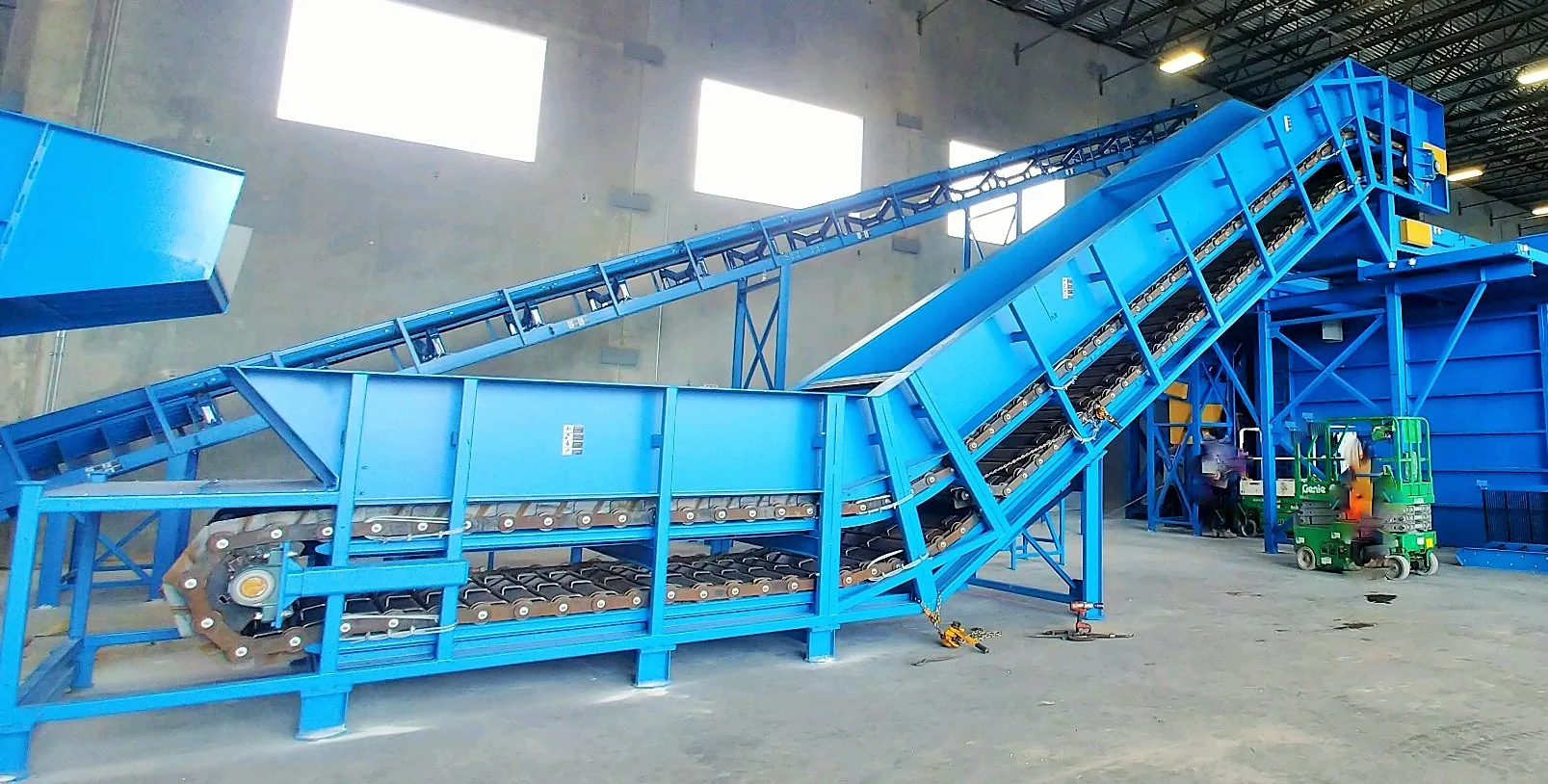
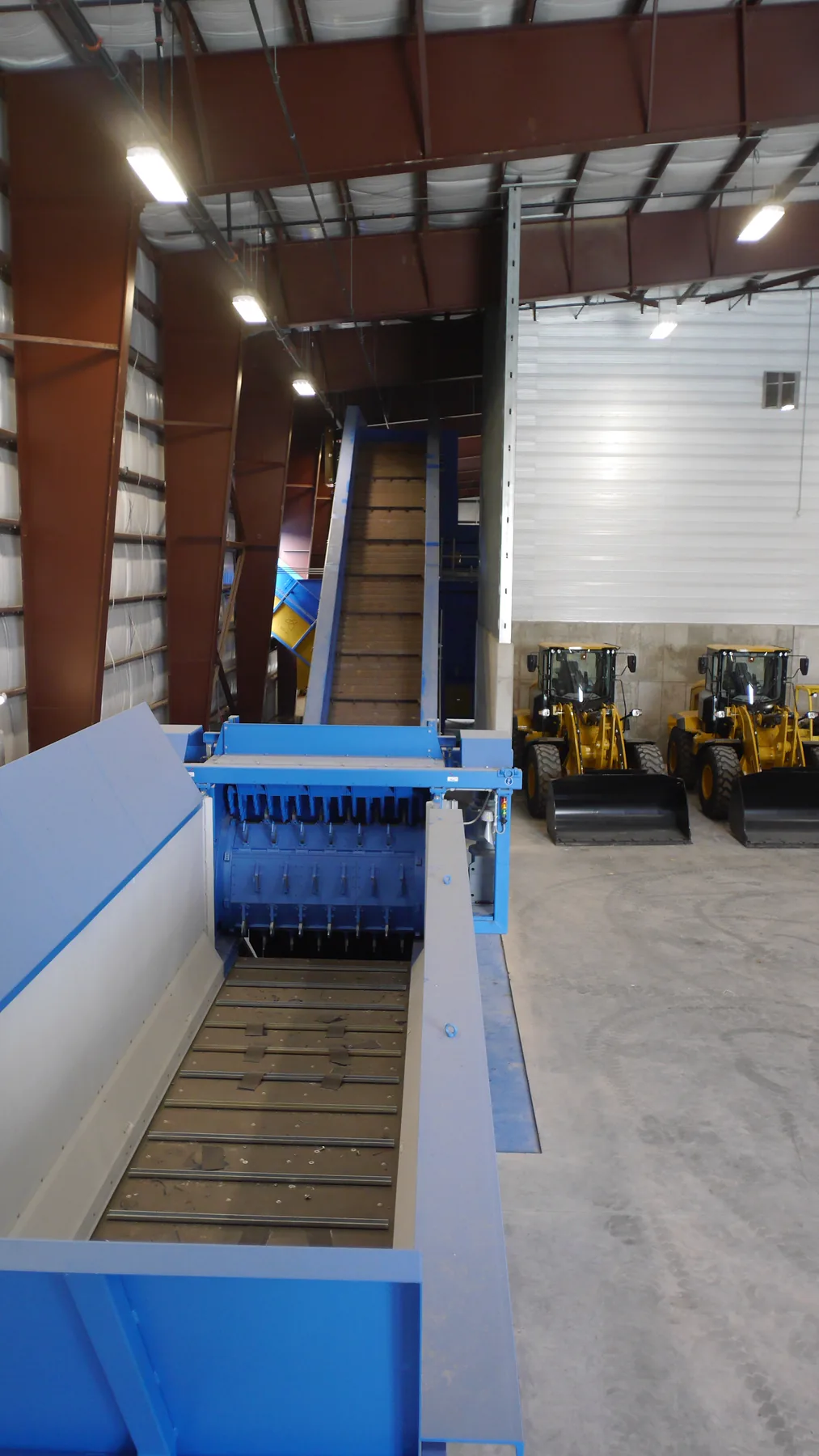
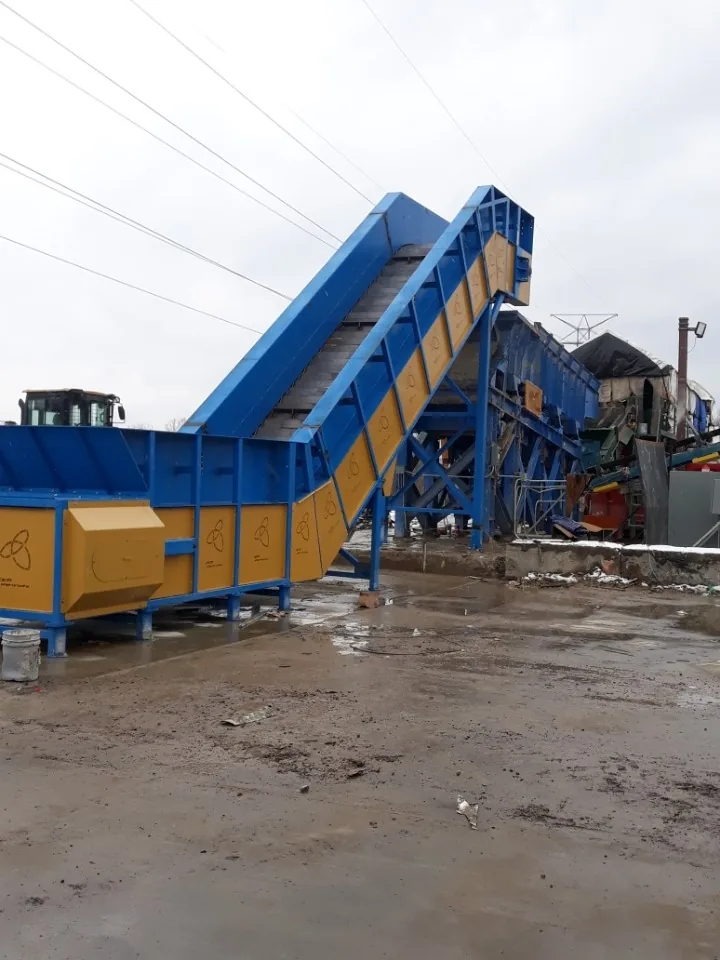
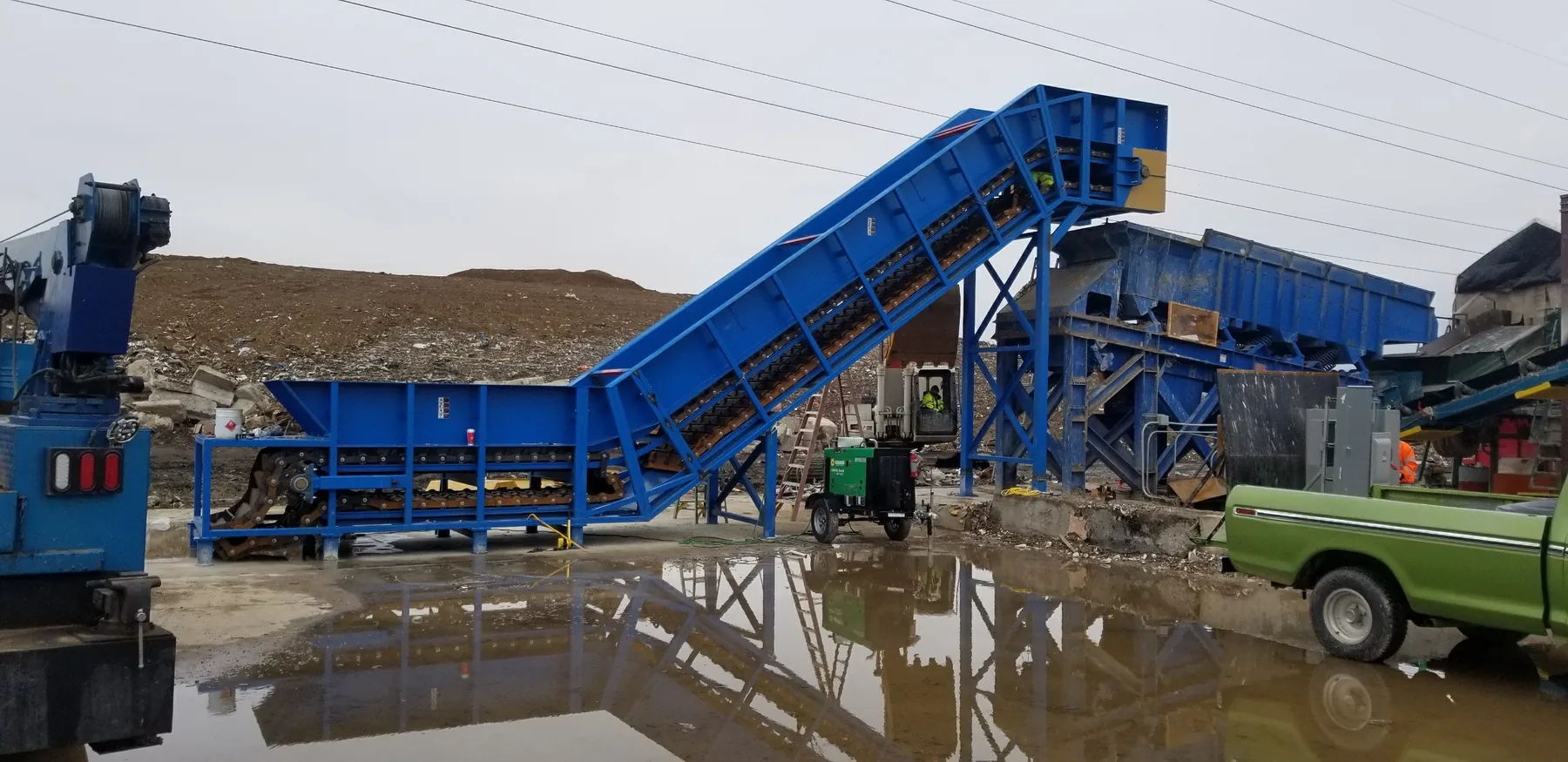
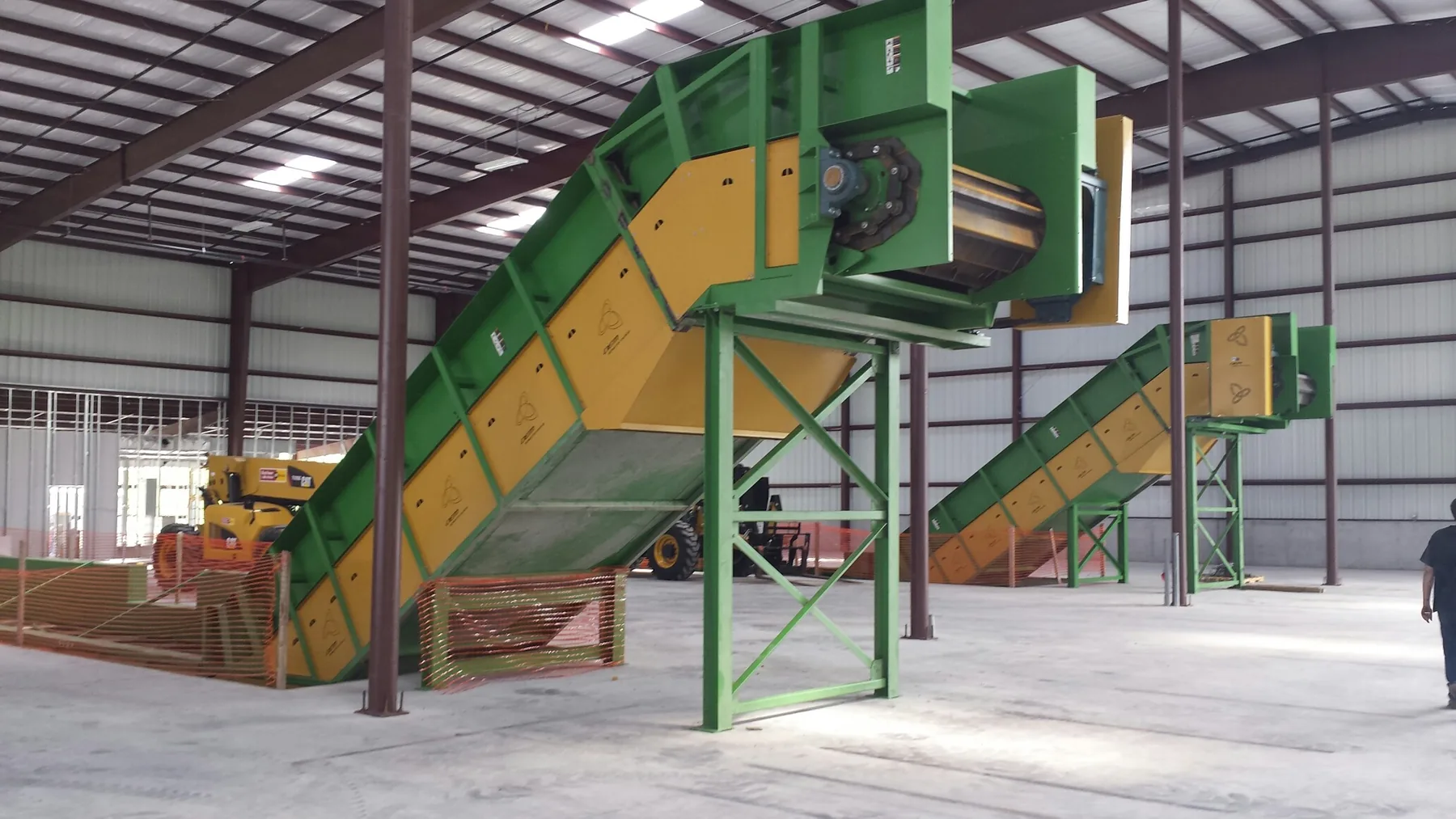
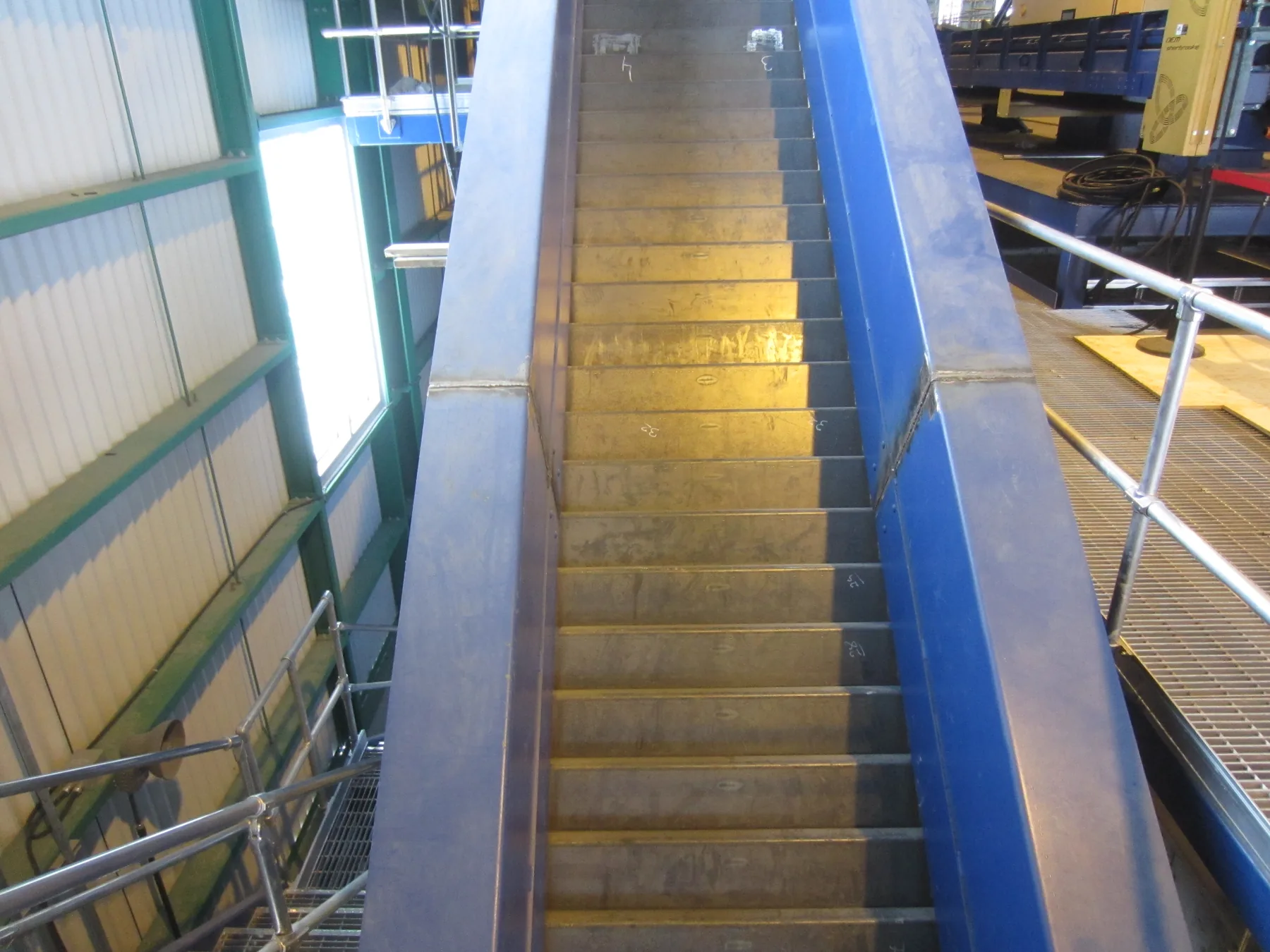
The Sherbrooke OEM heavy-duty apron conveyor is the steel-pan infeed machine for the hardest duty in recycling: excavator- or loader-fed primary loading of dense, sharp, surging material. It is built in two configurations on the same chain platform. The full Z-pan configuration runs overlapping Z-profile pans (typically 1/4 in steel, heavier per duty) the entire length — a leak-resistant trough with welded sidewings, bolt-through rods, and impact skates welded across each pan. The combo configuration replaces the steel pans with a full rubber belt carried on the same heavy chain at both edges — steel-reinforced beneath the belt and fitted with bolted-on cleats, with no steel pans. Both ride heavy sidebar chain (typically 9 in pitch) on hardened rollers over ASCE #30 crane rail, with positive chain drive that restarts under full load. Pan, wing, and liner materials range from mild steel to CHT 400 wear plate per material profile. Engineered per project, fabricated in Sherbrooke, Quebec.
Where It Fits
- Primary infeed on C&D, MSW, and single-stream lines — direct bucket loading
- Scrap and demolition steel handling where belts fail in months
- Steep Z-geometry elevation changes with cleated pans
- Combo configuration: a chain-mounted rubber belt with bolted-on cleats, where a continuous belt surface is wanted instead of steel pans
- Baler infeed conveyors
- Shredder and grinder infeed under surge, impact, and abrasive loading
- Trommel and screen infeed where the feed is bulky, jagged, or wet
- Bunker and receiving-pit reclaim with metered discharge
- Pan, drag-chain, and apron-feeder replacements and retrofits
C&D Recycling · Scrap Metal Recycling · MSW Sorting · Single Stream MRF
Configuration & Options
Every unit is engineered per project — these are the configuration choices and options we quote against, not limits.
| Width | 24–96 in |
|---|---|
| Configuration | Full Z-pan: overlapping steel pans the entire length · Combo: a full rubber belt fixed to the heavy chain at both edges, steel-reinforced under the belt, with bolted-on cleats — no steel pans |
| Profile | Z geometry: low loading zone, incline, elevated discharge |
| Sections | Tail + incline + head sections, each with its own length and angle (incline typically 35°) |
| Duty | Heavy duty for C&D and scrap: 3/8 in pans and walls, 5 in wheels · lighter streams: 1/4 in, 4 in wheels |
| Chain pitch | 6 or 9 in sidebar chain |
| Wheels | 3-1/4 to 5-1/2 in hardened rollers |
| Cleats | None, 4, 6, 8, or 12 in pan cleats for incline retention |
| Hopper | Optional integrated feed hopper |
| Chute work | Mild steel, stainless, or CHT chutes; optional CHT wear-plate liners |
| Structure | Standard supports or special engineered structure |
Construction
| Impact skates | 3 × 3/8 in × 3 in skates welded across each pan |
|---|---|
| Pan rods | Ø1 in full-width rods with nylon lock nuts |
| Sidebars | 1/2 in × 3 in heavy chain sidebars |
| Bushings | Machined, heat-treated DOM mechanical pipe |
| Rail | ASCE #30 crane rail — manganese running surface |
| Frame | Heavy-duty HSS square-tubing welded assembly |
| Drive system | Sprocket-and-chain drive sized to speed and horsepower; Teco-Westinghouse-class motor with Dodge Torque-Arm II reducer or equal |
| Guarding | All rotating parts guarded to OSHA requirements |
Related reading: from the Knowledge Hub
Project Photos
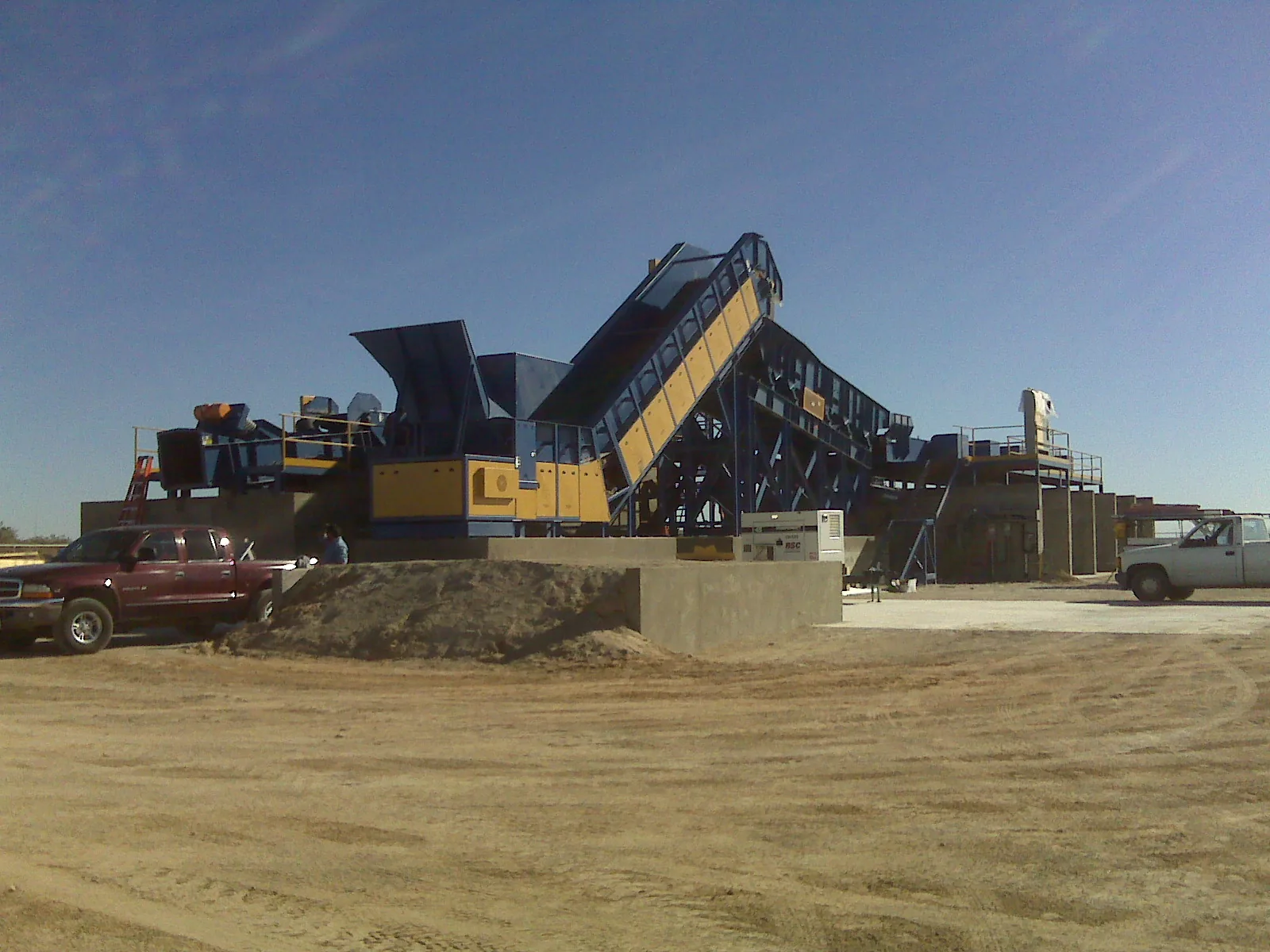
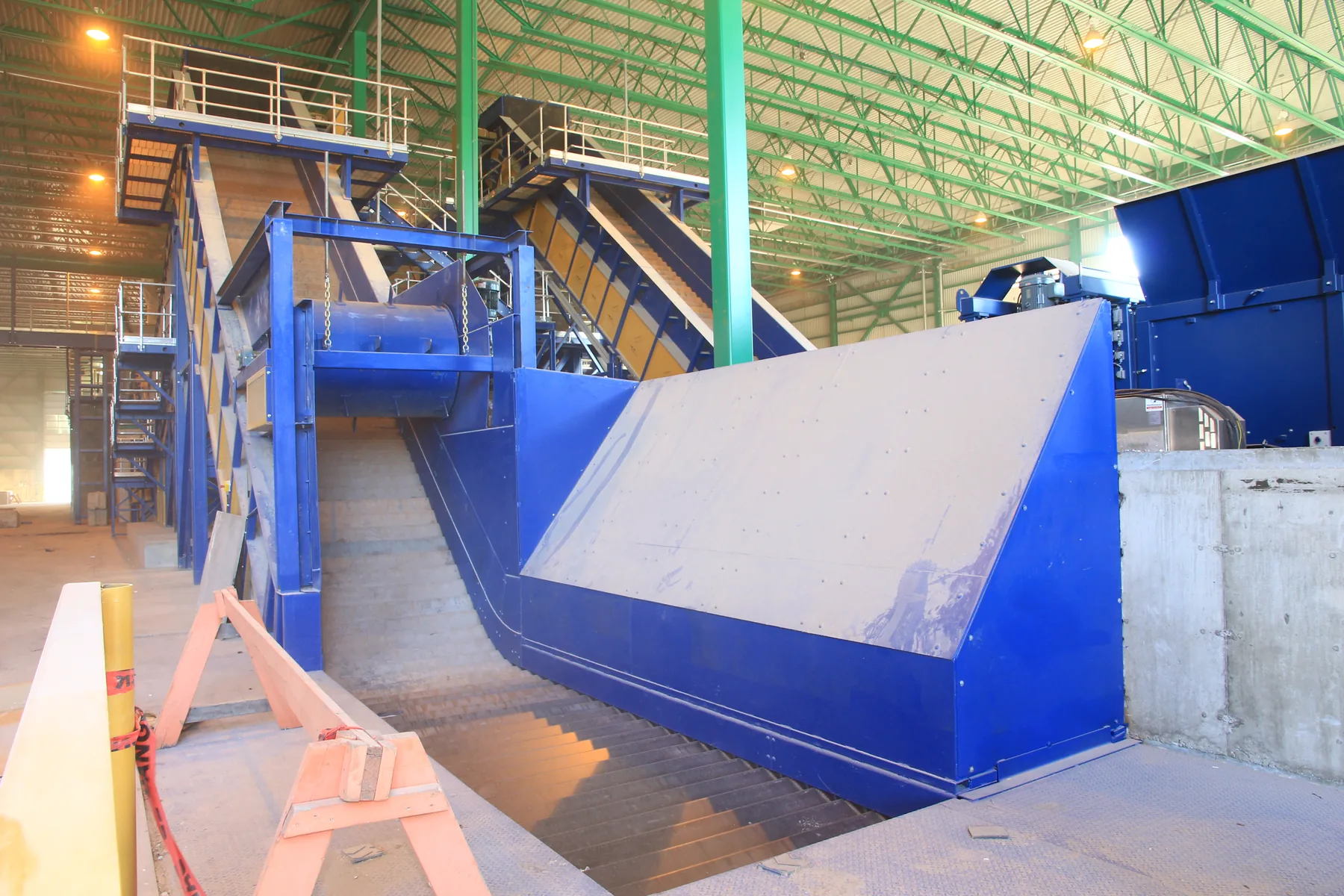
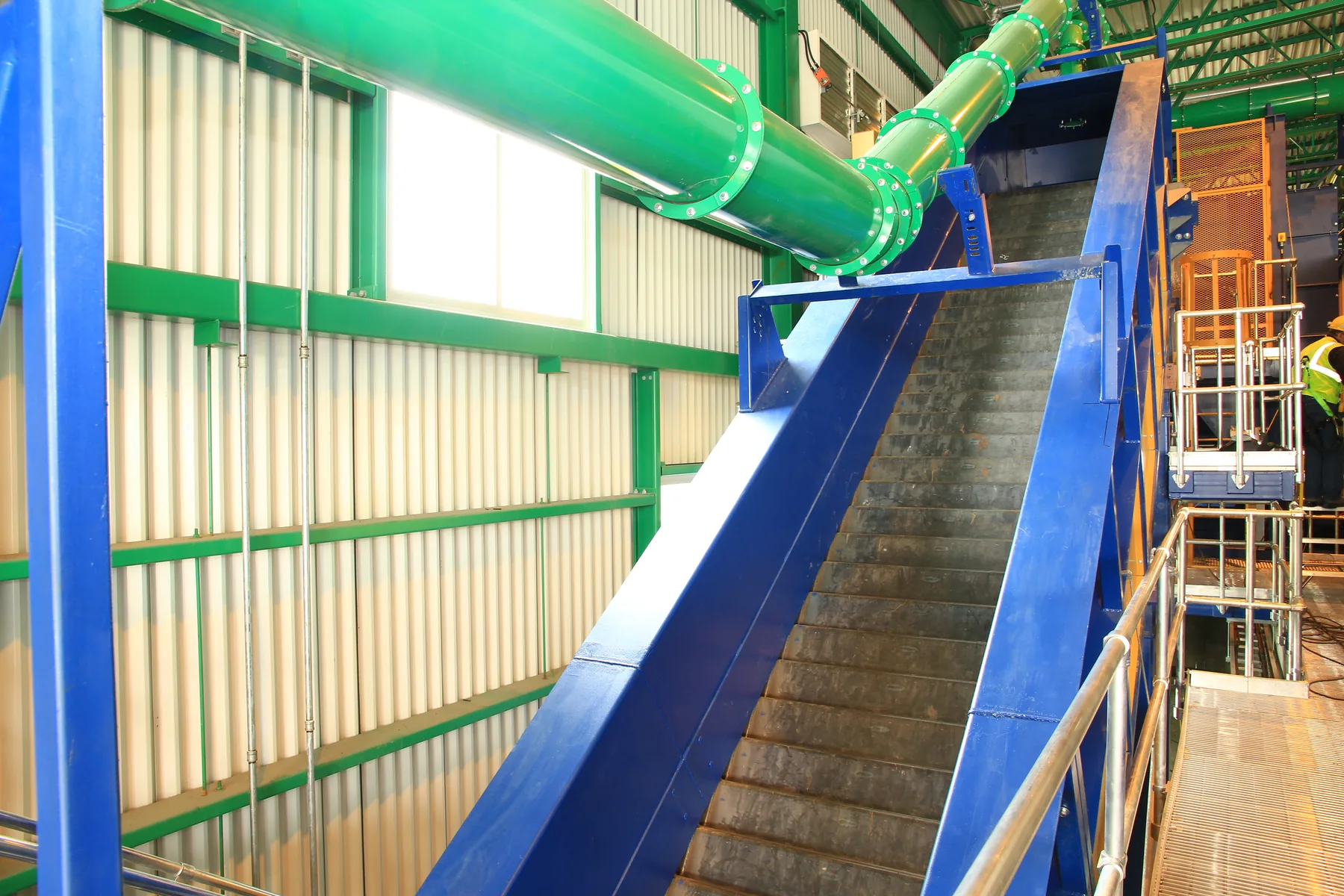
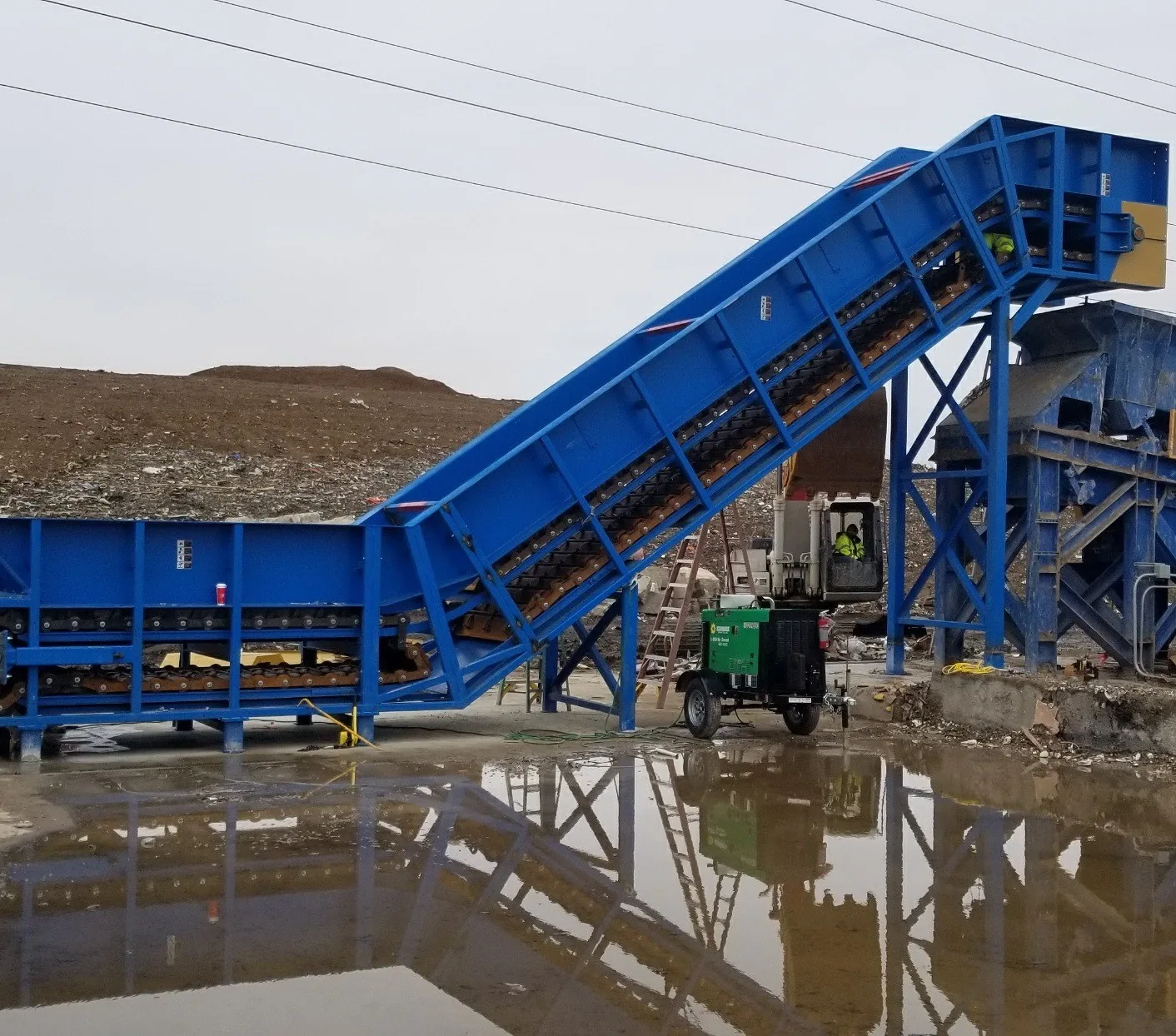
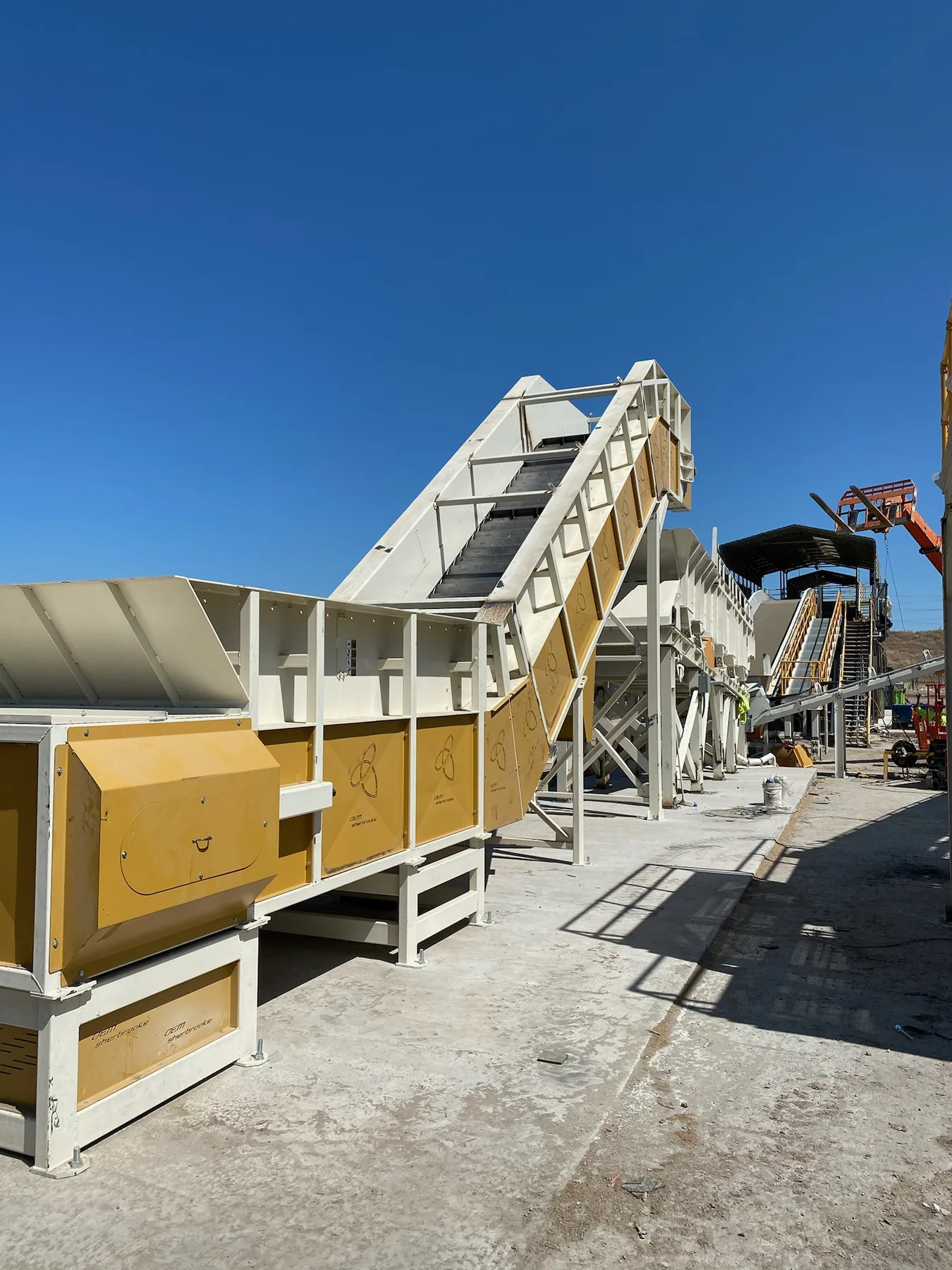
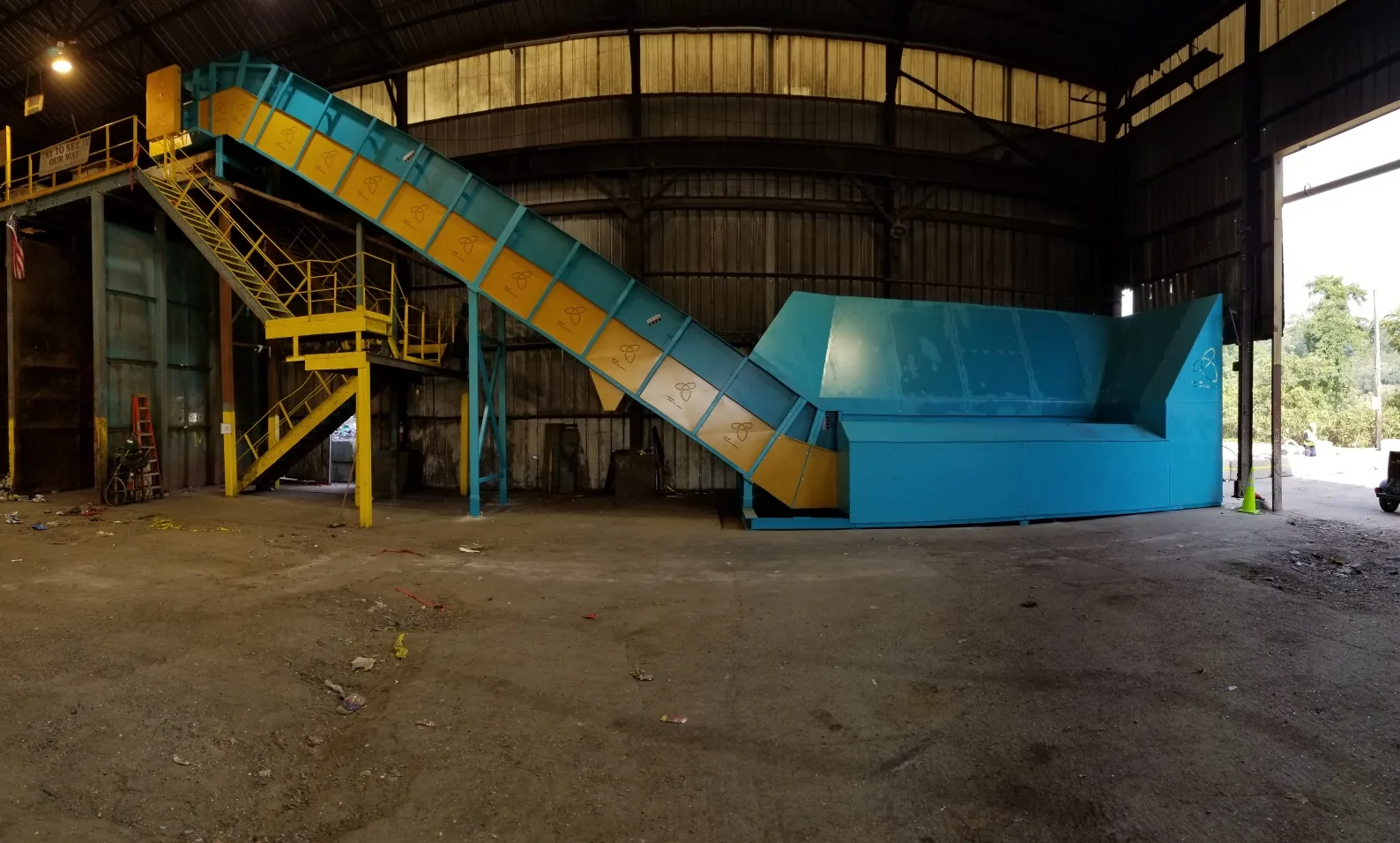
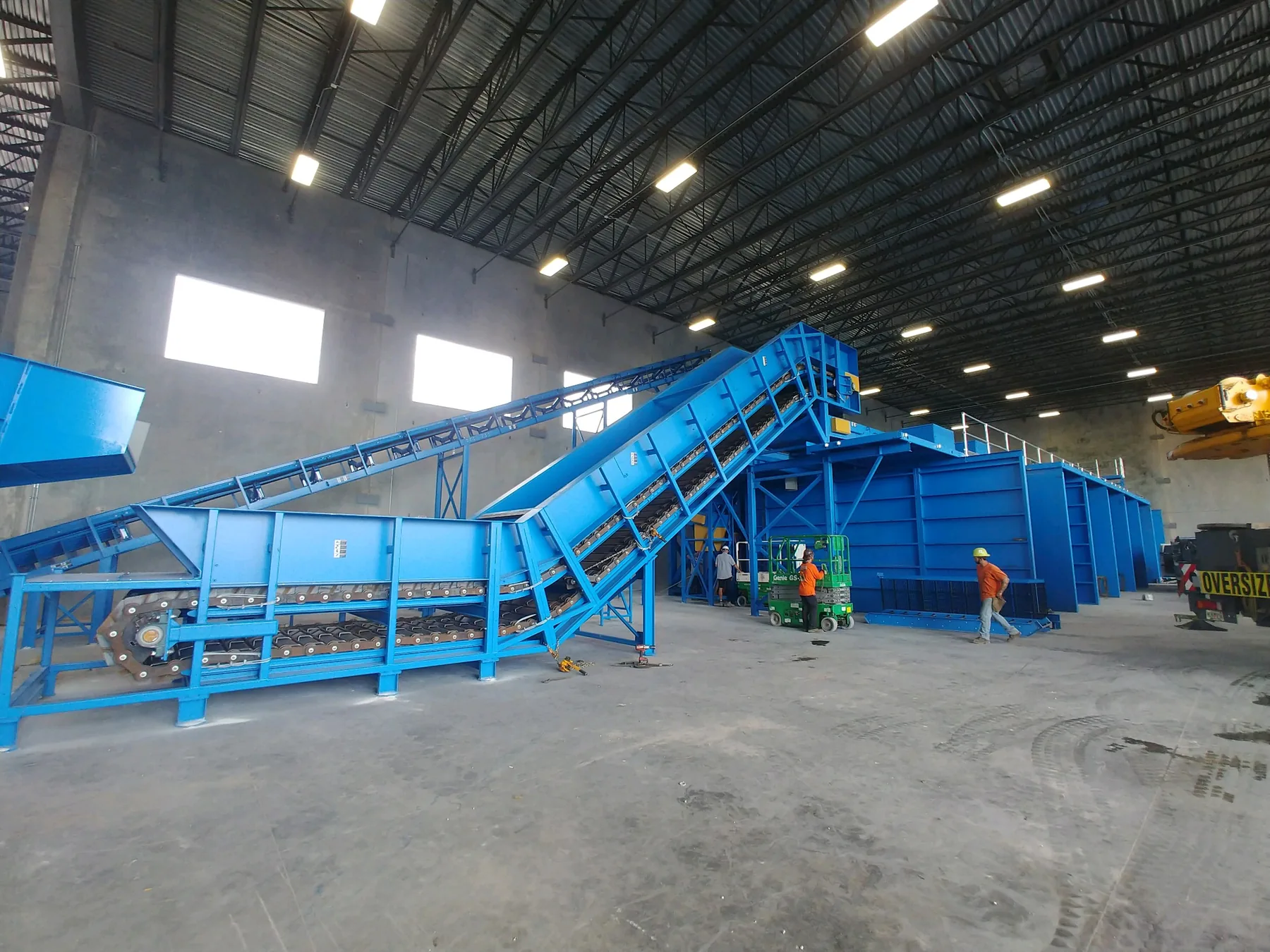
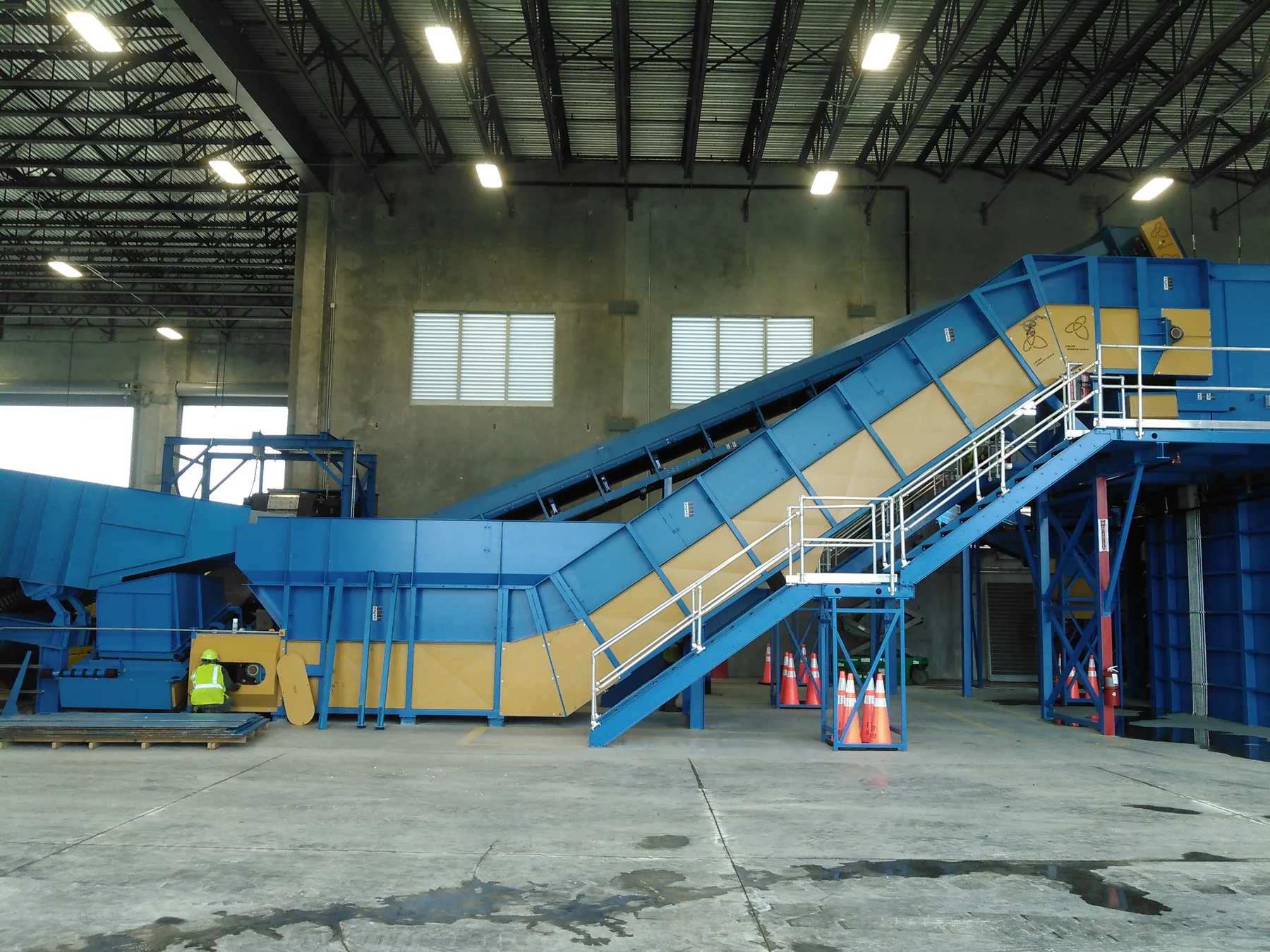
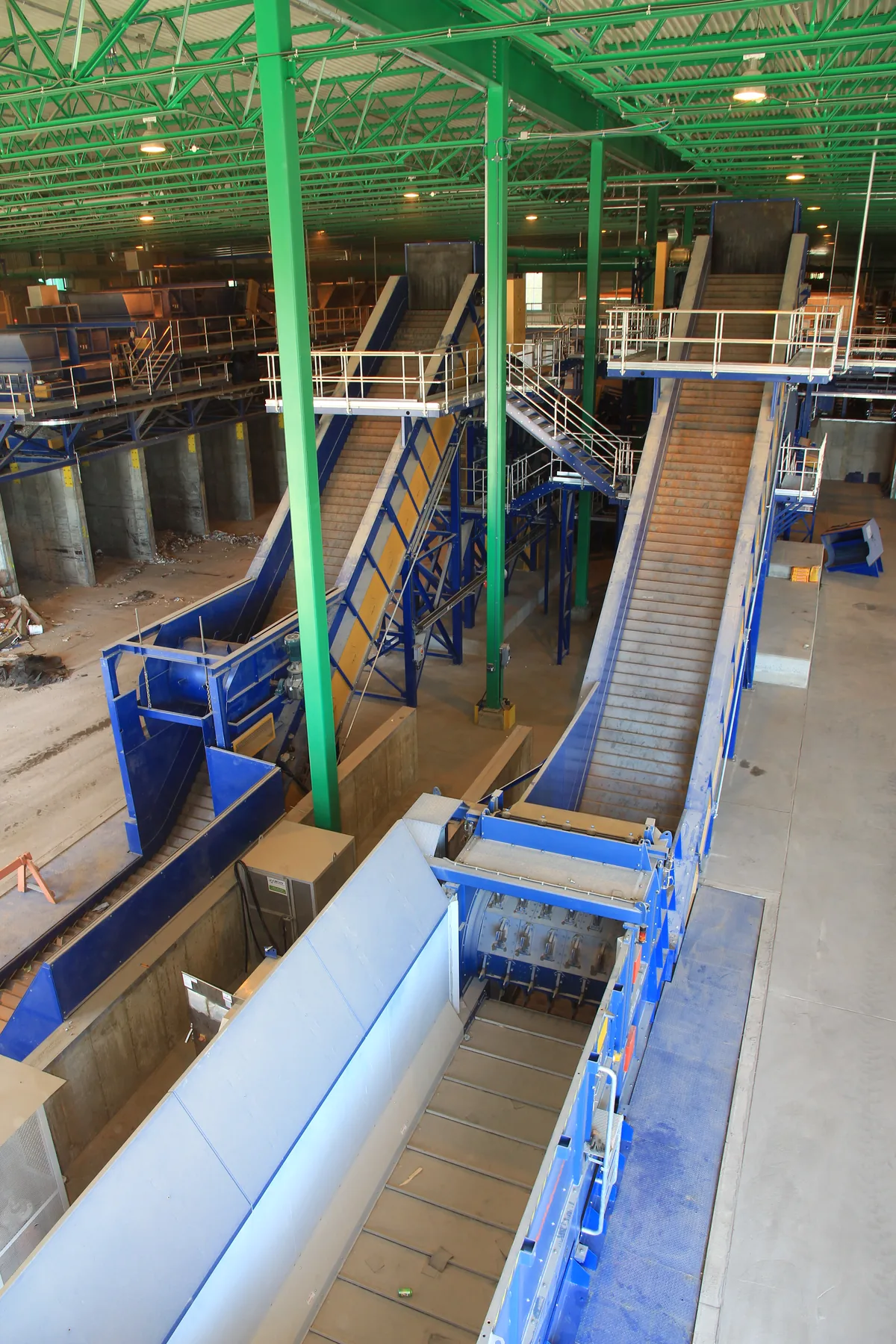
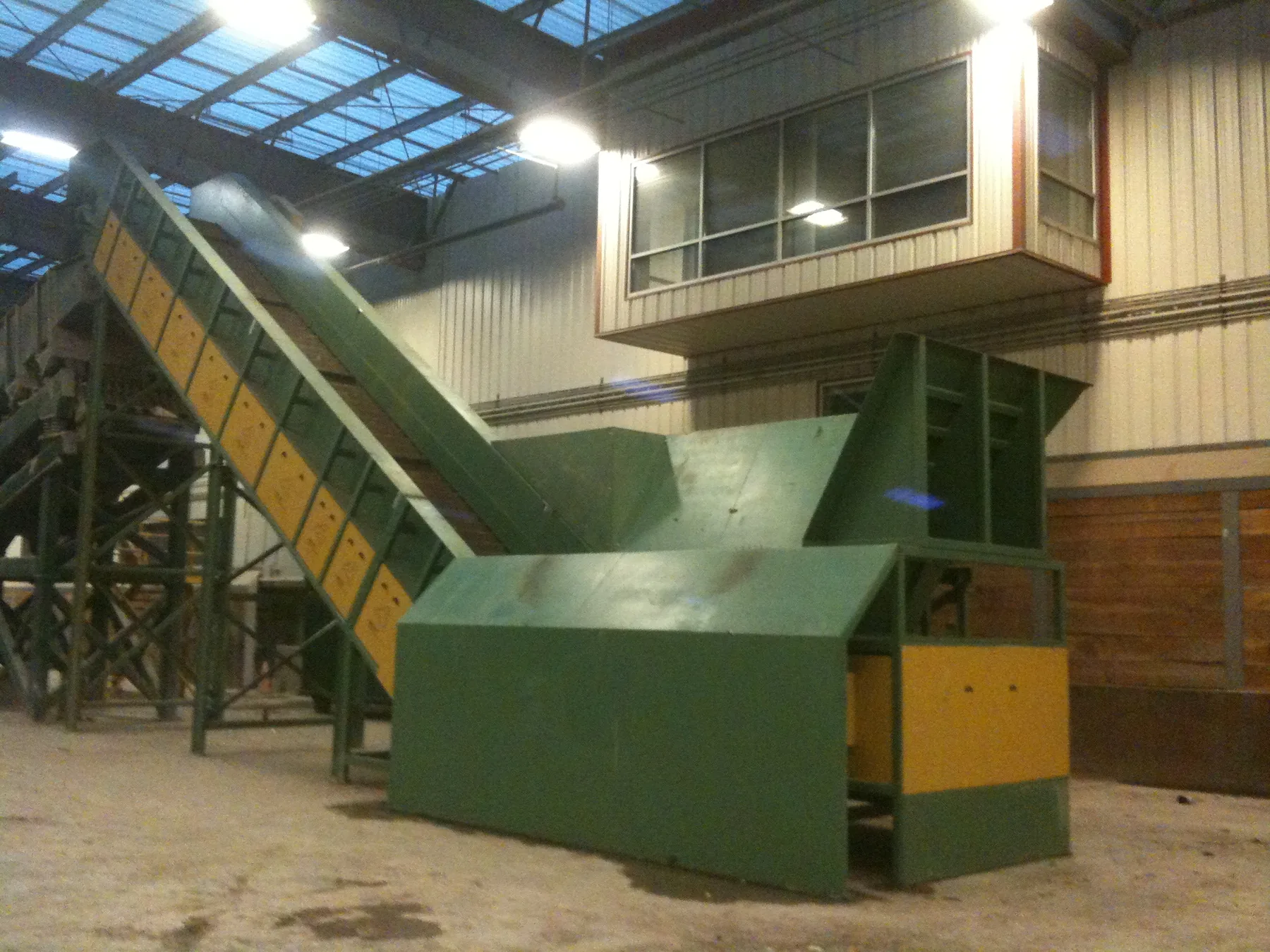
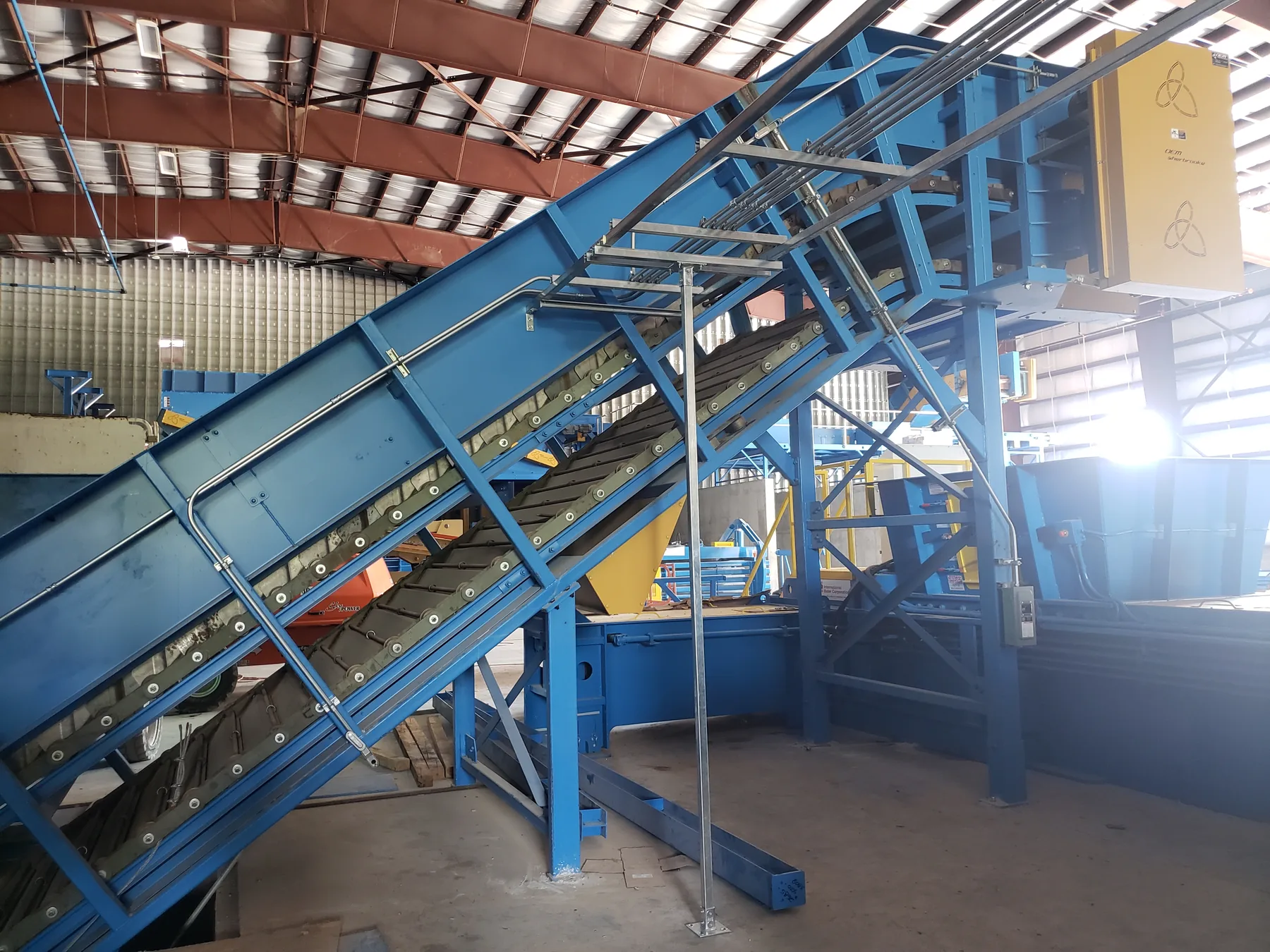
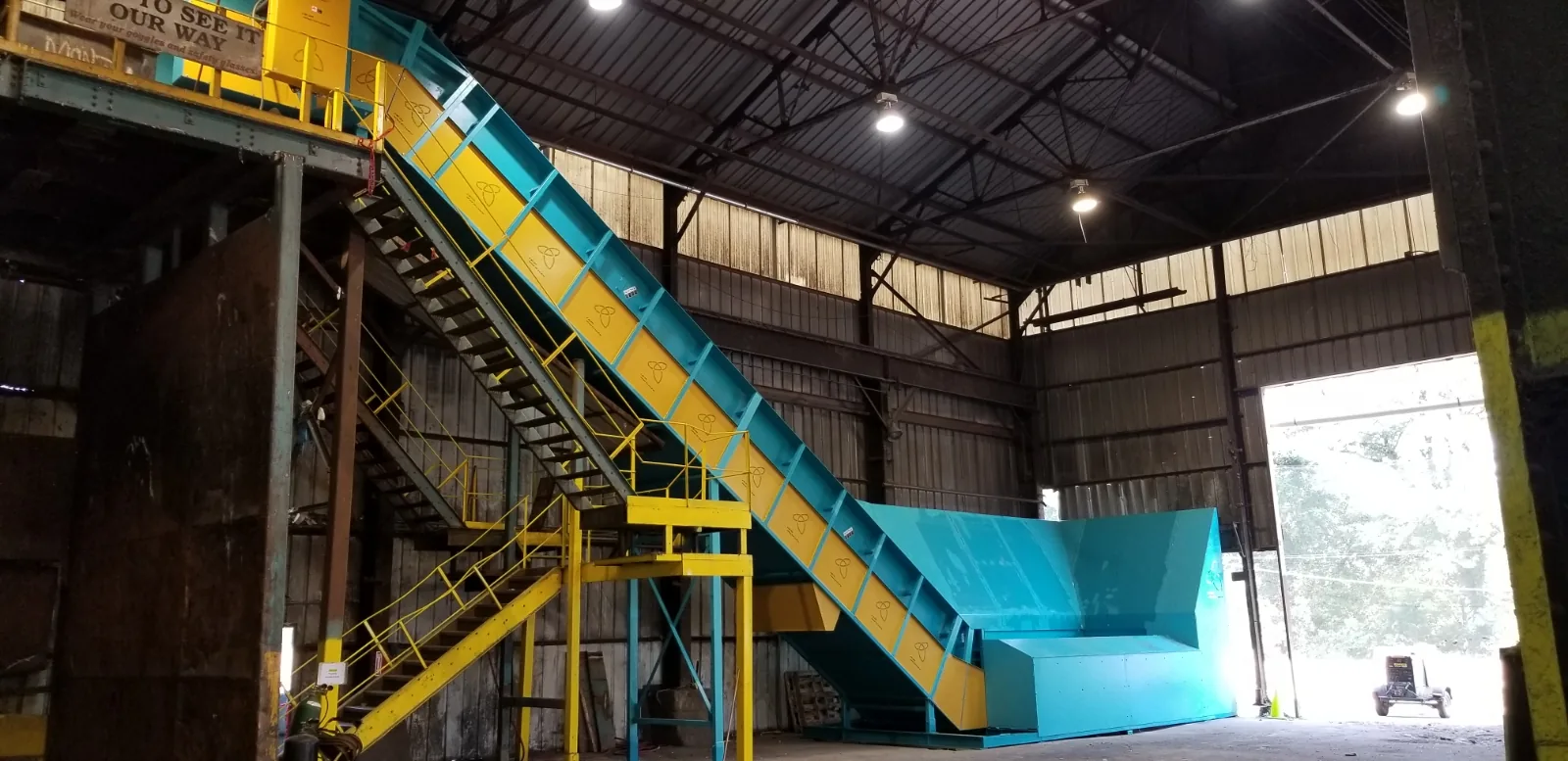
Heavy-Duty Apron Conveyor units built and installed by Sherbrooke OEM on recycling and C&D lines across North America.
Heavy-Duty Apron Conveyor — Frequently Asked Questions
Why a steel apron instead of a belt for primary infeed?
Primary infeed takes bucket impacts, sharp steel, and surge loading that cut and tear rubber belts. Overlapping steel pans absorb the strikes, the welded sidewings contain the burden, and the positive chain drive restarts buried. On this duty, steel outlives rubber by design, not by margin.
Full Z-pan or combo — when is the combo enough?
Both configurations ride the same heavy chain platform; the difference is the carrying surface. The full Z-pan uses overlapping steel pans for the most severe bucket impact, sharp steel, and abrasion. The combo replaces the pans with a full rubber belt fixed to the chain at both edges — steel-reinforced underneath and fitted with bolted-on cleats — giving a continuous belt surface with chain-grade strength where a steel-pan deck is not required. The material profile decides — that is a pre-design question.
What does the Z shape do?
The Z profile lets each pan overlap the next, sealing the carrying surface against fines leakage while allowing the conveyor to follow horizontal-incline-horizontal geometry — taking material from a low loading zone up to the line in one machine.
What pan thickness does my material need?
It depends on the worst-case lump, drop height, and abrasiveness. Typical C&D duty starts around 1/4 in Z-pans with impact skates; heavier demolition or scrap duty moves pan, wing, and liner materials up toward CHT 400 wear plate. The material profile decides — that is a pre-design question.
Need dimensions, capacity, or a budget price?
Send your material profile and layout — engineering answers with real numbers, from the team that will fabricate it in Sherbrooke.
Talk to Engineering