


Conveyors · Built in-house
Picking Conveyor
The slow, flat belt where people work the line — engineered around sorters: controlled speed, toe plates, pull cords within reach.
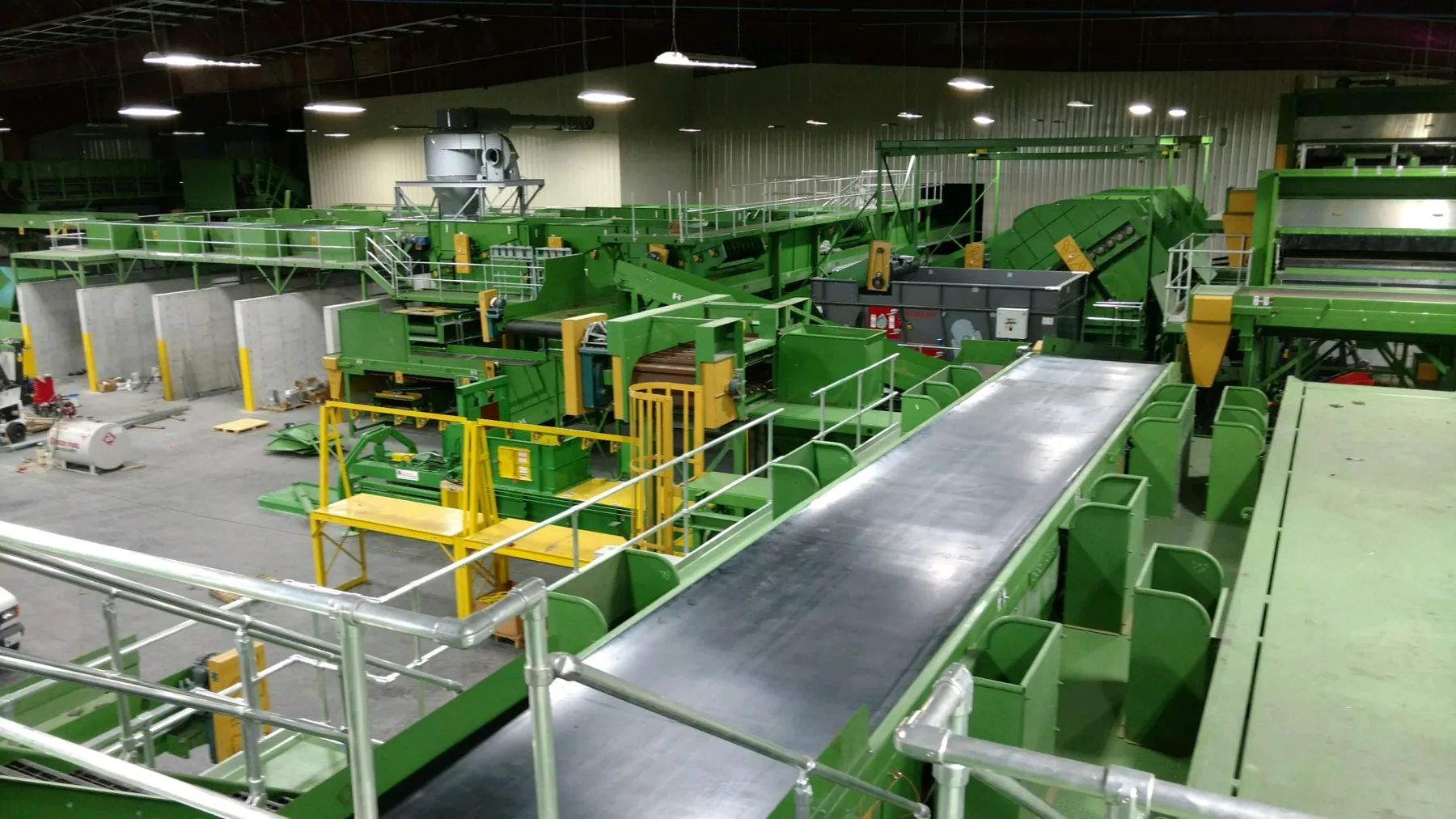
The Sherbrooke OEM picking conveyor is a sliderbed-design sorting belt that presents material to manual sorters at a controlled 60–100 FPM. It is built around the people who work on it: formed-steel toe plates with foot clearance, safety pull cords along the working side (one or both sides per width), optional standby stations, and burden depth set by the upstream metering. Widths around 72 in are common; length follows the number of sorting stations. Fabricated in Sherbrooke, Quebec and integrated with picking platforms and bunkers below.
Where It Fits
- Manual A-lines sorting the primary oversize on C&D systems
- Quality-control positions after de-stoners, optical sorters, and screens
- Container and fiber QC lines in MRFs
- Positive and negative sort (pick) stations on C&D, MSW, and single-stream lines
- Pre-sort cabins removing oversize and contaminants ahead of automated equipment
- OCC, film, and rigid-plastic hand-sort positions
Configuration & Options
Every unit is engineered per project — these are the configuration choices and options we quote against, not limits.
| Speed | 60–100 FPM, set per picks per sorter |
|---|---|
| Width | Commonly 72 in |
| Pull cords | Full length — one side up to 36 in wide, both sides beyond |
| Standby stations | Optional operator standby buttons |
| Toe plate | Formed steel with foot clearance, standard |
| Geometry | Straight or elbow (break-away) — incline and horizontal sections with angles per layout |
| Cleats | Rubber cleats applied per configuration; various types and sizes available |
| Skirts | Optional rubber skirtboards with adjustable clamps, any length |
| Stainless section | Optional stainless steel section on the conveyor, any length |
| Side walls | Optional raised side walls, height and length per need |
| Impact section | Optional — light, medium, or heavy duty, length per loading zone |
| Chute work | Mild steel, stainless, or CHT chutes; optional CHT wear-plate liners |
Construction
| Design | Sliderbed — continuous steel deck under the working surface |
|---|---|
| Toe plate | Formed steel panels with indentation for foot clearance |
| Belting | Heavy-duty rubber belt; specifications vary by application |
| Pulleys | Heavy-duty drum head pulley (lagged), wing tail pulley, XT hubs |
| Frame | Structural channel with welded cross members |
| Return idlers | CEMA C — 5 in rubber-disc return idlers |
| Take-up | Telescopic screw take-up |
| Guarding | All rotating parts guarded to OSHA requirements |
| Supports | Bolted structural steel — standard supports or custom structure engineered to fit the environment |
Project Photos
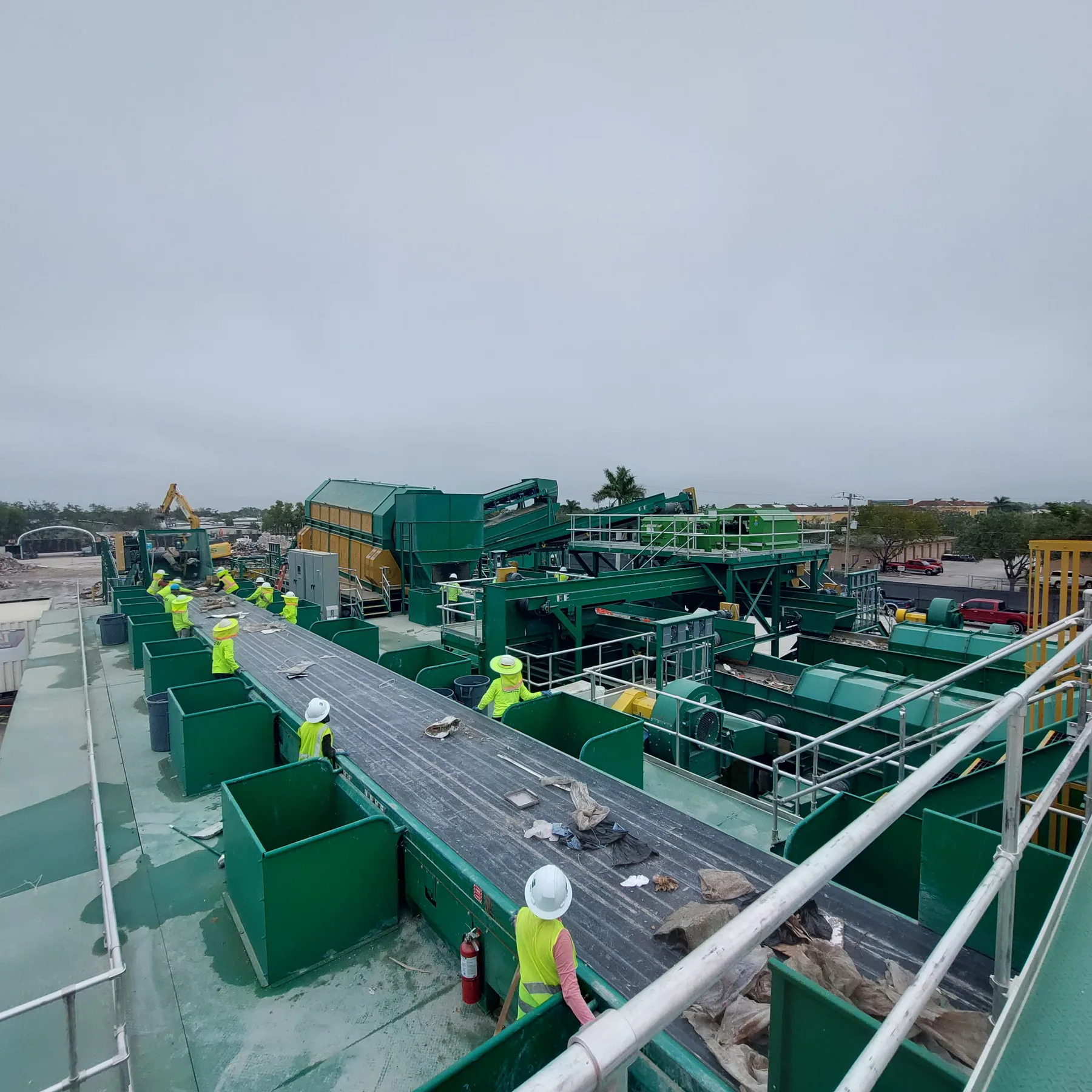
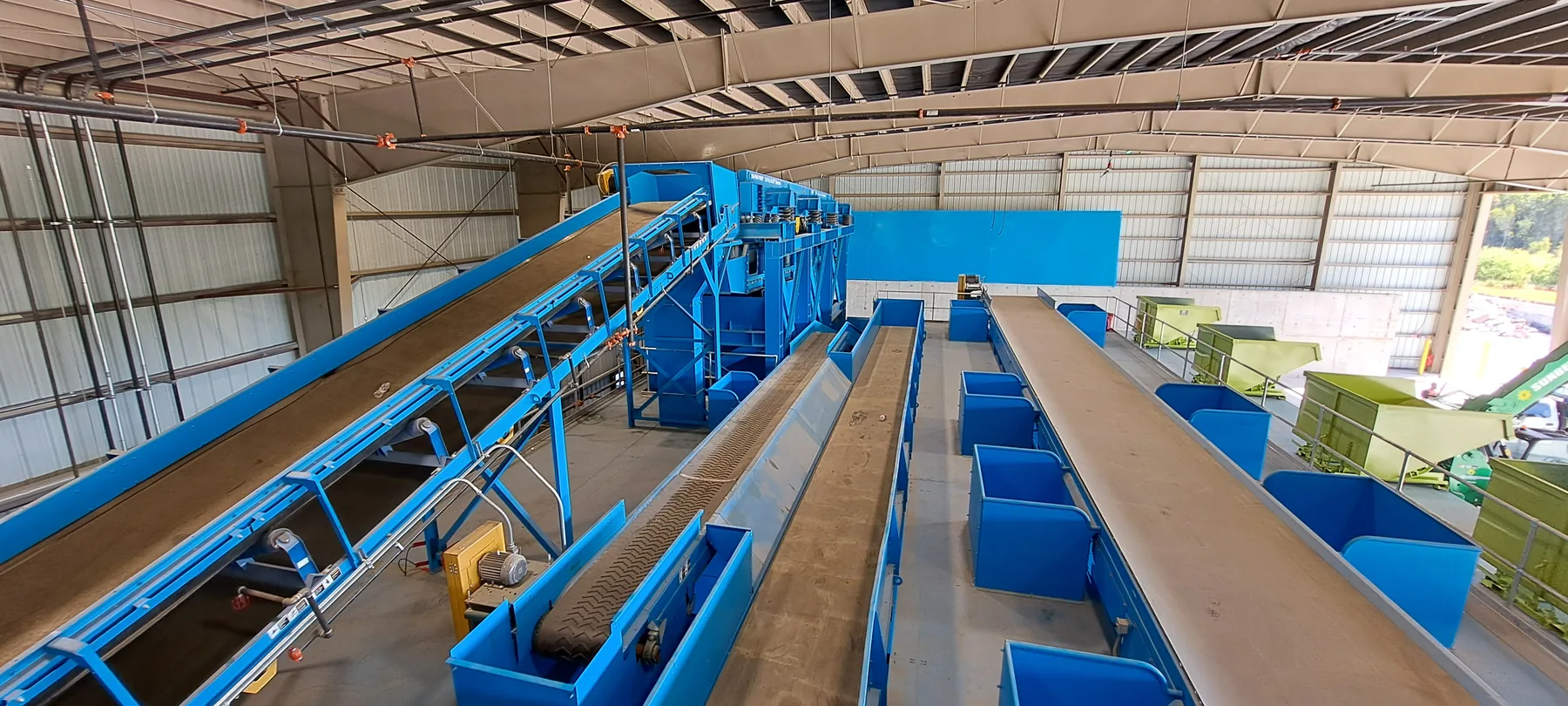
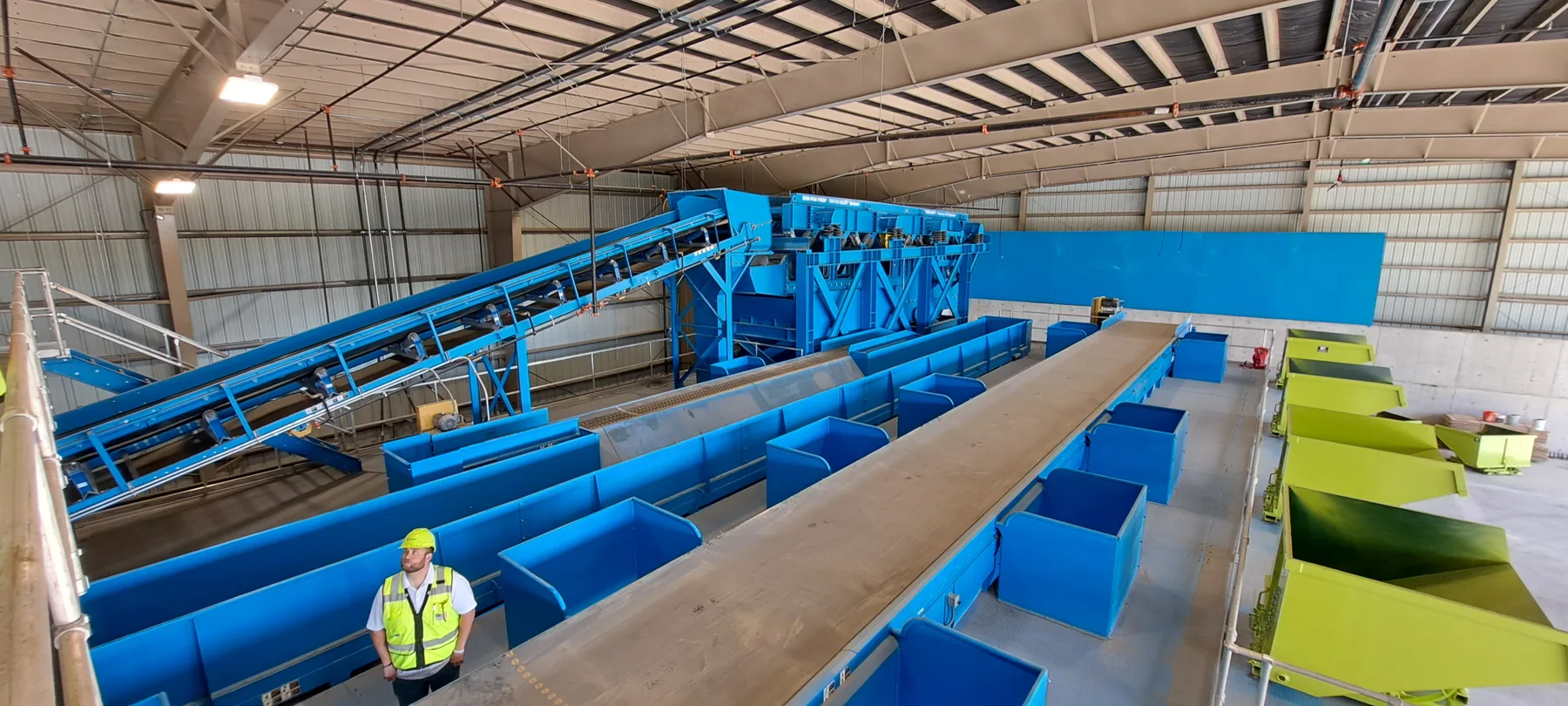
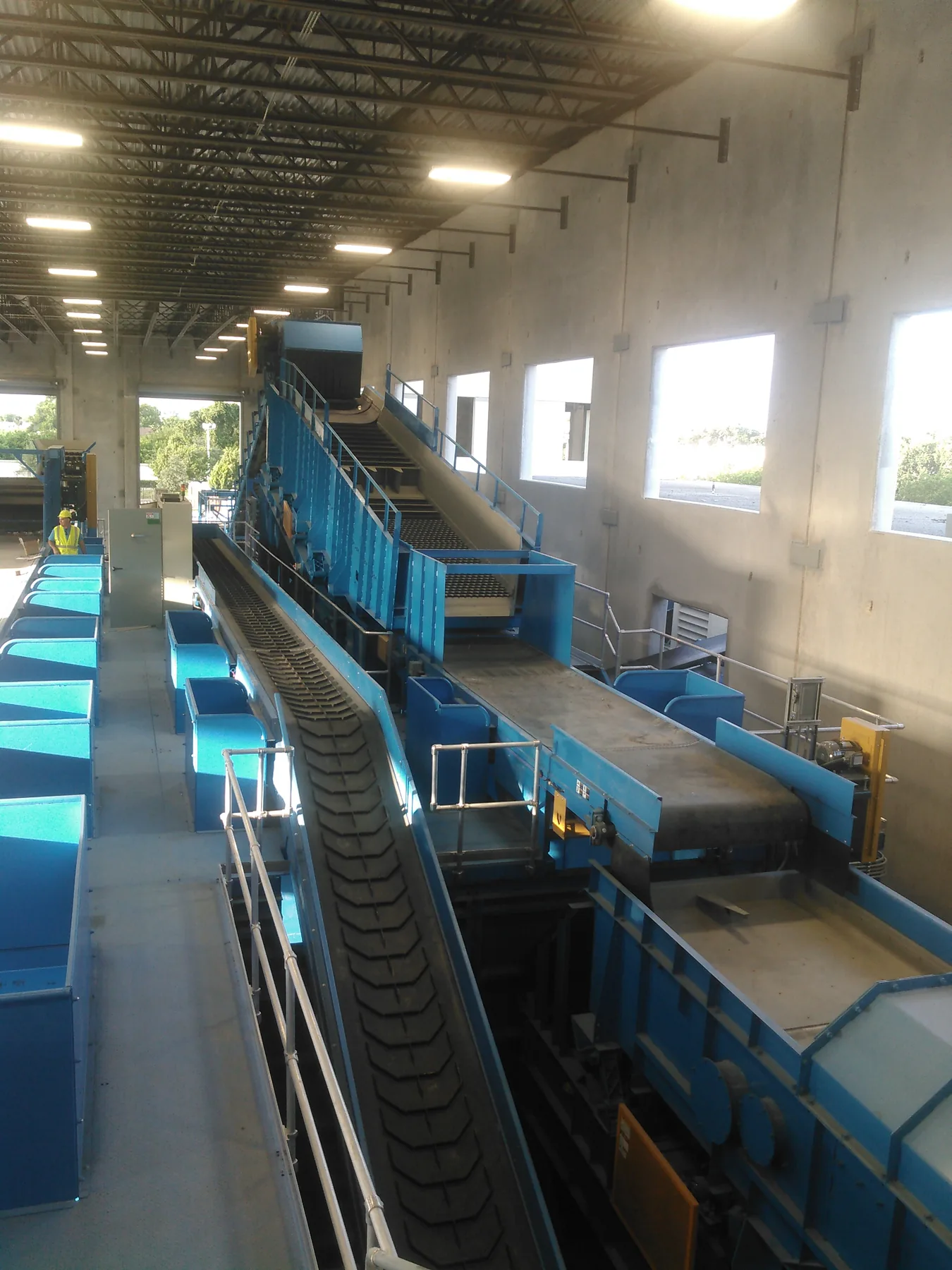
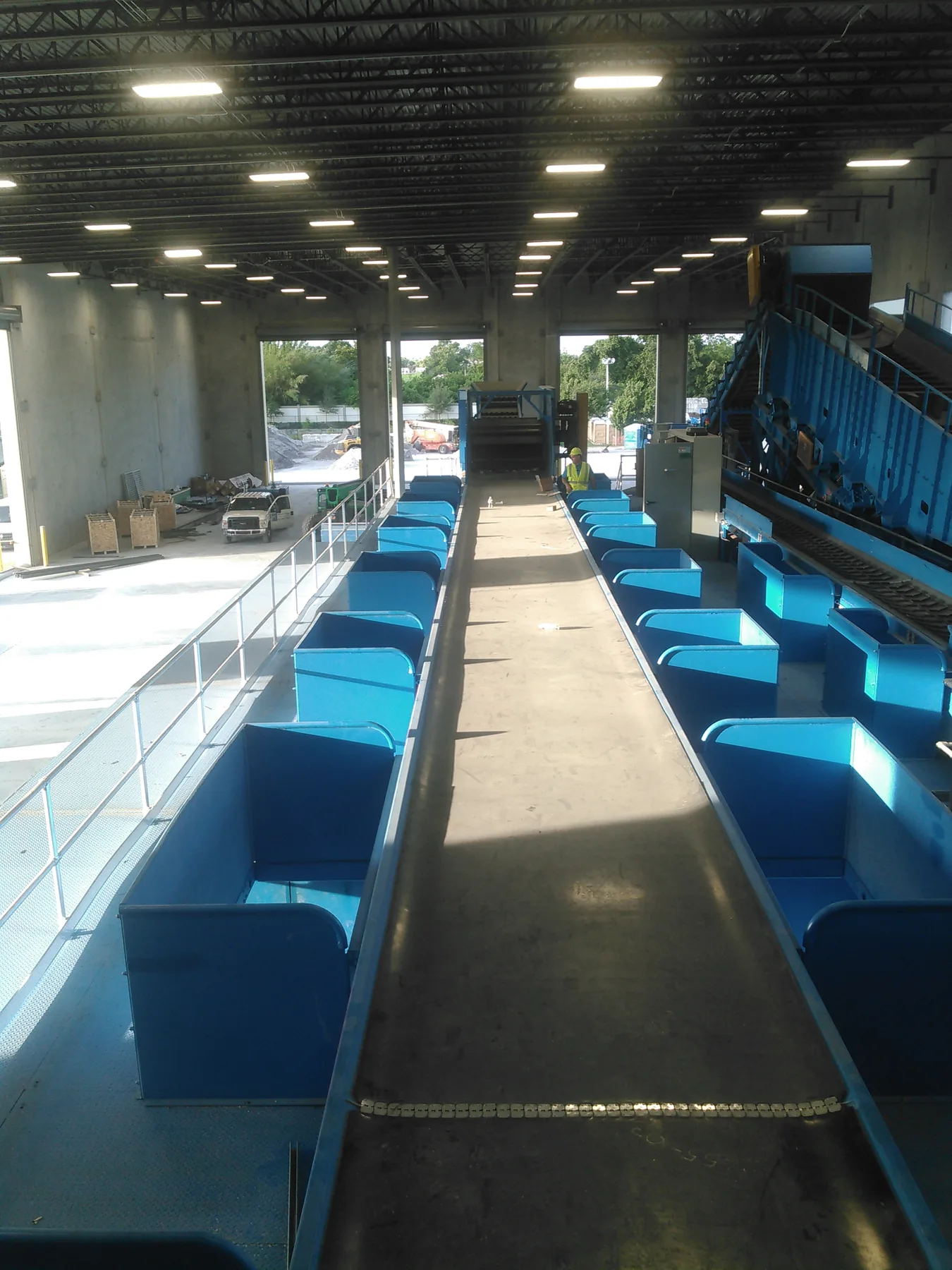
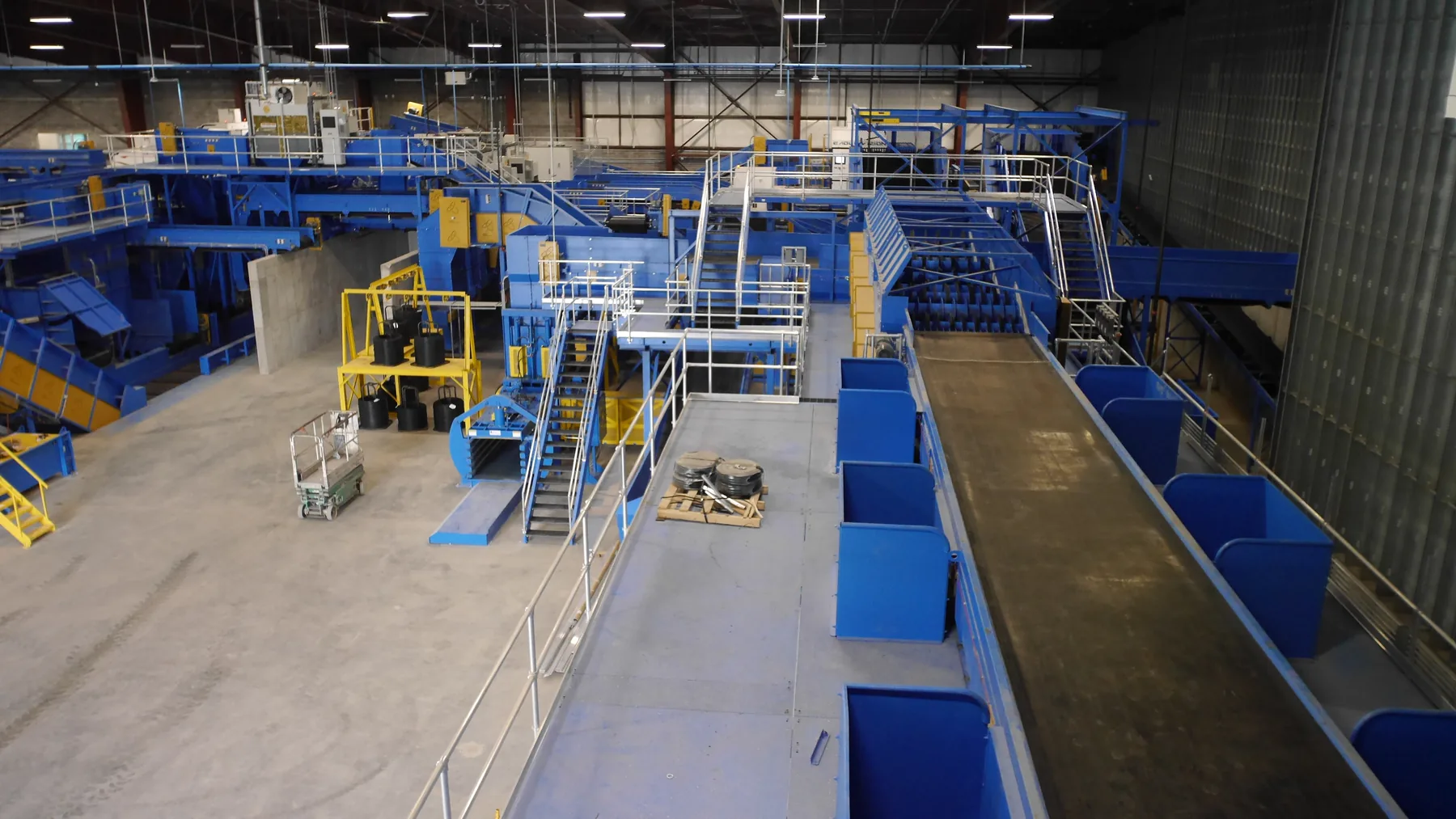
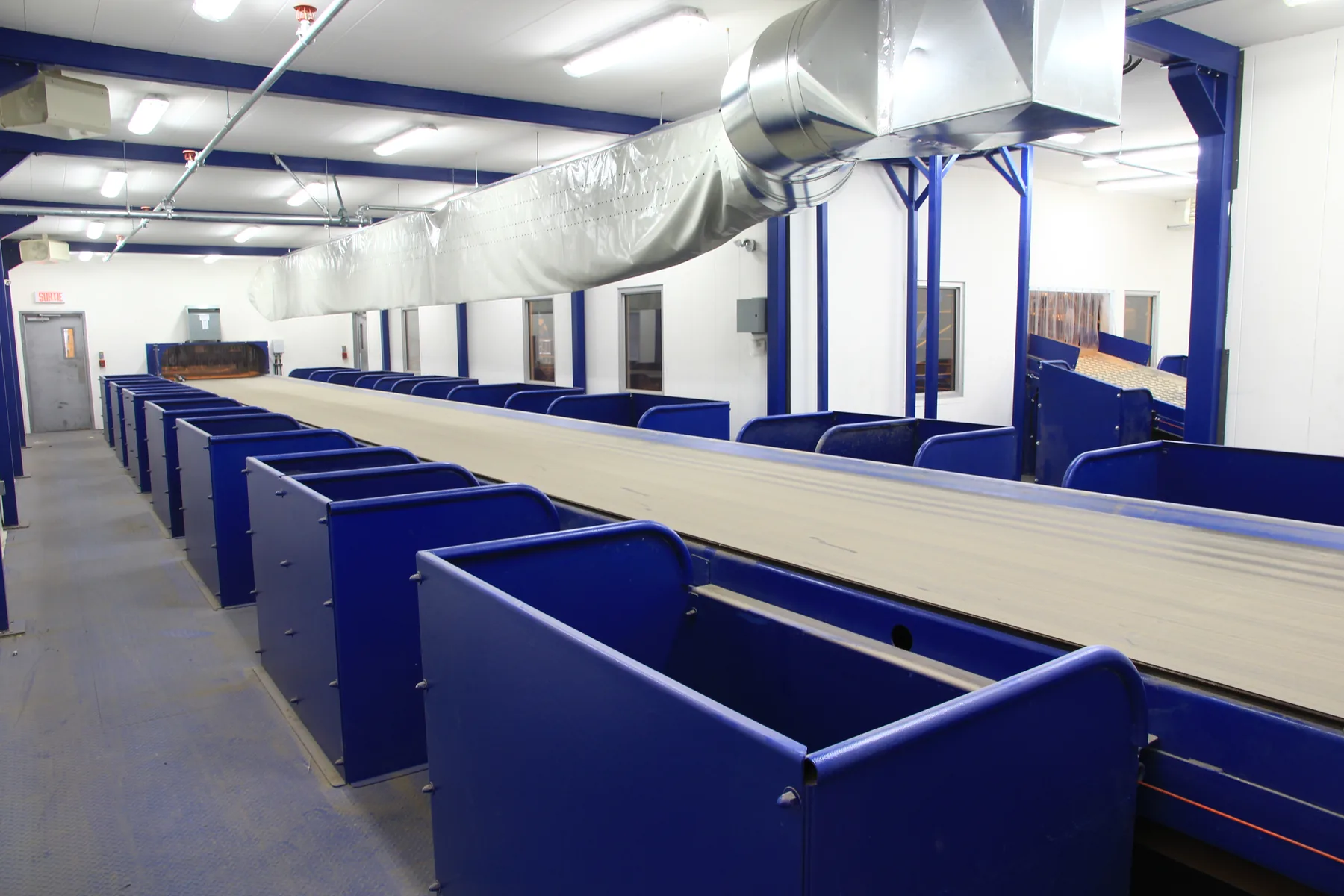
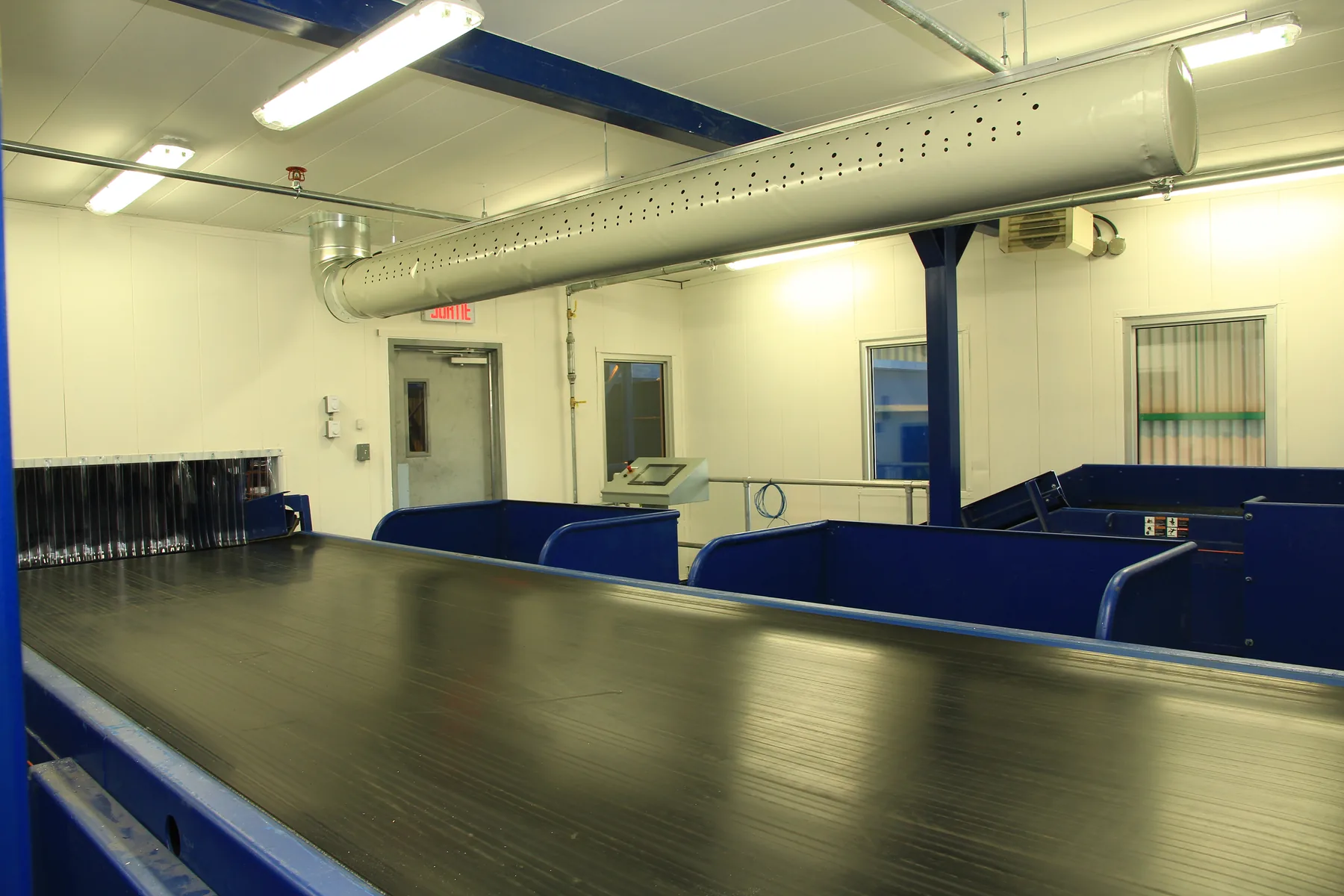
Picking Conveyor units built and installed by Sherbrooke OEM on recycling and C&D lines across North America.
Picking Conveyor — Frequently Asked Questions
How fast should a picking conveyor run?
Slow enough that sorters can identify and reach their targets — typically in the 60–100 FPM band. The right speed is a function of burden depth, picks per minute per sorter, and the fraction being worked, which is why it is specified per station, not per catalog.
How many pull cords does a picking line need?
Along the full working length, within reach of every sorter. As a rule a belt up to 36 in wide takes a cord on the working side; wider belts take cords both sides. Standby stations can be added where sorters rotate.
What sits under a picking conveyor?
Usually the products: sorters drop picks through chutes into bunkers or bins below the elevated platform, which is why picking conveyors, platforms, and storage are engineered together rather than bought separately.
Need dimensions, capacity, or a budget price?
Send your material profile and layout — engineering answers with real numbers, from the team that will fabricate it in Sherbrooke.
Talk to Engineering