


Conveyors · Built in-house
Sliderbed Conveyor
The workhorse of the sorting plant — a rubber belt running on a continuous steel deck, built for transfers, inclines, and sorted-fraction handling.
The Sherbrooke OEM sliderbed conveyor is a belt conveyor supported by a continuous steel deck rather than rollers, giving full support under the burden at every point. It handles transfers, inclines (including elbow/break-away geometries), and sorted-fraction runs throughout recycling plants. Frames are structural channel with welded cross members, fabricated in-house in Sherbrooke, Quebec, with widths, lengths, and drives engineered per project. Optional impact sections in light, medium, or heavy duty absorb loading-zone abuse.
Where It Fits
- Transfers between processing stages, where full belt support beats rollers for spillage and wear
- Inclines and elbow (break-away) configurations to change elevation inside tight buildings
- Sorted-fraction and residue runs across C&D, MSW, and single-stream plants
- Incline and elevating belt conveyors feeding screens, balers, or storage bunkers
- Recovered-fraction handling — fibre, OCC, containers, plastics, and wood
- Belt conveyor retrofits and replacements on existing sorting lines
C&D Recycling · MSW Sorting · Single Stream MRF · Aggregates & Custom
Configuration & Options
Every unit is engineered per project — these are the configuration choices and options we quote against, not limits.
| Width | 24–110 in — per burden and layout |
|---|---|
| Length | Per layout; elbow geometry available |
| Geometry | Straight or elbow (break-away) — incline and horizontal sections with angles per layout |
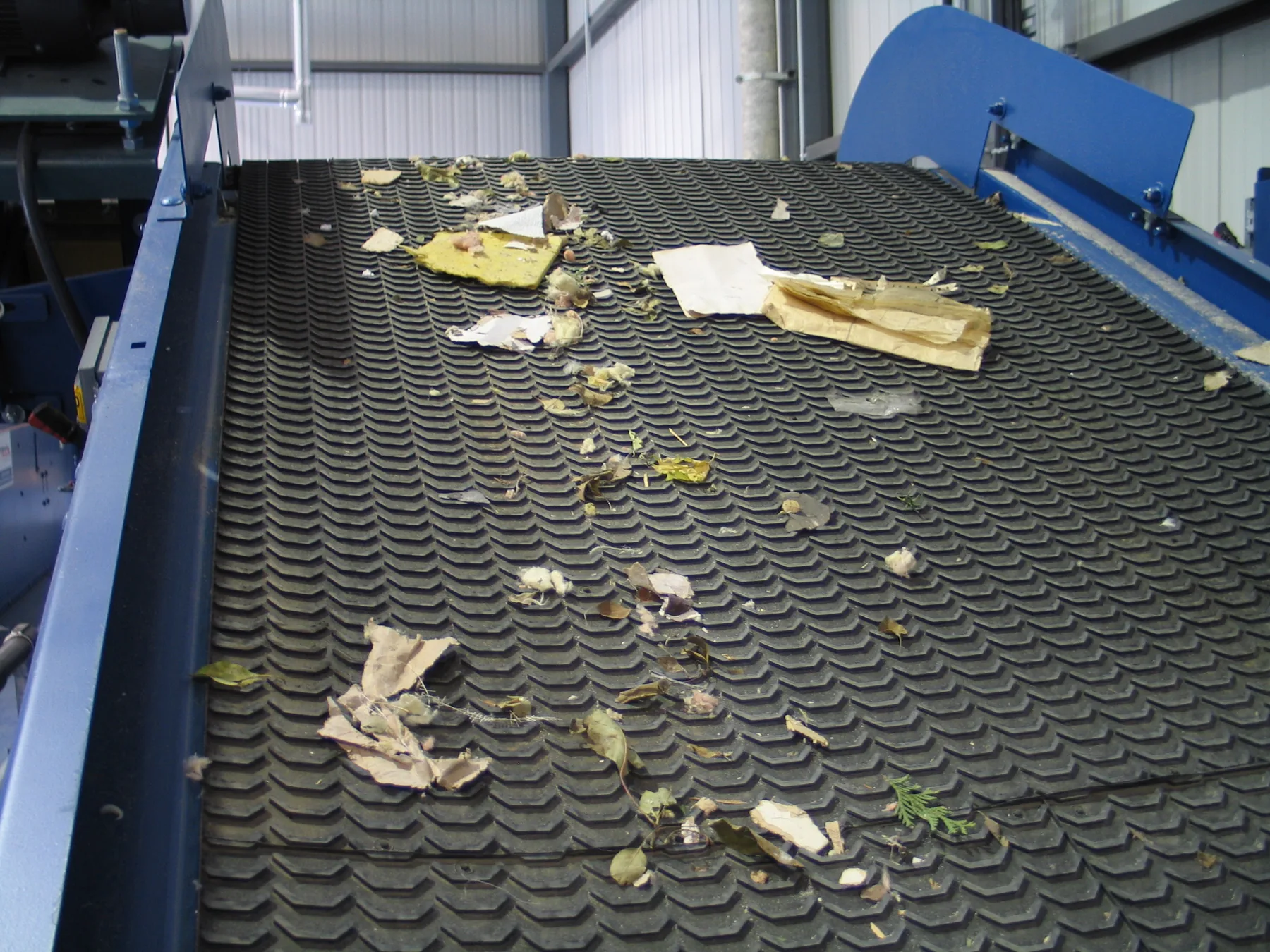
| Cleats | Rubber cleats applied per configuration; various types and sizes available |
| Skirts | Optional rubber skirtboards with adjustable clamps, any length |
| Stainless section | Optional stainless steel section on the conveyor, any length |
| Side walls | Optional raised side walls, height and length per need |
| Impact section | Optional — light, medium, or heavy duty, length per loading zone |
| Chute work | Mild steel, stainless, or CHT chutes; optional CHT wear-plate liners |
Construction
| Belting | Heavy-duty rubber belt; specifications vary by application |
|---|---|
| Fasteners | Bolt-hinged mechanical fasteners, Super-Screw, or vulcanized splice |
| Head pulley | Heavy-duty drum pulley, crown-faced, 3/8 in diamond lagging, XT hubs and bushings |
| Tail pulley | Heavy-duty wing pulley with XT hubs and bushings |
| Frame | Structural channel with welded cross members |
| Return idlers | CEMA C — 5 in rubber-disc return idlers |
| Take-up | Telescopic screw take-up — square tubing with ACME rod |
| Guarding | All rotating parts guarded to OSHA requirements |
| Supports | Bolted structural steel — standard supports or custom structure engineered to fit the environment |
Project Photos
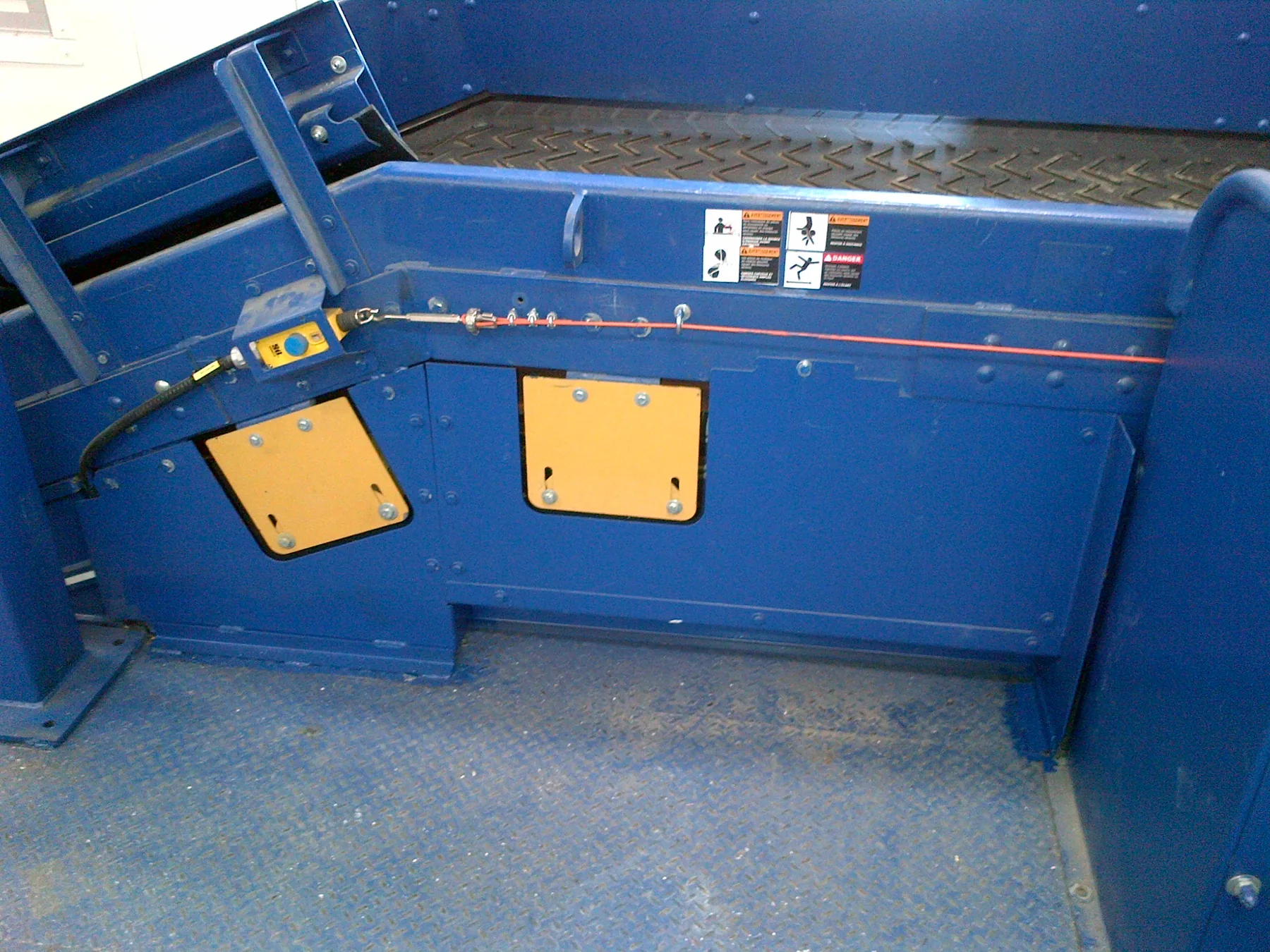
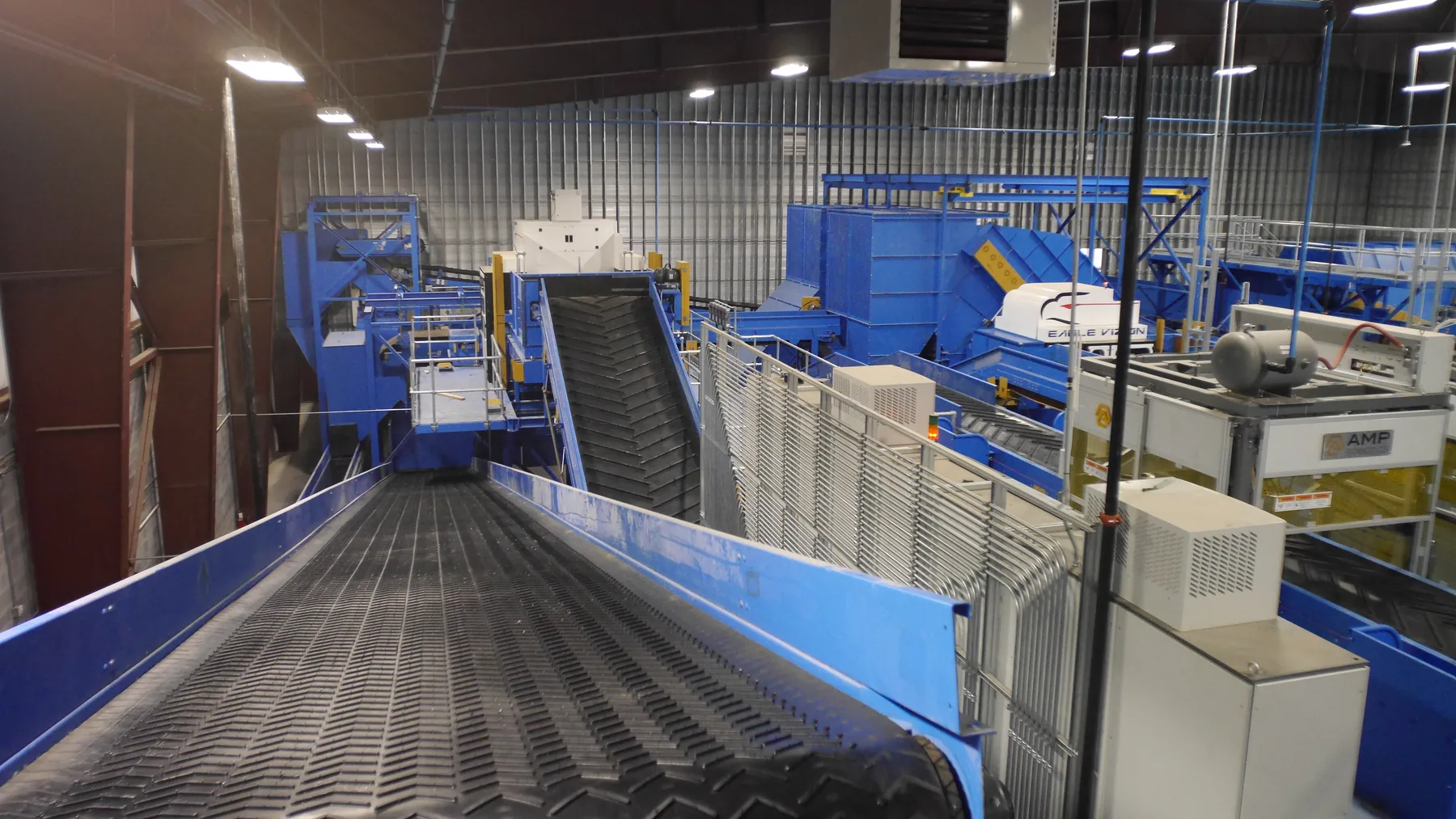
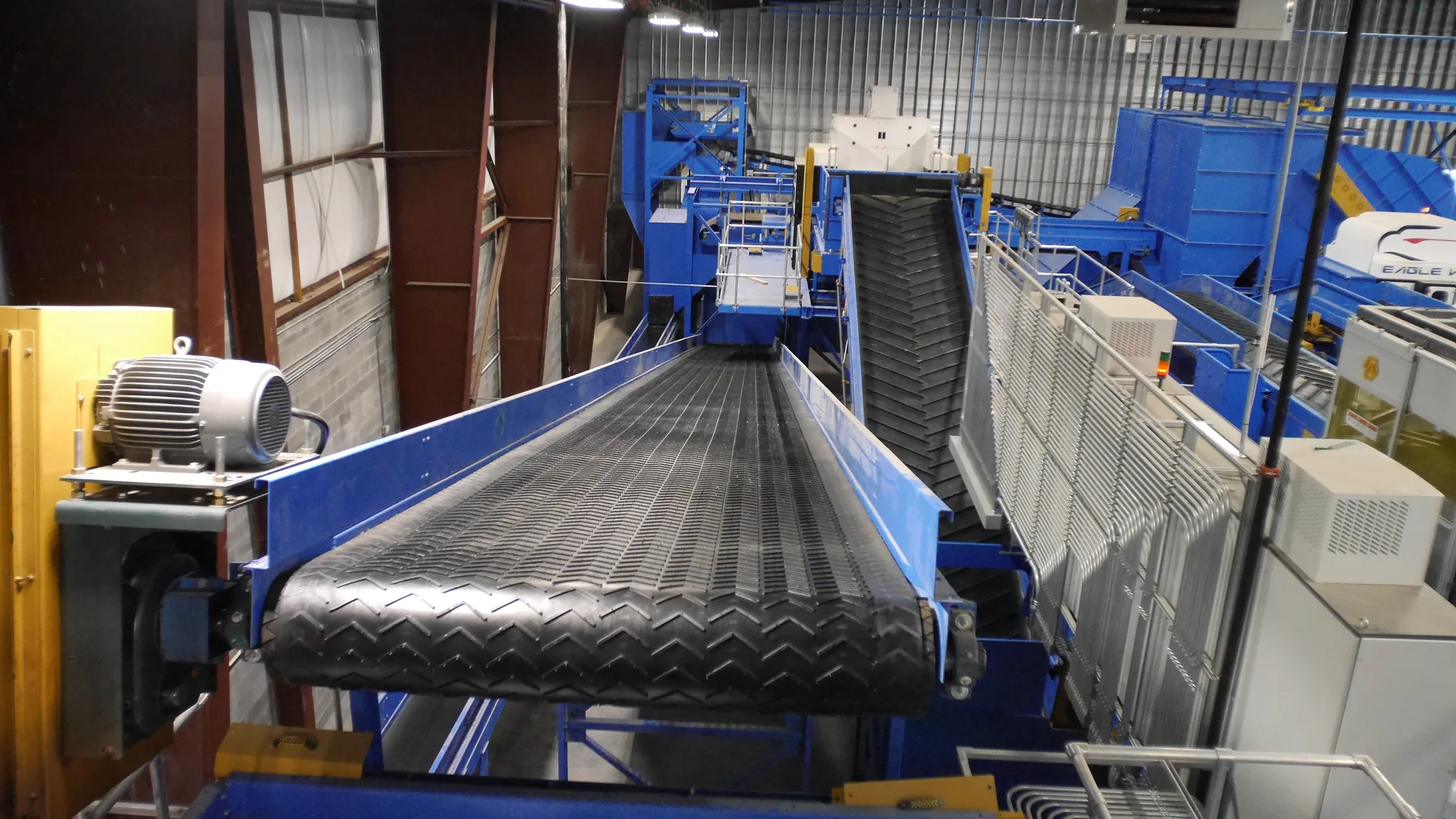
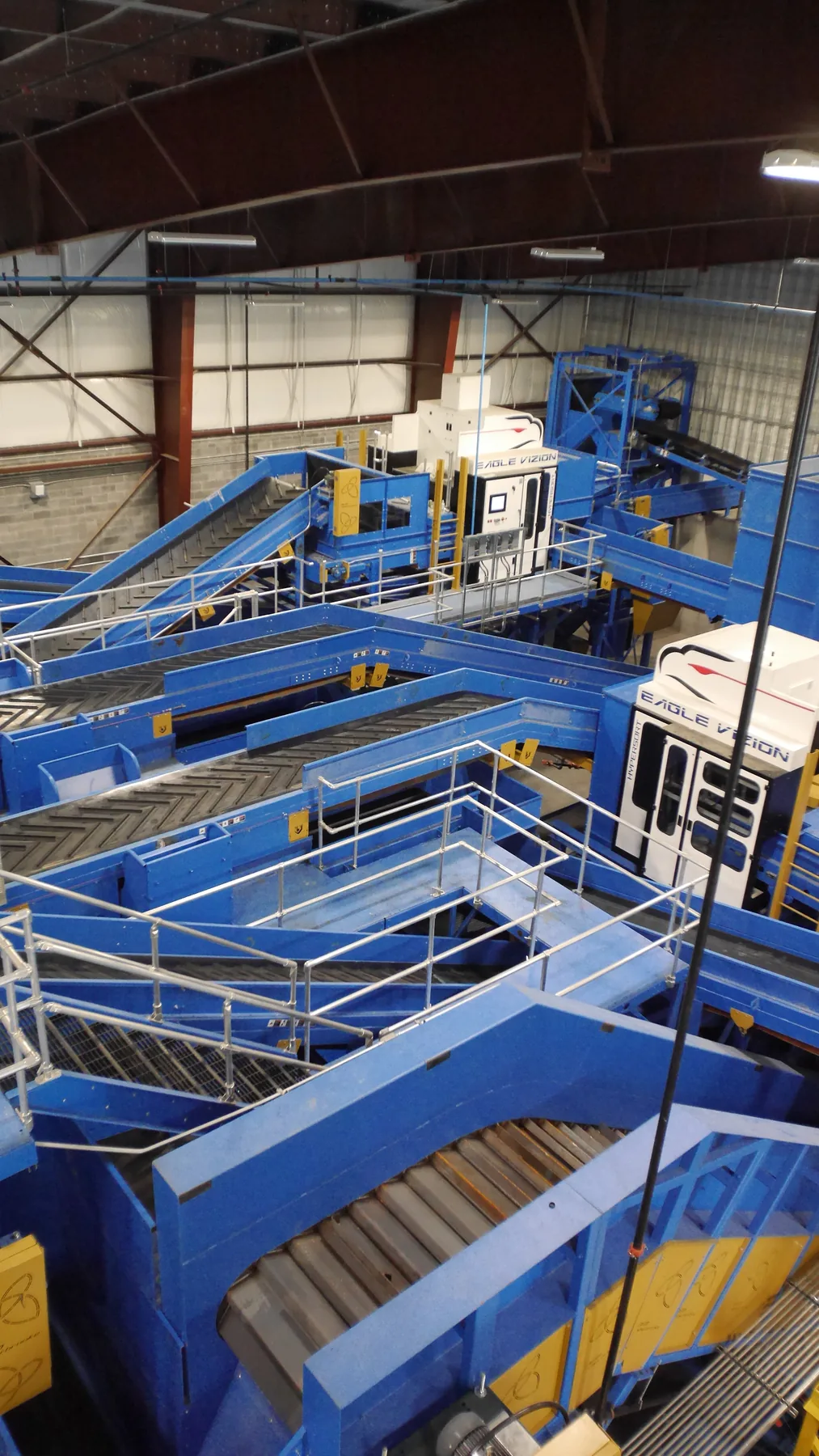
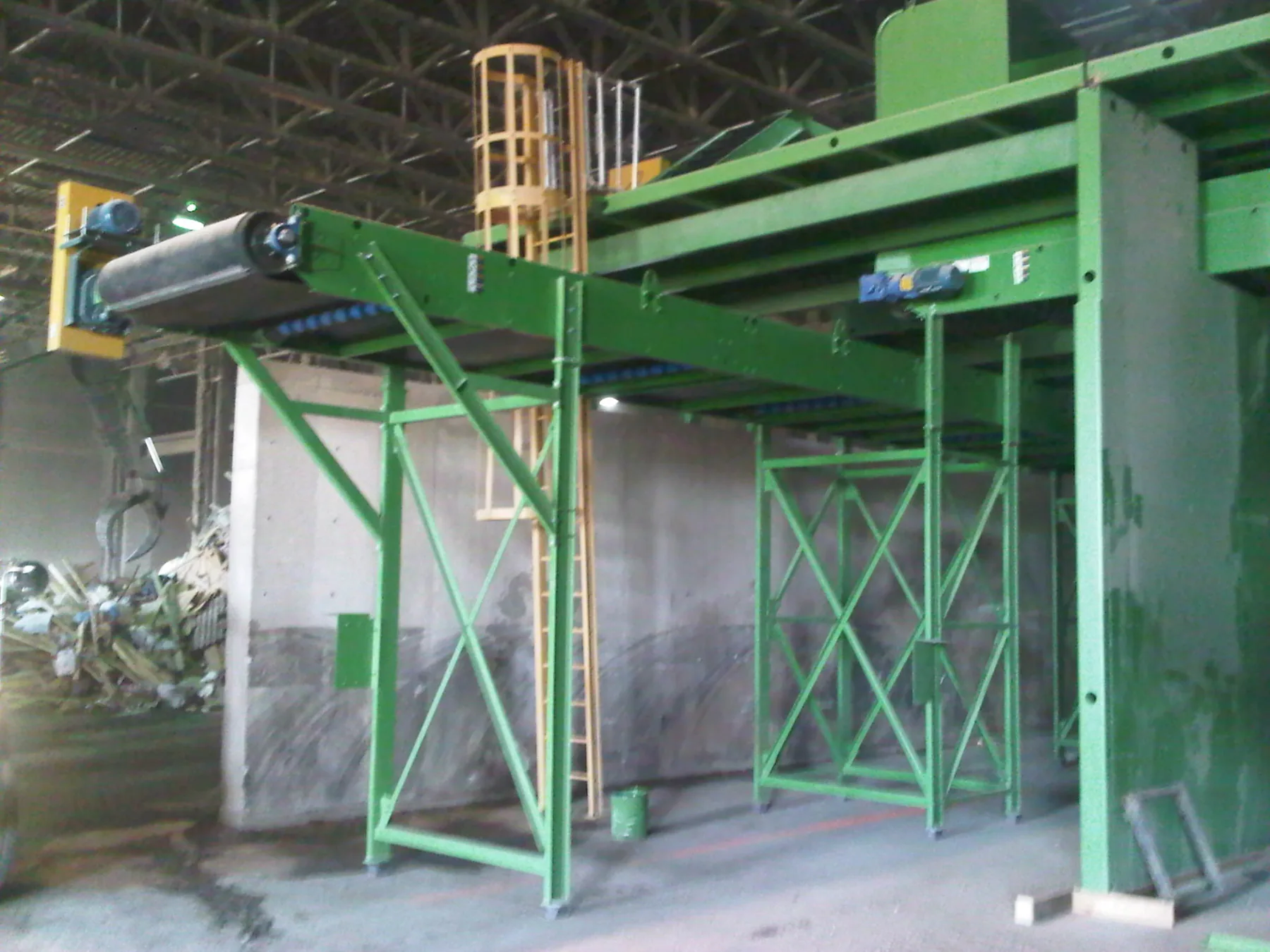
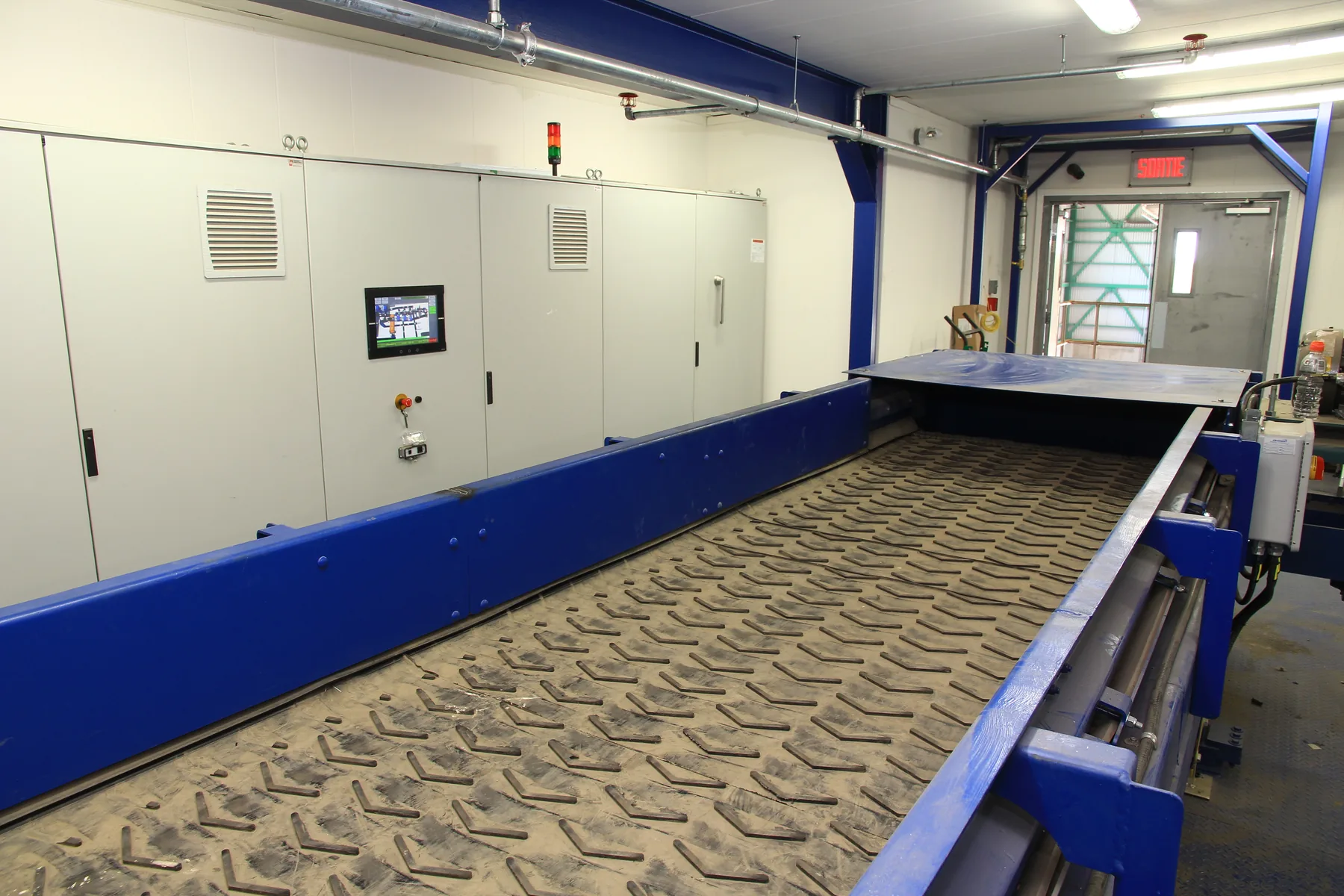
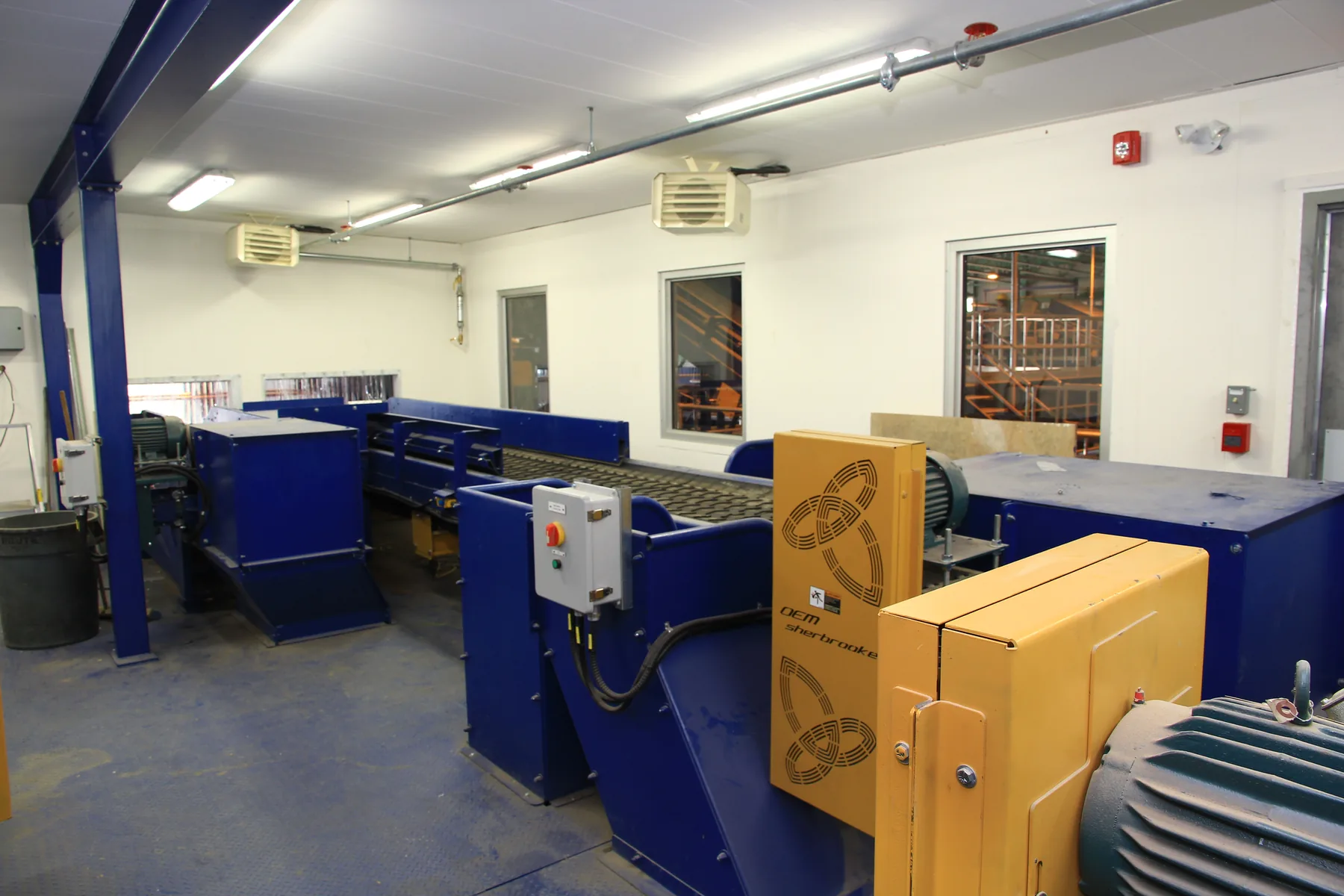
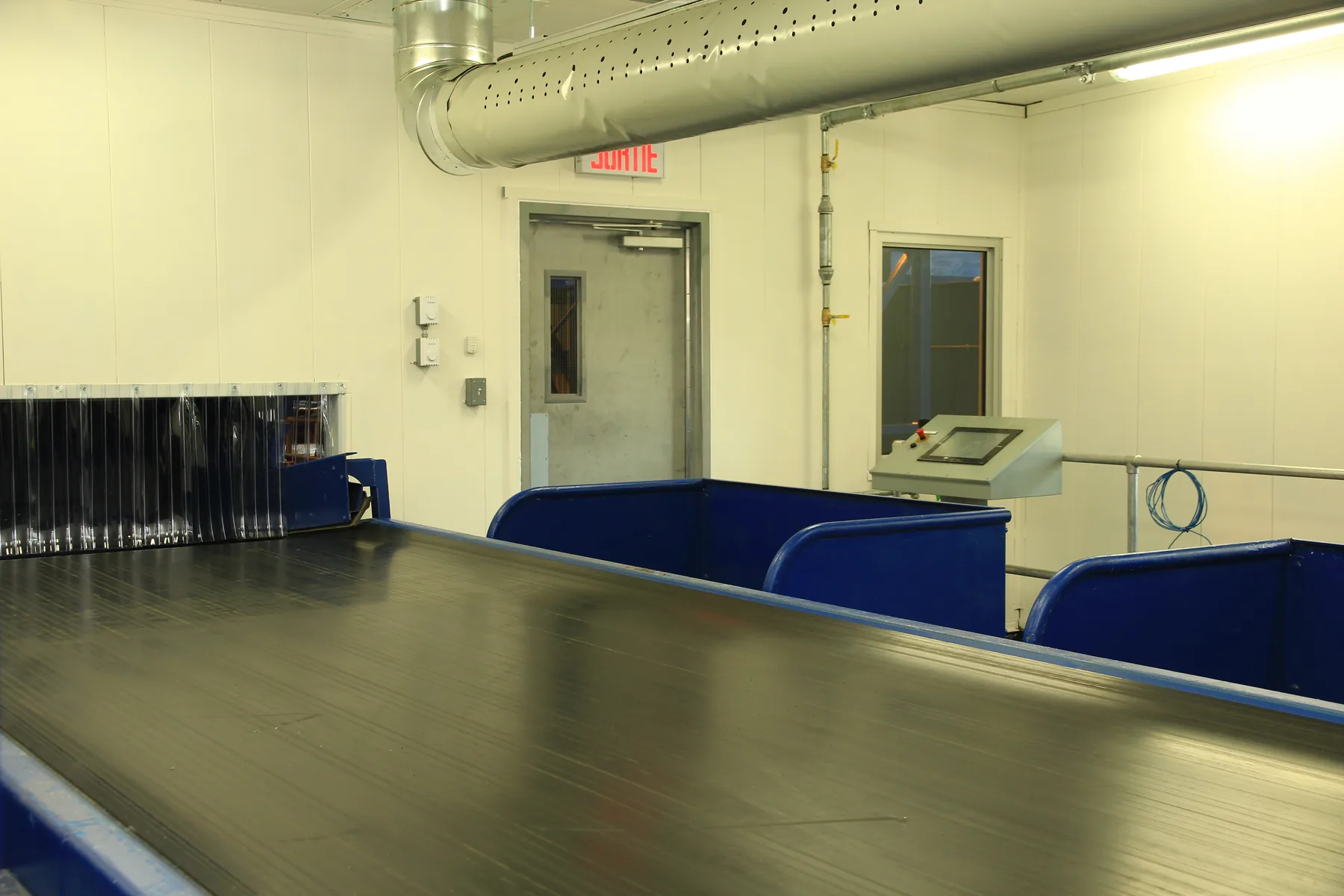
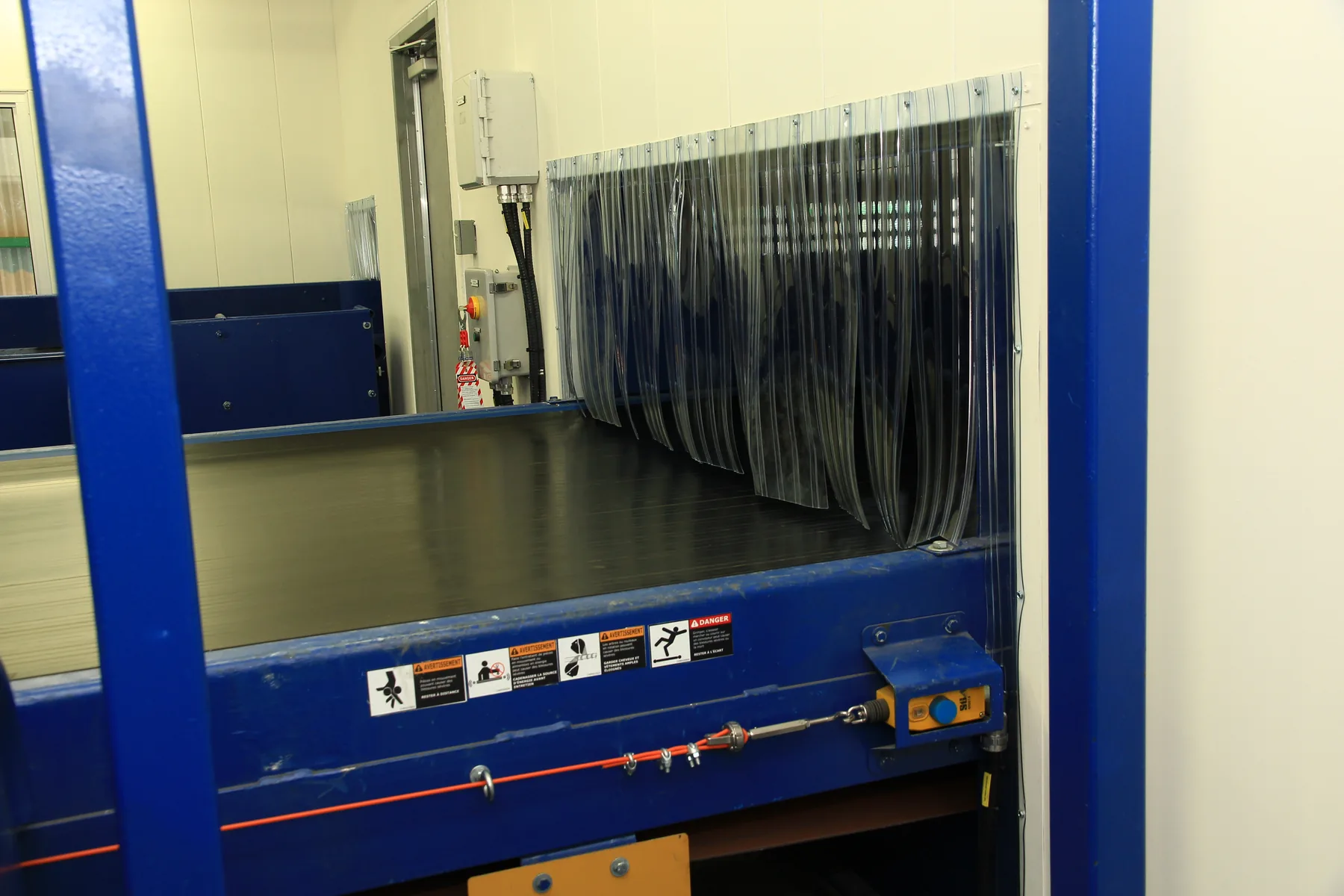
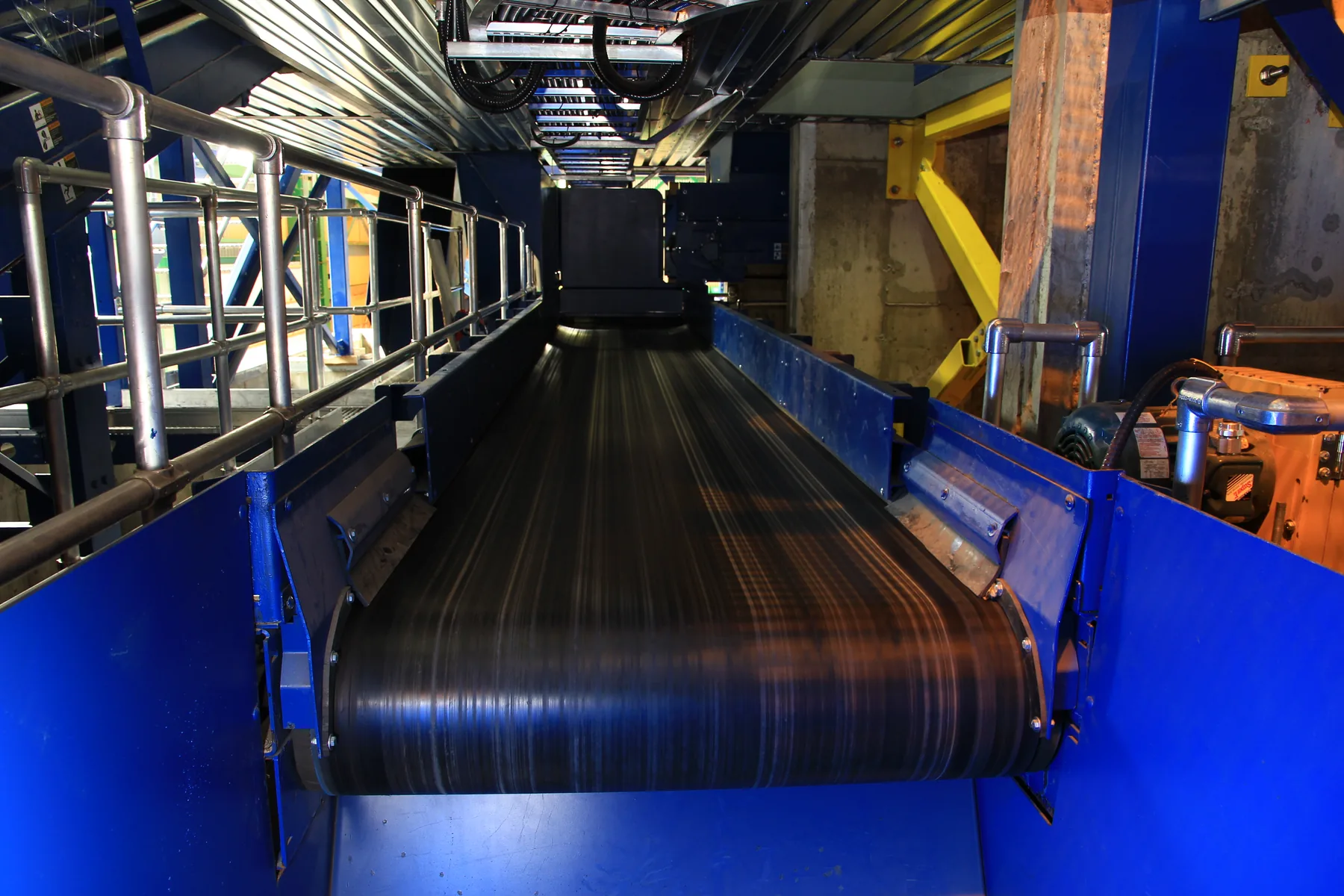
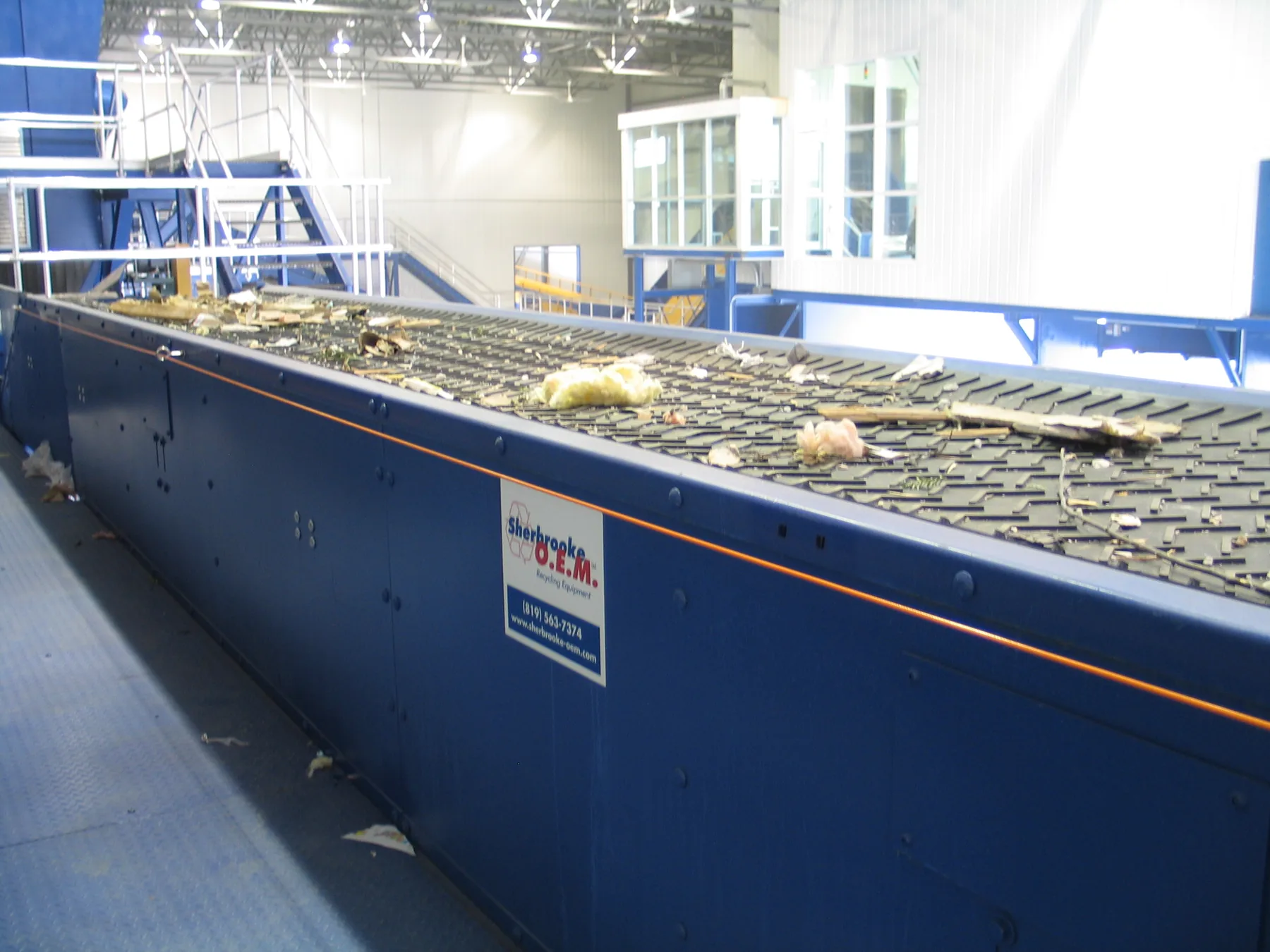
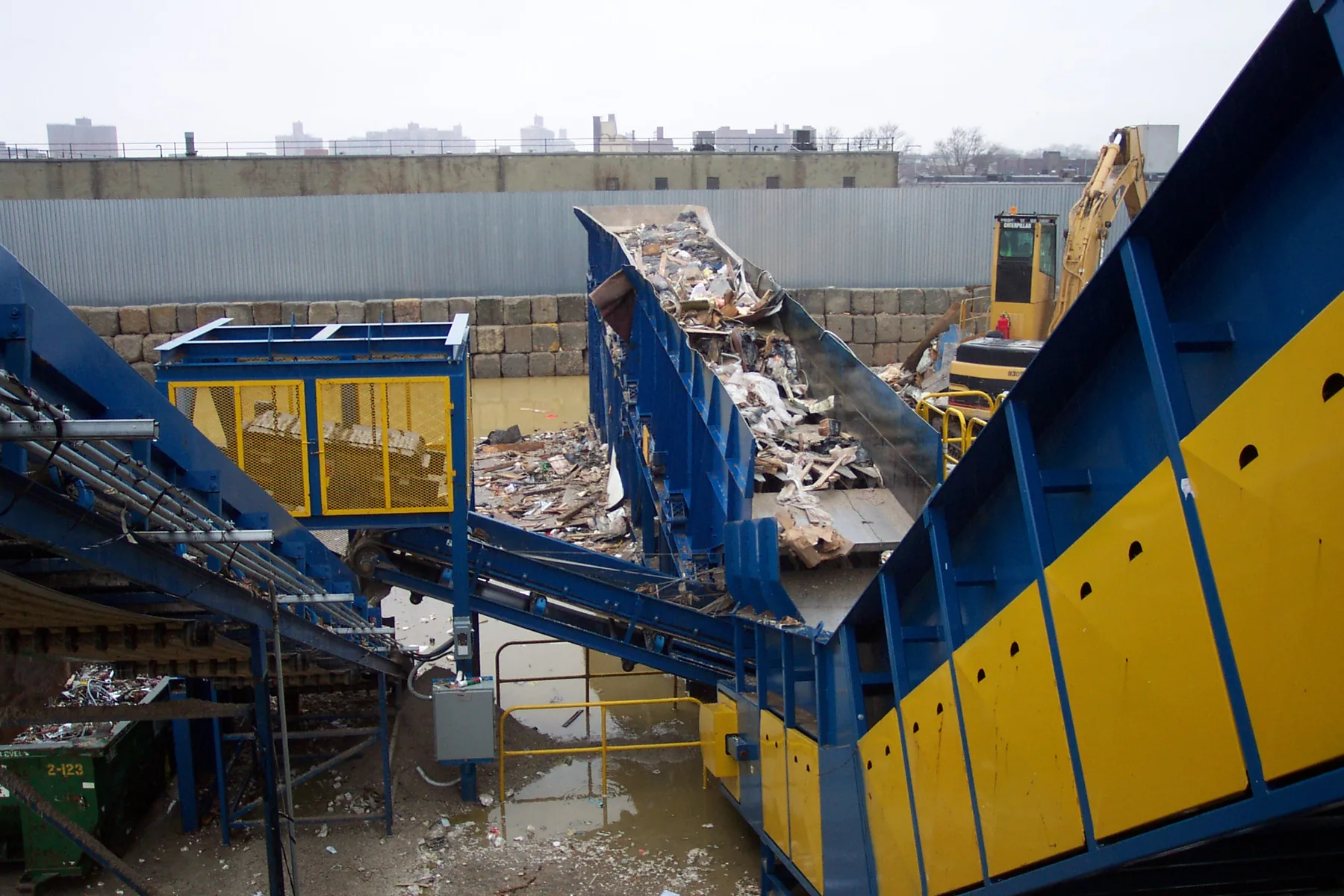
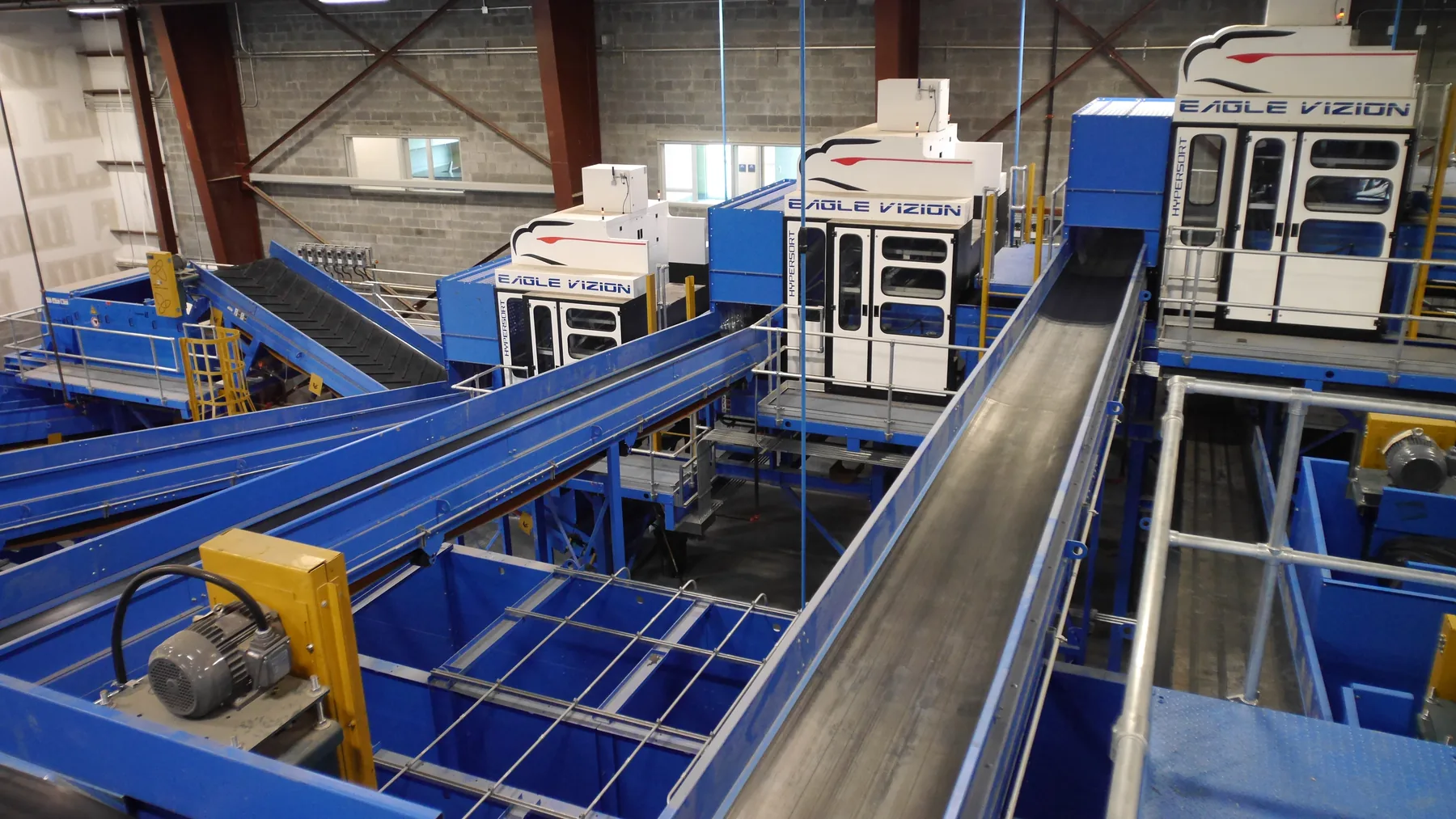
Sliderbed Conveyor units built and installed by Sherbrooke OEM on recycling and C&D lines across North America.
Sliderbed Conveyor — Frequently Asked Questions
When is a sliderbed conveyor better than a troughing idler conveyor?
A sliderbed supports the belt on a continuous steel deck, so point loads and small sharp pieces cannot deflect the belt between rollers. It wins on transfers, sorting positions, and anywhere spillage control and full support matter more than minimum drive power. Troughing idlers win on long, high-tonnage runs where lower friction pays.
Can a sliderbed conveyor take loading-zone impact?
Yes, with an impact section — a reinforced length of bed in light, medium, or heavy duty, matched to the drop height and material. For severe excavator- or loader-fed primary duty, a steel apron conveyor remains the better answer.
What belt is used on a sliderbed conveyor?
Typically 2- or 3-ply rubber belting chosen per application and position in the plant, joined with bolt-hinged mechanical fasteners so field repair is fast.
Need dimensions, capacity, or a budget price?
Send your material profile and layout — engineering answers with real numbers, from the team that will fabricate it in Sherbrooke.
Talk to Engineering