


Conveyors · Built in-house
Troughing Idler Conveyor
The long-haul belt — troughed on CEMA idlers for capacity and low drive power on extended, high-tonnage runs.
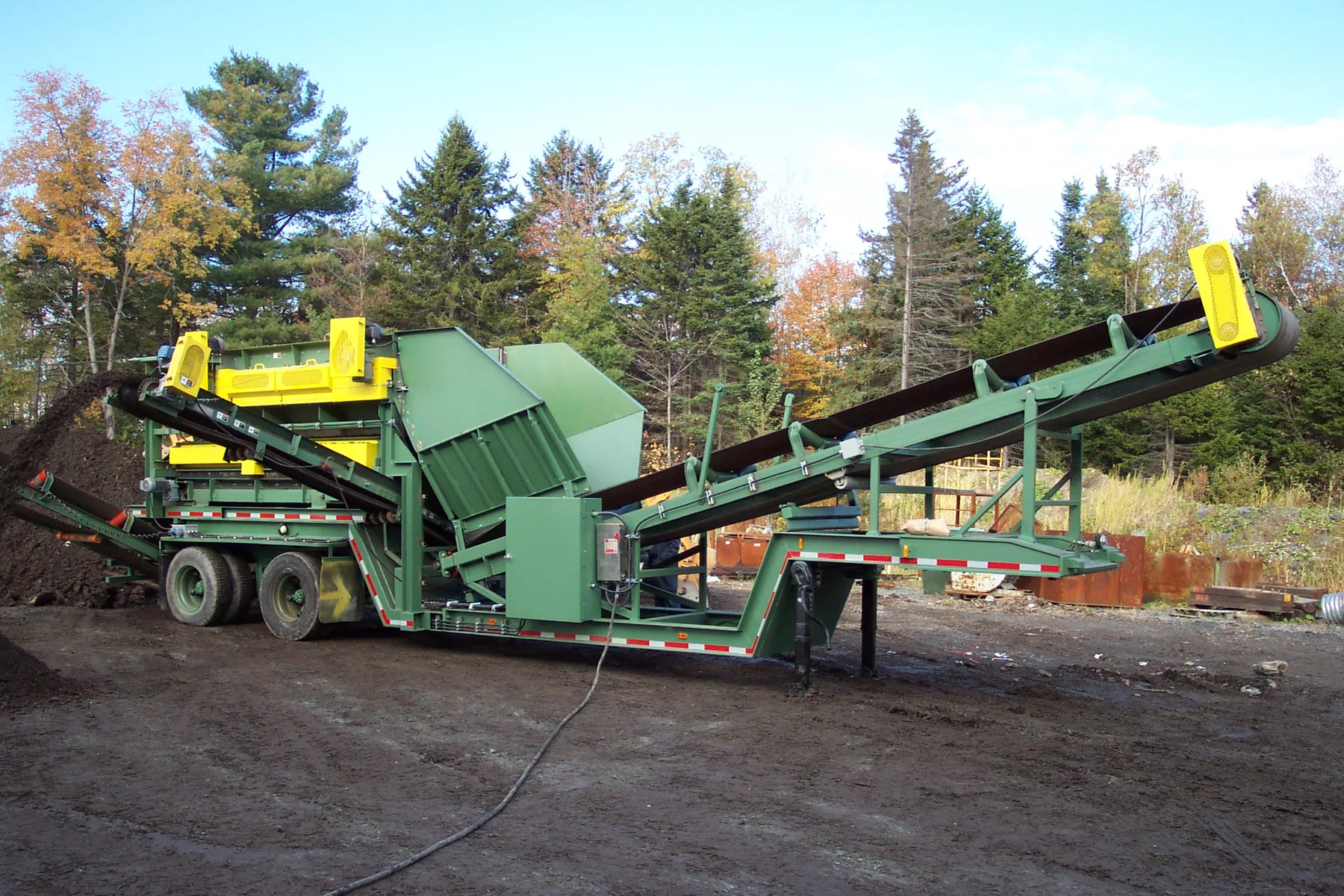
The Sherbrooke OEM troughing idler conveyor carries the belt on CEMA B 20°/35° troughing idlers, forming the belt into a trough that increases cross-section capacity and centers the load. Rolling support means lower friction than a sliderbed, so long runs and high tonnages take less drive power. Drives are Baldor-class motors with Dodge Torque-Arm II shaft-mount reducers (or equal), on C-1045 turned-ground-polished shafting and Dodge Imperial pillow-block bearings. Built per project in Sherbrooke, Quebec, with incline and elbow geometries available.
Where It Fits
- Long transfers between buildings or process areas
- High-tonnage trunk runs feeding or leaving the sorting line
- Screened, predictable streams — after the heaviest and sharpest material is out
- Overland and inter-building transfer of screened material
- Trunk and loadout conveyors to balers, storage, or truck and rail loading
- High-capacity runs for aggregates, biomass, and bulk recyclables
Single Stream MRF · C&D Recycling · MSW Sorting · Aggregates & Custom
Configuration & Options
Every unit is engineered per project — these are the configuration choices and options we quote against, not limits.
| Width | 24–72 in — per tonnage |
|---|---|
| Length | Custom per layout |
| Idlers | Typically CEMA B 20°/35° troughing carriers, CEMA C returns; determined at engineering |
| Geometry | Straight, with gradual radius curves where elevation changes — no break-away elbow |
| Cleats | Rubber cleats applied per configuration; various types and sizes available |
| Skirts | Optional rubber skirtboards with adjustable clamps, any length |
| Stainless section | Optional stainless steel section on the conveyor, any length |
| Side walls | Optional raised side walls, height and length per need |
| Impact section | Optional — light, medium, or heavy duty, length per loading zone |
| Chute work | Mild steel, stainless, or CHT chutes; optional CHT wear-plate liners |
Construction
| Carrying idlers | CEMA B — 5 in diameter, 20°/35° troughing |
|---|---|
| Return idlers | CEMA C — 5 in rubber-disc |
| Shafting | C-1045 TGP (turned, ground, polished) precision shafting |
| Bearings | Dodge Imperial IP pillow blocks or equal |
| Belting | Heavy-duty rubber belt; specifications vary by application |
| Pulleys | Heavy-duty lagged drum head, wing tail, XT hubs |
| Frame | Structural channel with welded cross members |
| Take-up | Telescopic screw take-up |
| Guarding | All rotating parts guarded to OSHA requirements |
| Supports | Bolted structural steel — standard supports or custom structure engineered to fit the environment |
Project Photos
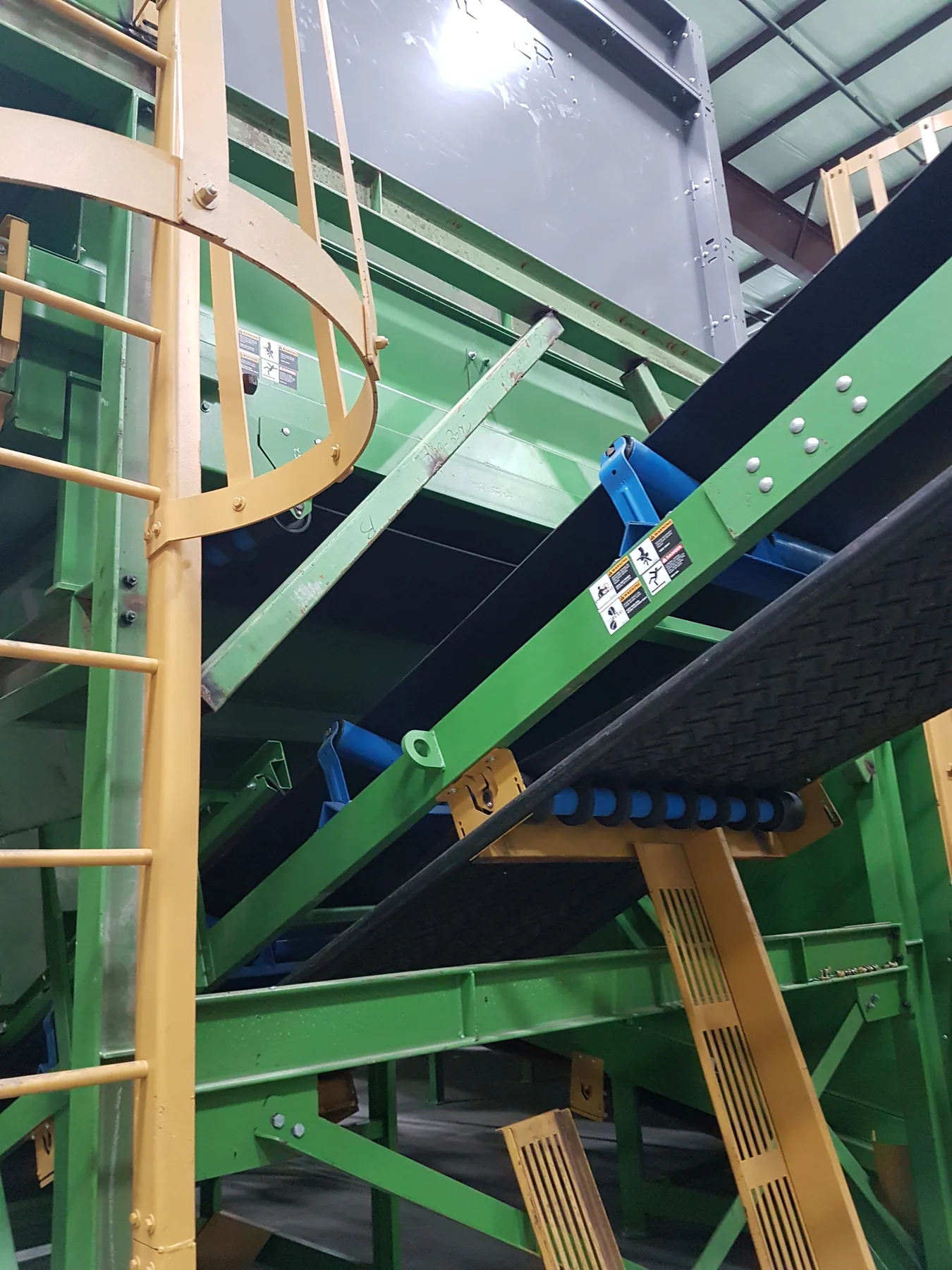
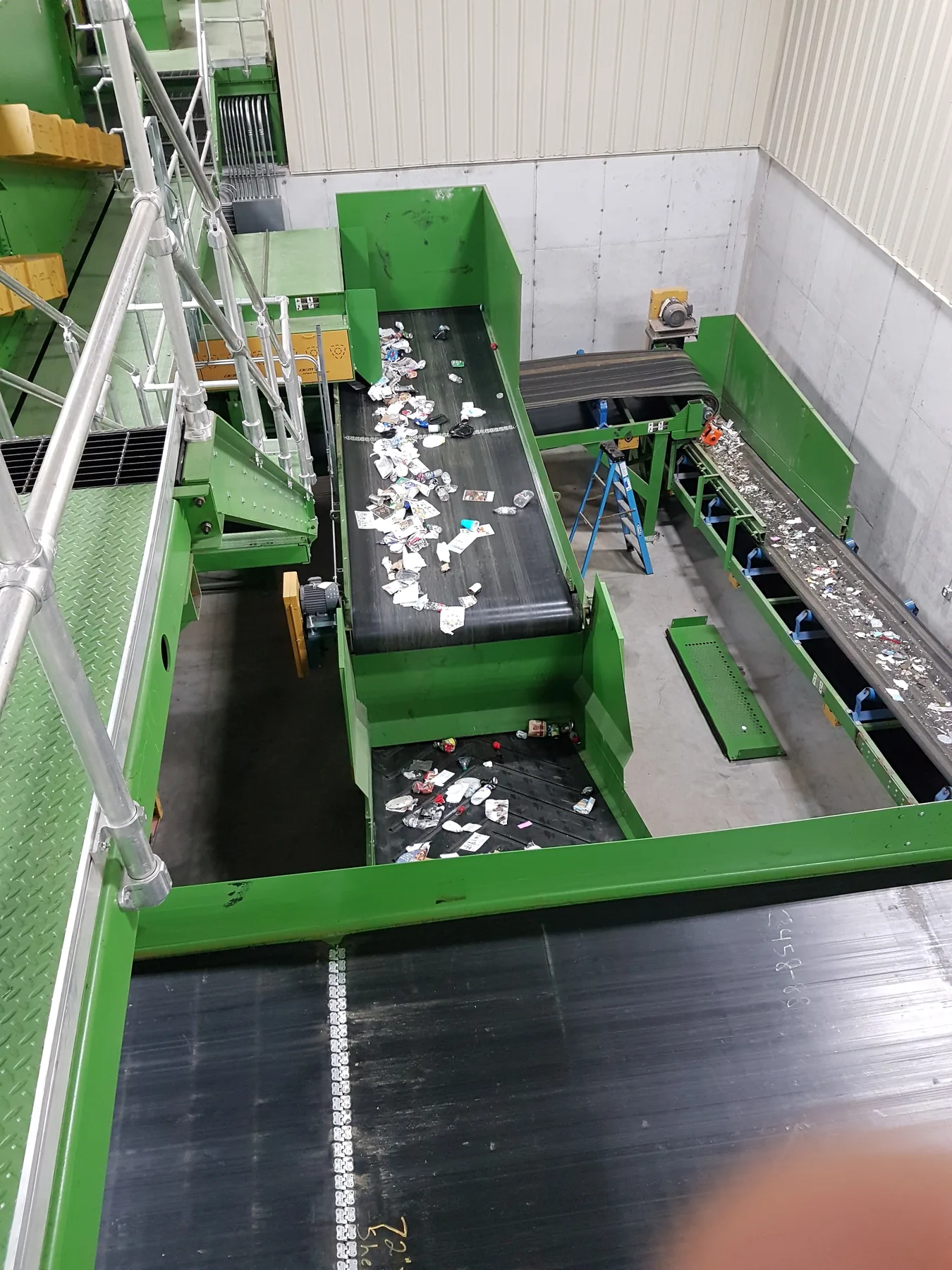
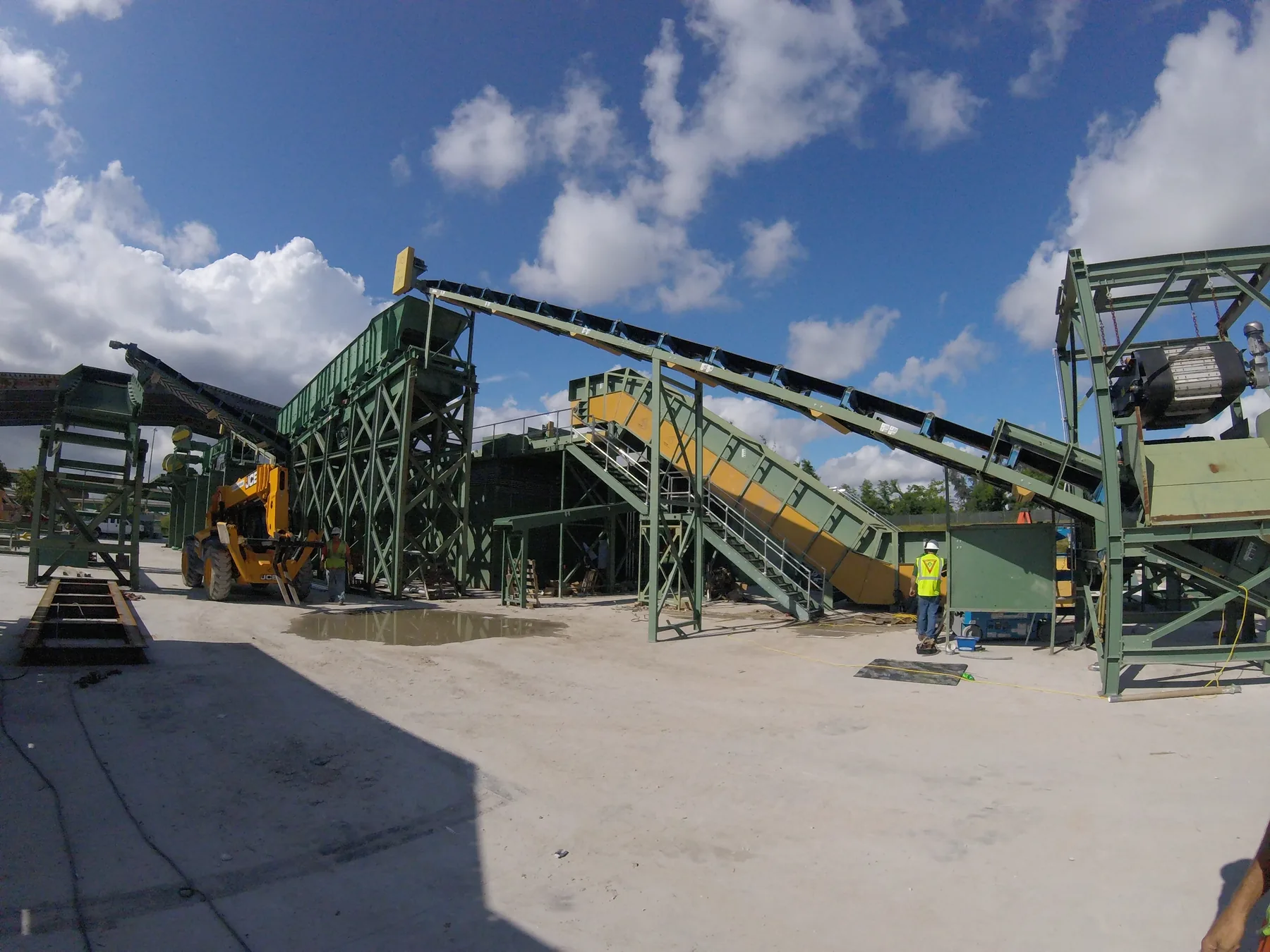
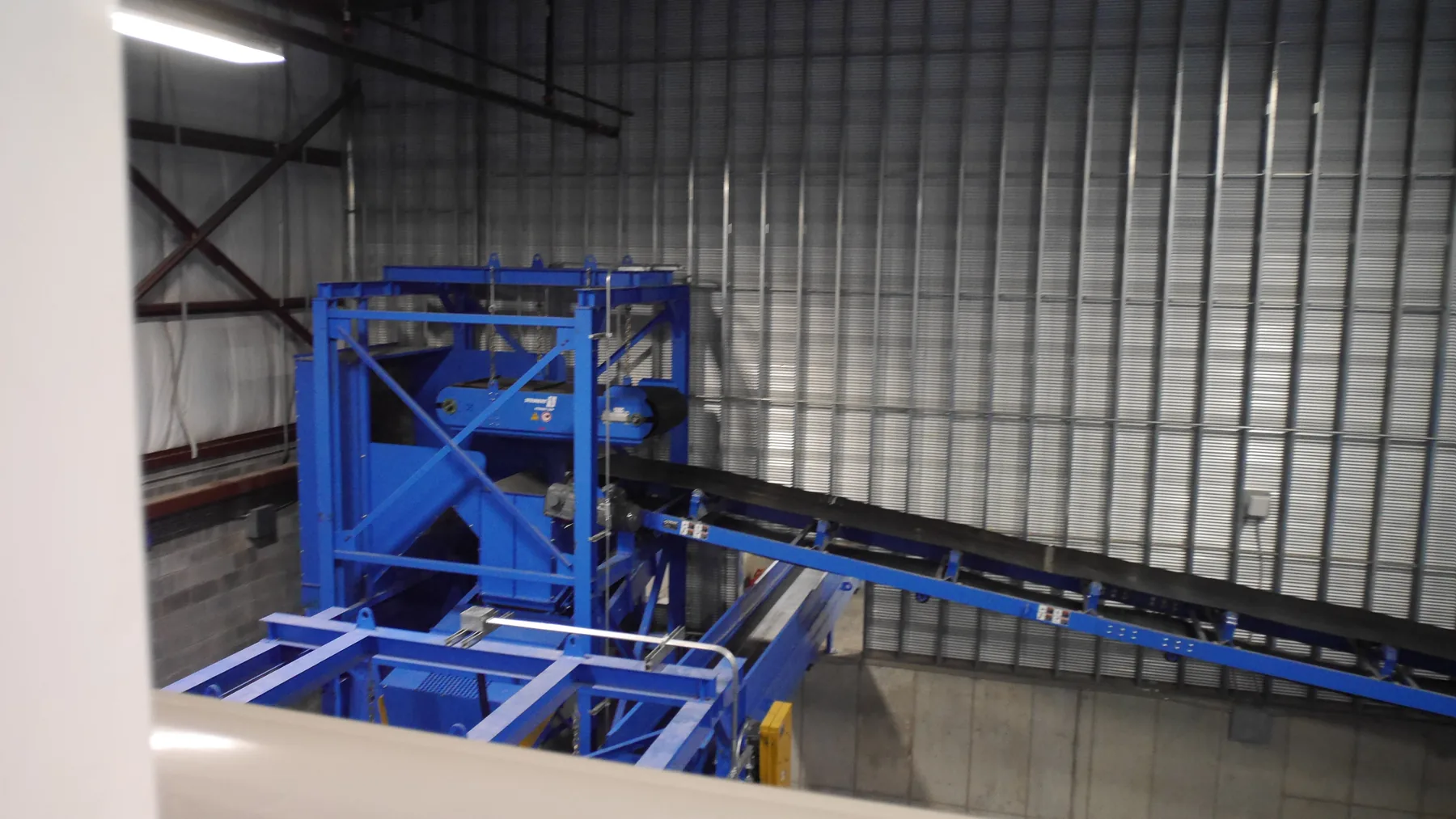
Troughing Idler Conveyor units built and installed by Sherbrooke OEM on recycling and C&D lines across North America.
Troughing Idler Conveyor — Frequently Asked Questions
Troughing idler or sliderbed — how do I choose?
Choose troughing idlers for long, high-tonnage runs of screened material, where lower rolling friction saves drive power and the trough adds capacity. Choose a sliderbed where the belt needs full support: transfers, sorting positions, sharp or point-loaded material, and spillage-sensitive locations.
What do the 20°/35° angles mean?
They are the wing-roller angles of the troughing set. Steeper angles deepen the trough, raising capacity and centering for a given belt width — chosen against the material and tonnage in the mass balance.
Can a troughing conveyor take an impact section?
Yes — impact-rated sections protect the loading zone, and on harder duty the loading zone can be built as a sliderbed or apron section transitioning to idlers for the run.
Need dimensions, capacity, or a budget price?
Send your material profile and layout — engineering answers with real numbers, from the team that will fabricate it in Sherbrooke.
Talk to Engineering